For Hanna: The first anniversary with your Kindertransport list
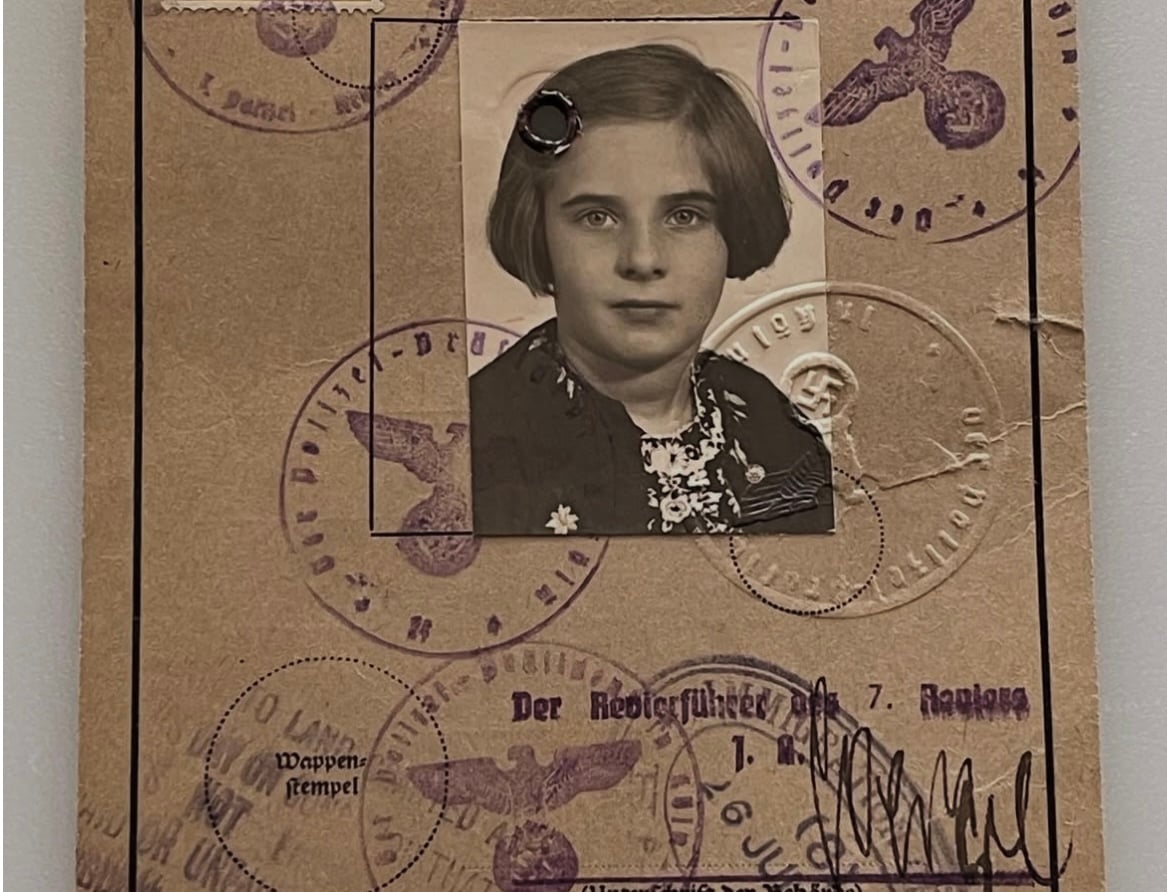
Eighty-six years ago, on July 25, 1939, Hanna Zack Miley boarded a Kindertransport from Nazi Germany to Britain. She did not know it then but she would never see her parents again. Last year, in October 2024, I found Hanna’s Kindertransport list in Yad Vashem’s archive. On the 86th anniversary of Hanna’s departure she has her Kindertransport list. For the first time in 86 years, she knows which children she travelled with on the Kindertransport, what route the train took, and where and when the transport crossed on the border. I recently discovered that there was another transport which journeyed on this day and it joined Hanna’s transport in the Hook of Holland. The two Kindertransports travelled on the same ferry and arrived in Britain together on July 26, 1939. Hanna has now been reunited with some of the families of those who were on her transport.
July 24, 1939 was Hanna’s final day at home in Cologne. I hesitate here because Gemünd was her actual home. Her family moved to Cologne after Kristallnacht for anonymity because they hoped that they would be safer there. I get goosebumps when I think about Hanna’s final day with her beloved parents. Did they eat breakfast together? How did her mother pack her suitcase? Did she go shopping for anything? What did her parents say when they tucked her into bed the night before? Did they sit up all night dreading their 7-year-old’s departure? Hanna remembers how her best friend, who was like a brother to her, Kurt Meier came to her family’s new apartment to say goodbye. Kurt’s family had also fled Gemünd for Cologne. Kurt gave Hanna a little passport photo of himself. On the back her wrote his name and address. The photo could have been for a visa application. Kurt never made a journey to safety. At Yad Vashem I found Kurt’s deportation dates: 27/7/1942 – Terezin and 23/01/1943 – Auschwitz. He did not survive. He was murdered during the Holocaust.
Hanna remembers how her parents locked the door of their apartment on the second floor of Horst-Wessel Platz 14 and how the three of them entered the elevator together. They pressed the down button, opened the door, stepped into the street, and made their way to the Köln Hauptbahnhof. Hanna had ‘no awareness that each step [they took brought them] nearer to [their] forever parting’. When Hanna was 13-years-old in 1945 she received a letter from the Red Cross which read:
Markus Zack. Born: 24th September 1878. Date deported to Litzmannstadt (Lodz): 30th October 1941. Date of death in Kulmhof (Chelmno): 3rd May 1942.
Amalie Zack. Born: 22nd February 1891. Date deported to Litzmannstadt (Lodz): 30th October 1941. Date of death in Kulmhof (Chelmno): 3rd May 1942.
Hanna’s parents were deported from the same train station she had left from on the Kindertransport.
Hanna’s parents helped her clamber up the steep train steps. When she turned around to wave to them, she saw that they were crying. This was the moment when ‘a terrifying foreboding arose within [Hanna]’. She felt utterly alone yet she was surrounded by children – 57 children in fact. Hanna has reenacted her Kindertransport journey several times as she travelled back to London and Cologne. Hanna actually moved back to Germany for a while. She now lives in America with her husband, George. Hanna knew that her Kindertransport number was 8814 because she kept her Kindertransport tag. Her mother’s handwriting is on the back of it. She has written Hanna’s pet name and then crossed it out and written her full name. Did she do this the night before Hanna left? Did she think that her official name needed to be shown rather than the name she was fondly called at home? You look at the tag and see a parent’s love inscribed into history.
So many survivors and their families are desperate to know who they journeyed with on the Kindertransport. Who were the children who experienced this flight to freedom with them? Who were the families who also made the brave decisions to send their children away to a foreign country in the hope that they would be safe in the arms of strangers? For Hanna it took 86 years to find this information out. I know how much it meant to Hanna that day I messaged her from my office in Jerusalem to say that I had found her list. I was sitting there shaking as I knew the enormity of this discovery for Hanna. As I waited for her response, I thought about what it meant to her to see this lost information and I imagined how proud her parents would be. I imagined them looking down on the life she has created with George and her friends around the world. I thanked them for Hanna.
Hanna’s response was: ‘Oh Amy, this is beyond imagination! I think about you flying into a war zone and there in THE place of remembrance you are quietly doing research and find that list!!’ Hanna automatically thought about Erika Jaroschy who was the little Czech girl who was meant to have been taken in by Hanna’s foster family. She was on the Winton Transport which did not leave due to the outbreak of the war. Hanna was taken in by a family who was originally meant to home Erika. Erika’s father, Dr Stefan Jaroschy called her Ini. He wrote a letter to the foster family about his daughter. The letter is dated 28th August 1939. It states that Erika was ‘a child as happy as the day is long’ and ‘always in good spirits’. He hoped that the foster family would be content with her. 86 years on, another parent’s total admiration and affection for their child is also remembered in the book of life. Erika’s uncle, Franz Jaroschy did escape to America and became an orchestra conductor. I sadly don’t know yet what happened to Erika. Erika’s father’s name appears in the Arolsen records. He was a prisoner of the Gestapo in Pankrac prison in Prague. He was killed in Terezin just weeks after his arrest. Erika’s name appears on her father’s documents. I think she had a brother, Stefan who was named after their father. Last year Hanna and I were contacted by a descendant of one of Franz’s friends who also knew this information. I think I’ve found the address of where Erika lived in Prague. There is still so much to research to do!
Over the next few days Hanna and her friends will commemorate her arrival on the Kindertransport which saved her life. For the first time we have the proof – the documents – which affirm this miracle. But with all the joy in celebrating Hanna Hanna herself remembers the final parting from her parents and Erika and Kurt who are not here with us.
As I was finishing this piece Hanna messaged me to say: ‘This year the remembrance is like new, just realised I’m sharing it with the descendants of the Kinder on the list’.