Jewish, Autistic, Writer, Activist - Thought Provoking Influence
For the Patrilineal Jews: You Are Jewish
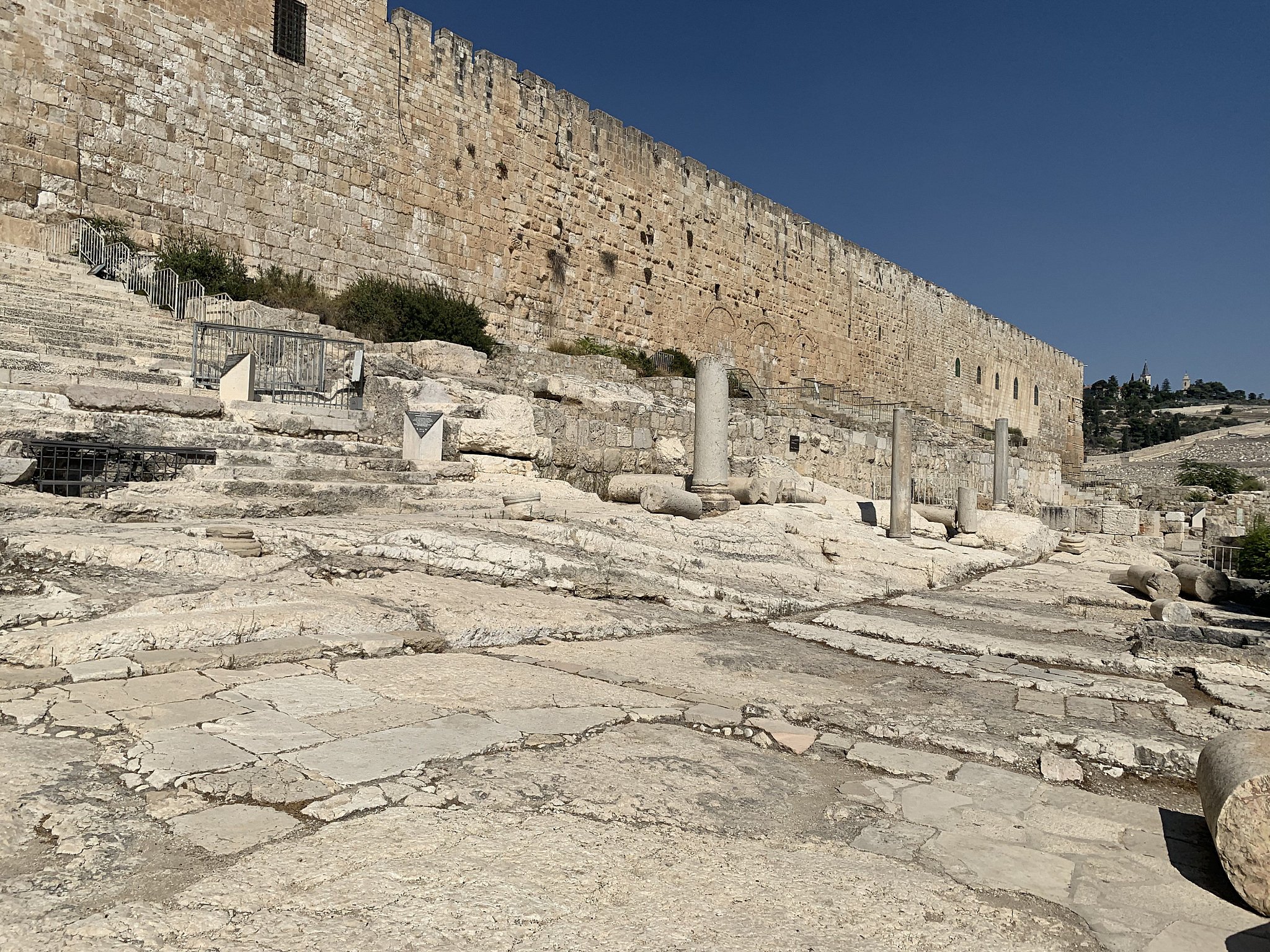
The Davidson Archaeological Park in Jerusalem, October 2021 - Courtesy of the Author
I am not a “patrilineal Jew.” My mom is Jewish, and so is my dad. I am simply Jewish.
But I believe the same principle of belonging should extend to Jews whose Jewish identity comes through their fathers. The term “patrilineal Jew” may describe a particular form of Jewish ancestry, but it should not be used to diminish someone’s Jewish identity or suggest that their connection to the Jewish people is somehow less meaningful.
But who is considered Jewish?
Under traditional Jewish law, a person is considered Jewish if they are born to a Jewish mother or convert to Judaism through a recognized conversion process.
In Orthodox and Conservative Judaism, Jewish status traditionally passes through the mother. If your mother is Jewish according to halakha, you are Jewish regardless of how religious you are, whether you believe in G-d, or whether you actively practice Judaism. Reform Judaism in the United States takes a different approach. It recognizes a child with either a Jewish mother or Jewish father as Jewish when that child is raised Jewish and establishes Jewish identity through appropriate acts of identification and practice.
In my own case, there is no question of matrilineal versus patrilineal descent: my mother is Jewish, and my father is Jewish. I identify as “just Jewish” because I do not belong to a particular denomination, even though I am religious, and Judaism plays an important role in my daily life.
But not every Jew has had such a straightforward experience of belonging.
Far too many patrilineal Jews have experienced exclusion from Jewish life simply because they do not have a Jewish mother. That needs to change.
Someone raised Jewish by a Jewish father may grow up celebrating Jewish holidays, attending synagogue, learning Jewish history and traditions, confronting antisemitism, supporting Israel, and understanding themselves as part of Am Yisrael, only to enter a Jewish space and be told that they are somehow not Jewish enough.
Jewish identity can encompass a variety of forms: spiritual, ancestry, upbringing, culture, community, religious practice, education, and a genuine connection to the Jewish people.
Imagine growing up knowing that Judaism is part of who you are, only to repeatedly be asked to prove that you belong. That does not strengthen Jewish identity. It drives people away from it.
Traditional Jewish law should be understood and respected, no matter the denomination or whether you identify with one. There is a difference between saying, “Our denomination has a particular religious standard for Jewish status,” and saying, “You have no place in Jewish life.” One is flat-out exclusion, and the other questions the Jewish status.
We should be able to understand that distinction.
While traditional Jewish law regarding matrilineal descent should be understood and respected, different Jewish movements have different religious standards, and those differences won’t disappear, particularly within Orthodox and Conservative circles. Their standards will continue to align with tradition regarding Jewish status, marriage, conversion, ritual participation, and other religious matters. At the same time, our communities can choose compassion over unnecessary exclusion.
Change matters even more at a time when Jewish communities around the world are confronting assimilation, declining affiliation, and rising antisemitism. Pushing away people who actively want to embrace their Jewish heritage is a moral and spiritual failure.
We should be creating more pathways into Jewish life, not more reasons for people to walk away from it.
Israel shows how complicated Jewish status can be. Israel’s Law of Return demonstrates that Jewish identity and Jewish legal status do not always fit neatly into one definition. Under the Law of Return, eligibility for Aliyah extends beyond people considered Jewish under traditional halakha. A person may generally qualify if they are Jewish or are the child or grandchild of a Jew. As a result, Jewish ancestry through a father or grandfather can establish eligibility for Aliyah.
At the same time, the law separately defines a “Jew” as someone born to a Jewish mother or someone who converted to Judaism and is not a member of another religion.
That creates an important distinction: someone with a Jewish father and a non-Jewish mother may qualify for aliyah as the child of a Jew while not being considered halakhically Jewish under Orthodox or Conservative standards unless they undergo conversion.
In other words, eligibility for Israeli citizenship under the Law of Return and recognition as Jewish for certain religious-status matters in Israel are related questions, but they are not identical ones.
That complexity should remind us that Jewish identity has religious, legal, cultural, familial, communal, and national dimensions. Trying to reduce all of them to a single label often fails to capture the reality of Jewish life.
The future of the Jewish people depends not only on preserving our traditions, but also on ensuring that people who genuinely see themselves as part of our people have opportunities to belong, learn, participate, and contribute.
Patrilineal Jews should not have to spend their lives proving that their connection to Judaism is real or meaningful. We can respect halakha. We can acknowledge denominational differences. We can maintain religious standards within communities that consider those standards binding.
And we can still treat people with dignity.
These ideas do not have to contradict one another.
More importantly, the Torah tells us we have a moral and spiritual obligation as Jews to build communities in which people feel that they have a place. And right now, we are not doing enough.
When we talk about inclusion in the Jewish community, the conversation cannot begin and end only with disability inclusion. Disability inclusion is essential, but inclusion is much broader than accessibility alone. It must also encompass people who genuinely feel ostracized, rejected, overlooked, or pushed to the margins of Jewish communal life.
That includes patrilineal Jews. It includes converts. It includes interfaith families. It includes Jews who do not fit neatly into a denomination, Jews who are rediscovering their heritage, Jews who were not raised with extensive Jewish education, and people who may have spent years wondering whether there is a place for them within our community.
Inclusion is not simply about making sure someone can physically enter a synagogue, Jewish community center, school, or communal event. It is also about what happens once they walk through the door.
A truly inclusive Jewish community does not require us to abandon halakha, erase denominational differences, or pretend that every Jewish movement follows the same standards. It requires us to recognize the humanity and sincerity of the person standing in front of us.
There is a profound difference between maintaining a religious standard and making someone feel unwanted.
And we need to ask ourselves difficult questions.
Do they feel wanted? Do they feel respected? Do they feel like there is a seat at the table for them? What are we doing wrong and what are we doing right? How can we help make this experience better?
How many people have walked away from Jewish life because their first experience with a Jewish institution was rejection? How many people stopped attending synagogue, stopped seeking Jewish education, or stopped exploring their heritage because someone made them feel as though they had to prove they belonged? How many people desperately wanted a connection to Judaism but eventually stopped trying because our communities made that connection unnecessarily difficult?
And how many opportunities to strengthen Am Yisrael have we lost because we were more focused on determining who was “Jewish enough” than helping someone build a Jewish life?
Jewish continuity requires belonging. Jewish continuity cannot be sustained through exclusion alone.
It is strengthened when people are given reasons to embrace their heritage rather than distance themselves from it. Our history has taught us the importance of community, peoplehood, responsibility, and standing together. Those values should not merely be things we teach; they should be reflected in how we treat people who come through our doors.
We often talk about the importance of ensuring that Judaism survives from one generation to the next. But Jewish continuity is not simply about numbers. It is about creating communities that people actually want to remain connected to.
If we want the next generation to embrace Judaism, then Jewish life must be something people experience as meaningful, welcoming, challenging, spiritual, and worth carrying forward.
That means preserving our traditions while also recognizing that the Jewish people have never been a monolith.
We can disagree about religious law. We can belong to different denominations, or no denomination at all. We can observe Judaism differently. We can debate what Jewish status means under halakha.
But disagreement does not require humiliation, and religious differences do not justify cruelty.
When someone is reaching toward Jewish life, our instinct should not be to push them away. It should be to help them find their way in.
For some people, that may mean finding a congregation that recognizes their Jewish status. For others, it may mean Jewish education, greater communal involvement, reconnecting with traditions they did not grow up practicing, or pursuing conversion if that is the path they personally choose.
Whatever that journey looks like, it should begin with dignity rather than rejection.
That is why I believe we need to reconsider how we use the term “patrilineal Jew.” It can describe ancestry, but it should never become a qualifier for someone’s worth, belonging, or connection to the Jewish people.
The Jewish community cannot demand continuity while simultaneously making people fight for the opportunity to participate in it.
We have a moral obligation to do better. We have a spiritual obligation to do better. And if we truly care about the future of Am Yisrael, we have a communal obligation to do better.
Because ultimately, a Jew should not have to spend their life explaining which side of their family their Judaism came from.
They should just be able to say:
I am Jewish.
Related Topics