
Jewish, Autistic, Writer, Activist - Thought Provoking Influence
For Whoever Votes, The Jewish Future is in Our Hands
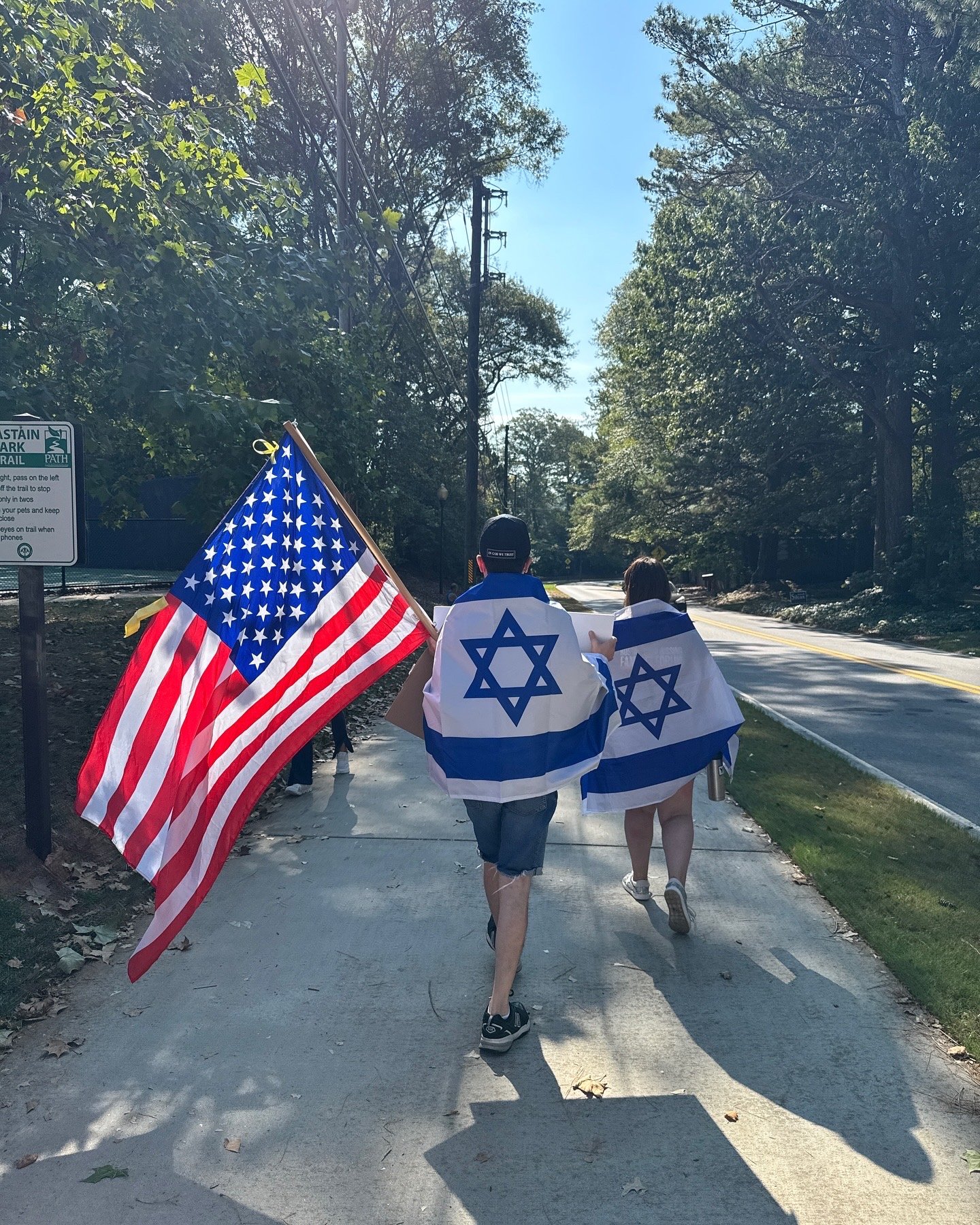
For generations, the US-Israel relationship has been a key component of American Jewish life. Many American Jews see Israel as an integral part of their Jewish identity, and a recent Jewish Federations of North America (JFNA) study found that 88% of American Jews support Israel’s right to exist as a Jewish and democratic state. Yet only 37% choose to identify themselves as “Zionists.”
By the most basic definition, Zionism is the movement for Jewish self-determination in the Jewish people’s ancestral homeland. That makes the gap between support for Israel’s existence and identification with the word “Zionist” particularly striking. The JFNA findings also suggest that American Jews do not share a single understanding of what the term means, helping explain why support for Israel’s existence is considerably higher than identification with the label itself.
Since October 7, questions about the future of American Jewry have become increasingly urgent. Antisemitism, political polarization and growing divisions over Israel have forced American Jews to confront difficult questions about our place in the United States and our relationship with Israel. The US-Israel relationship is not only a matter of foreign policy, but for many American Jews, it intersects with identity, community, security and our connection to Jews around the world.
Now, the United States and Israel are approaching consequential elections within a week of each other. American voters will head to the polls for the midterms on November 3, while Israelis are scheduled to vote on October 27. The results will help shape the political environment surrounding the US-Israel relationship during the years ahead.
Already, this year’s American primaries have shown how differently debates over Israel are unfolding across the country. In New York, several progressive candidates sharply critical of Israel defeated pro-Israel incumbents, highlighting the growing influence of the Democratic Party’s progressive wing. Florida produced a different set of results: several established pro-Israel candidates prevailed, while two Republican candidates associated with an emerging anti-Israel faction of the party lost their primaries.
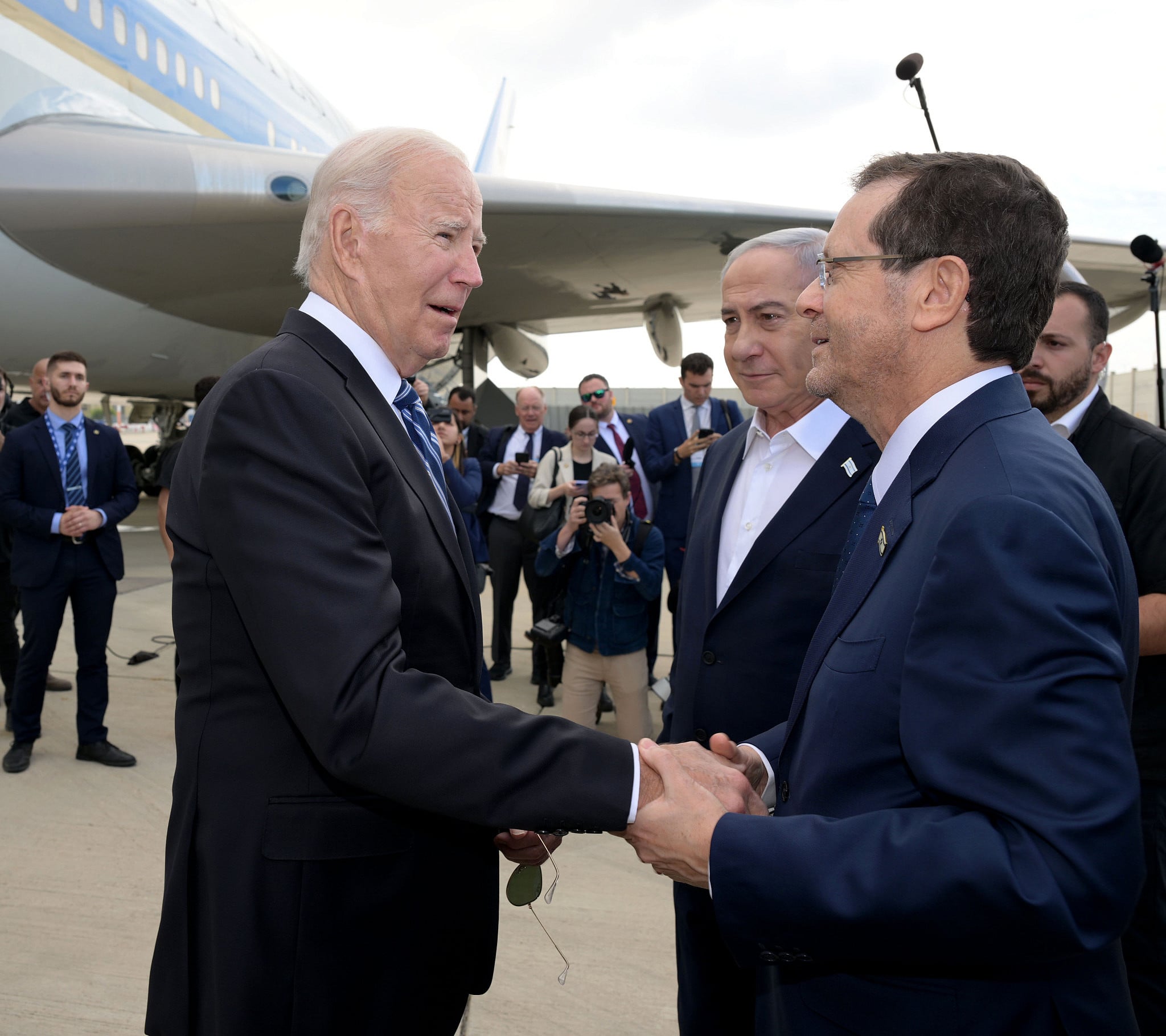
In photo: Prime Minister Benjamin Netanyahu and President Isaac Herzog welcomes United States President, upon his landing at Ben Gurion Airport. — October 18, 2023 (Credit: Avi Ohayon/GPO)
These races should also remind us that debates surrounding Israel no longer fall neatly along party lines. An increasingly significant shift within both parties over Israel, antisemitism, US foreign policy and the future of the American relationship with the Jewish state, could either fracture American Jewry or be a lesson to replenish it.
Meanwhile, Israel is facing its own political crossroads.
Former IDF Chief of Staff Gadi Eisenkot and his Yashar party have emerged as a major challenge to Prime Minister Benjamin Netanyahu and Likud. Recent polling has placed Yashar either ahead of or roughly even with Likud, although Israel’s parliamentary system means that winning the most seats does not automatically determine who becomes prime minister. Ultimately, the ability to assemble a governing coalition of at least 61 members of the Knesset will determine who forms the next government.
Eisenkot is also difficult to place neatly into the traditional categories of “hawk” or “dove.” On security, he has taken positions that could reasonably be described as hawkish. As IDF chief of staff and throughout his career, he has emphasized military deterrence and a willingness to use significant force against threats to Israel. Reuters has described him as a former general with a hard-line security reputation. At the same time, Eisenkot occupies a more centrist political space on several broader questions and has presented himself as an alternative to Netanyahu rather than simply another figure of the traditional Israeli right. In that sense, I would describe him as a mix: hawkish on security, but more centrist in his broader political approach. Professionalism is also a prized value of Yashar.
That distinction matters beyond Israel’s borders. Whoever forms Israel’s next government will inherit not only Israel’s domestic challenges but also the responsibility of managing its relationship with Washington and with a deeply divided American political landscape.

If Netanyahu loses, it will also mark the end of an era for a leader whose fluent English and communication style have made Israeli politics especially easy for me to understand and process. From spending his teenage years in the Philadelphia area to becoming one of the most recognizable and well-spoken Israeli leaders of my generation, Netanyahu has developed a unique ability to communicate Israel’s positions directly to English-speaking audiences. Whatever comes next politically, his departure would represent a significant shift not only in Israeli politics, but also in how Israel communicates with the United States and the broader English-speaking world.
For American Jews watching both elections unfold, the question is therefore larger than who wins any individual race. It is what kind of US-Israel relationship emerges afterward — and what role the American Jewish community will play in sustaining, challenging and shaping that relationship for the next generation.
For whoever votes, we are the ones who will ultimately decide where the Jewish future is headed.
Related Topics
Related Posts