
The views expressed herein are solely mine.
Forget Jakarta: Why Israel Must Pivot to Timor
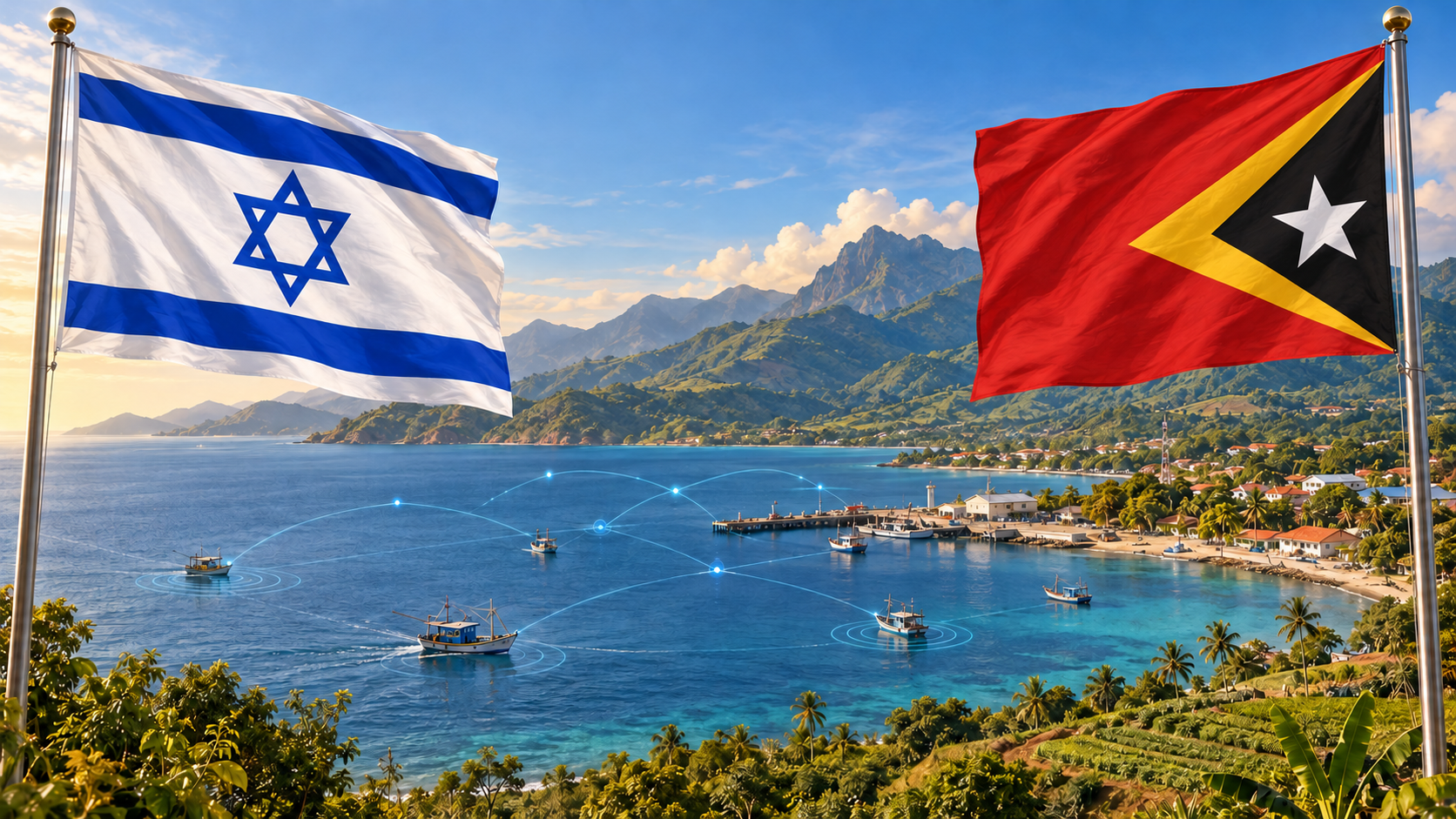
Credits: AI-Generated Image.
Indonesia’s refusal to grant visas to Israeli gymnasts for the October 2025 World Championships, followed by the International Olympic Committee’s formal termination of hosting discussions, exposed the hard limits of Jakarta’s so-called “pragmatism.” This diplomatic hardening culminated on September 19, 2026, when President Prabowo Subianto openly embraced anti-Israel rhetoric at the Darussalam Gontor centenary, chanting “Free Palestine” and describing Palestinians as “massacred, bombed, and attacked continuously.” This public posture, paired with a joint statement alongside Egyptian President Abdel Fattah el-Sisi condemning Israeli communities in Judea and Samaria, aligns with deep-seated domestic constraints. Because Indonesia’s restrictive, multi-agency calling-visa system serves as a tangible expression of its broader ideological refusal to recognize the Jewish state, Jerusalem must abandon the geopolitical illusion that a formal peace agreement is achievable in the near term with the world’s most populous Muslim nation. Instead, a sovereign Timor-Leste offers a highly strategic alternative channel to start acting now.
Historically, Israel has thrived by bypassing hostile major powers through peripheral diplomacy. In early 1961, a small Israeli agricultural team embedded in newly independent Tanganyika, establishing critical water-management networks before sub-Saharan states cut relations after the 1967 war. That low-visibility engagement proved that Israel can project power and build lasting technical capacity in vulnerable states facing regional intimidation. Today, Timor-Leste—sovereign only since 2002 after decades of brutal Indonesian occupation—faces analogous pressures. Incomplete land and maritime boundary talks with Jakarta leave the young nation economically exposed. In fact, Prime Minister Xanana Gusmão has warned that illegal fishing alone plunders hundreds of millions of dollars from Dili annually. Simultaneously, Timorese police arrested hundreds of foreign nationals in transnational scam-center operations between August 2025 and mid-2026, confirming that weak local regulation attracts predatory syndicates. These critical security vacuums create a perfect opening for specialized Israeli capabilities that Indonesia refuses to tolerate.
To neutralize these asymmetric threats, Jerusalem should immediately establish a “Scam Shield Pact.” By embedding joint analytical cells armed with Israeli AI-fusion platforms, digital forensics, and blockchain transaction tracing, Dili can systematically dismantle active cyber-scam compounds. Furthermore, these advanced toolkits will also harden Timorese digital-identity systems against the subversion already bleeding through Oé-Cusse. Ultimately, sharing real-time intelligence on regional syndicates will transform Timor-Leste into a vital digital tripwire in Southeast Asia—all without requiring a permanent Israeli military footprint.
Simultaneously, an “Island Resilience Laboratory” must be deployed to safeguard Timorese sovereignty. This initiative will use commercial satellite tasking and AI-driven maritime domain awareness to patrol exclusive economic zones and halt rampant fishing losses. Crucially, Israel can provide independent technical data packages to strengthen Dili’s leverage in maritime boundary negotiations, without needing Indonesian approval. To anchor this alignment, existing agricultural exchanges that send Timorese trainees to Israel should expand into a permanent tropical arid-tech center that will yield climate-resilient crop protocols designed for island export.
Alongside maritime defense, Dili must introduce a “Sovereign Digital Governance Stack” to insulate it from hostile interference. Implementing advanced encryption standards and procurement anomaly-detection algorithms will effectively block the corruption pathways that transnational crime exploits. Finally, a “Quiet Capacity Corridor” will maintain a discreet liaison on crime flows, telemedicine, and disaster-response protocols. This low-visibility framework successfully circumvents Indonesian restrictions while seamlessly leveraging Israel’s existing non-resident representation in Singapore. Most importantly, every component of this strategy exploits verified Timorese requirements while demanding minimal Israeli resource outlays.
In the end, these steps revive Israel’s classic periphery doctrine for the modern era. By equipping Timor-Leste with the tools for revenue protection and institutional resilience, Jerusalem gains a critical Southeast Asian partner whose unique cyber and maritime challenges perfectly match the Jewish state’s technical strengths. While Jakarta’s performative hostility slams the door on direct engagement, Dili offers a wide-open strategic pathway. Though coordination with regional actors like Australia remains essential, the immense strategic return far outweighs Israel’s limited commitment and secures a better diplomatic future for it at the United Nations.
Related Topics
Related Posts