
Forgetting the Hostages Would Be a Greater Defeat Than Letting Hamas Survive
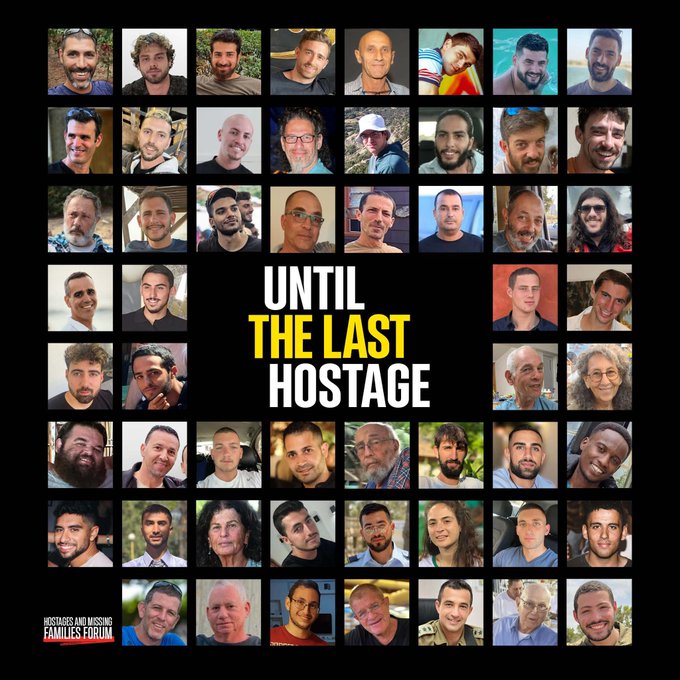
The world is watching a crisis that tests not strategy but humanity. Across the conflict zones, hostages remain in captivity, held by Hamas, an organization whose ideology thrives on terror, cruelty, and the manipulation of innocent lives. Headlines focus on military victories, territorial gains, and the elimination of threats. But the moral test of our time is not whether Hamas survives another day. It is whether the world acts decisively to save the hostages. Failing them would be a tragedy far greater than any temporary endurance of an armed group.
Hamas is dangerous. Its survival poses a threat. Yet danger alone is not the measure of moral failure. Moral failure occurs when we allow the innocent to become collateral in political calculations. Every day a hostage remains captive, every hour a family waits in agony, the world faces a stark question: will we act to save them, or will bureaucracy, pride, and ideology dictate their fate?
Some argue that negotiating with terrorists emboldens them. Others claim concessions equal weakness. These arguments collapse under the weight of human life. Hostages are not bargaining chips. History proves this point. Inaction, rigid ideology, and political posturing have led to preventable tragedy countless times. In contrast, persistent diplomacy, creative problem-solving, and international pressure have rescued hostages even in seemingly impossible situations. Moral courage is not weakness—it is strength in action.
Consider past conflicts where hostages were freed through relentless negotiation. Every story is a reminder: the lives of the innocent are worth extraordinary effort. Back-channel diplomacy, coalition pressure, and innovative solutions have saved lives in situations that seemed hopeless. Ignoring these options in the name of principle is neither pragmatic nor ethical. It is a failure to act according to the most fundamental responsibilities of leadership and citizenship.
The consequences of neglect are not abstract. Every hour in captivity deepens trauma; every day of delay risks lives; every hesitation diminishes our moral authority. Treating hostages as secondary to military or political goals redefines victory as hollow. The survival of Hamas may be regrettable, but the preventable suffering—or death—of hostages is irreversible. That is the tragedy that will linger long after the battles end.
This is a test of decency. Hostages are not pawns; they are parents, children, spouses, friends. Their lives are of intrinsic value, and the world must act accordingly. Anything less is moral failure, masked by rhetoric and ideology. True strength is not measured in the survival of enemies, but in the protection of those who cannot protect themselves. Leaders and negotiators must make the uncomfortable decisions required to save lives.
We have the tools, the moral imperative, and the means. What is lacking is collective will—the courage to place humanity above ideology, action above pride, and compassion above political theater. Every decision, every delay carries consequences. To forget the hostages is a catastrophe beyond calculation. Hamas may endure, but the stain of inaction will endure far longer.
The real tragedy is not Hamas surviving another day. It is the world failing the hostages. It is letting political calculations outweigh the moral obligation to act. History will not remember whether Hamas survived a particular campaign. It will remember whether we honored our obligation to protect the innocent, even when doing so was difficult. That memory is lasting. That judgment is unavoidable.
Every hour matters. Every moment counts. Governments, coalitions, and leaders must summon the courage to act decisively. The lives of hostages demand nothing less. Anything short of urgent, creative, and persistent action is unacceptable. This is the measure of our humanity. Forgetting the hostages is a failure we cannot recover from; letting Hamas endure is a temporary, regrettable reality—but one we can face if, and only if, we save those in our care.
The choice is ours. History will judge us not for our victories or defeats on the battlefield. It will judge us for the lives we chose to save—or the lives we let slip away. Ignoring the hostages would be a greater defeat than letting Hamas survive. And that is a defeat the world cannot afford.