Staff Correspondent, Netra News
Forgotten citizens: Indigenous Bedouins of the Negev
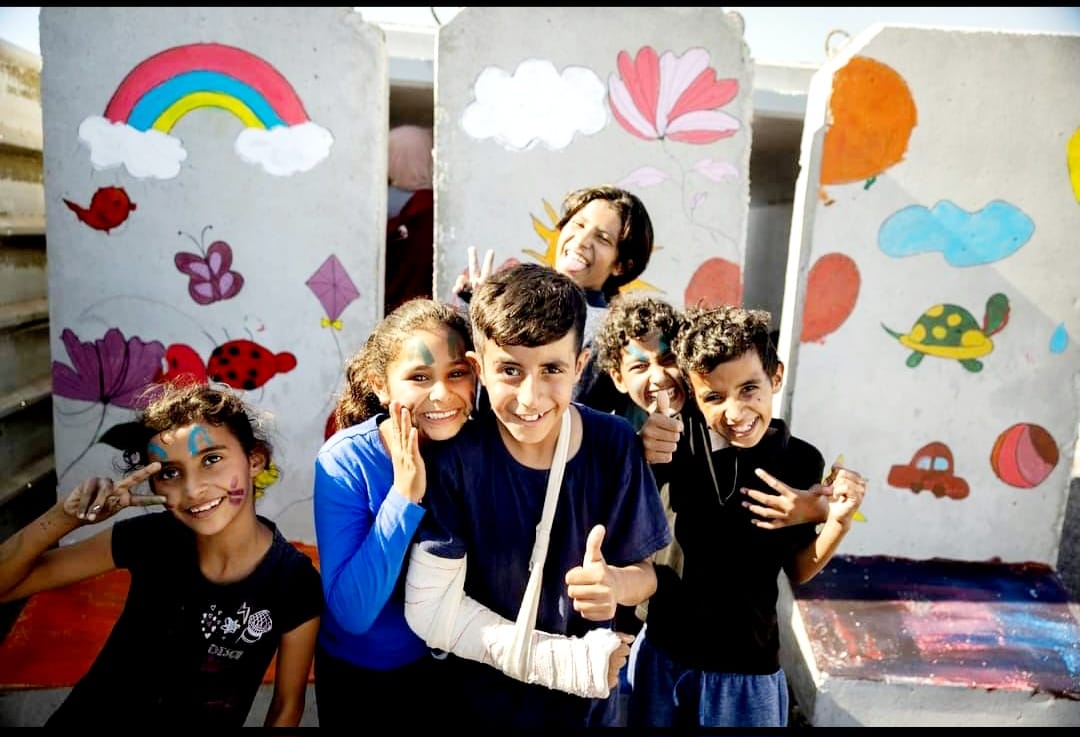
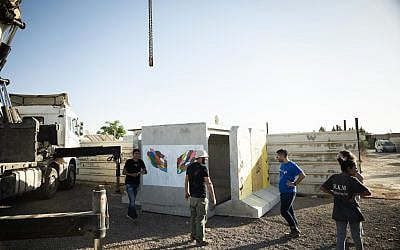
IsraeAID and AJEEC-NISPED bring rocket shelters to unrecognized Bedouin villages. (IsraAID)
The Negev Desert is the ancestral homeland of the indigenous Bedouins, a semi-nomadic people whose roots in the region date back centuries. Today, over 300,000 Bedouins remain an invisible population — living under the shadow of systemic neglect. Though citizens of Israel, the Bedouin community has for decades found itself caught in the paradox of formal citizenship and social exclusion. This exclusion reflects a hierarchy of citizenship in which Bedouins — despite, in some cases, serving in the military and contributing to the economy and culture — are treated as second-class citizens. Recent wartime events, including the October 7 attacks and the more recent Israel-Iran war, have once again underscored the state’s longstanding failure to treat its Bedouin population as equal citizens.
Historical Footprint and Marginalization
The Bedouins trace their lineage in the Negev back to at least the seventh century. In the 1970s, the Israeli government initiated efforts to sedentarize the Bedouin population. The creation of seven government-planned towns—such as Rahat, Hura, and Segev Shalom—was intended to provide infrastructure, education, and services. But these towns, while an improvement in some respects, were often under-resourced and bore the scars of top-down planning that clashed with tribal structures and socio-economic needs. Unemployment and poverty soared. Many Bedouins viewed the towns as a cultural straitjacket.
At the same time, tens of thousands of Bedouins continued to live in unrecognized villages—settlements without official status, often lacking electricity, water, sewage, or schools. There are over 30 such villages in the Negev today. Residents live under constant threat of home demolitions, evictions, and legal battles over land ownership.
A Community Exposed in Times of War
Despite being citizens of the State of Israel, Bedouins in unrecognized villages found themselves without bomb shelters, warning sirens, or even basic emergency instructions in Arabic. Entire families huddled together in makeshift shelters, exposed to missile threats with no protective infrastructure. The irony is stark: while Israeli cities were shielded by the Iron Dome and reinforced bomb shelters, Bedouin citizens had little more than sand dunes to protect their children.
This scenario is not new. During the October 7 attacks led by Hamas, Bedouin communities again bore the brunt of the violence and chaos without the protection or attention afforded to other citizens. Several Bedouin men and women died—some while trying to help others escape. Yet in the aftermath, their deaths were scarcely acknowledged by the Israeli state, further emphasizing their peripheral status in the national consciousness.
Displacement
Israeli authorities have repeatedly demolished Bedouin villages and homes in the Negev region, with significant incidents in recent years:
Al-Araqib Village
Al-Araqib, an unrecognized Bedouin village, has been demolished multiple times by Israeli authorities. As of March 2025, it had been demolished 238 times over 15 years. Despite these demolitions, residents continue to rebuild their homes each time.
Wadi al-Khalil
In May 2024, Israeli forces destroyed around 50 homes in Wadi al-Khalil, a village near Hura in the southern Negev desert. The community, consisting of approximately 500 individuals, expressed anger and distress over the demolitions, which left many without shelter.
Ras Jrabah
A village with over 500 residents faced a court order in June 2024 for demolition and evacuation by December 31, 2024. The Israeli government plans to expand the nearby Jewish city of Dimona into the area, raising concerns about forced displacement.
In 2023, Israeli authorities demolished over 3,280 Bedouin structures in the Negev, marking a significant increase compared to previous years. These actions have led to widespread displacement and a lack of basic services for many Bedouin communities in the region.
Civil Society: Filling the Gaps
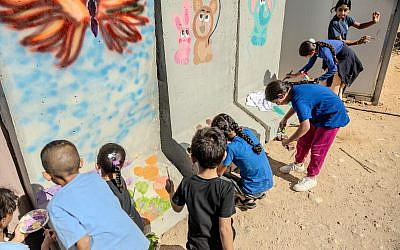
Where the state has failed, civil society has stepped in. Organizations such as IsraAID, AJEEC-NISPED, and Standing Together have become lifelines for many Bedouin communities. In the wake of the October 7 attacks and during the Iran-Israel conflict, these groups mobilized rapidly to provide aid, trauma support, and—most notably—shelter.
IsraAID, traditionally focused on international disaster relief, turned its attention inward to assist Bedouins facing internal displacement and insecurity. The organization has worked to provide basic infrastructure and emergency shelters for unrecognized villages, especially during extreme weather events. Its approach—rooted in dignity and community collaboration—offers not just material support but also visibility to an otherwise ignored population.
AJEEC-NISPED, a Jewish-Arab NGO based in the Negev, has long worked to empower Bedouin youth through education, employment, health, and leadership programs. AJEEC works hand-in-hand with Bedouin communities to foster self-sufficiency and build local capacity. Recently, it launched initiatives to build temporary shelters and distribute emergency supplies in unrecognized villages, often relying on donations and volunteer labor.
Similarly, Standing Together, a grassroots movement of Jews and Palestinian citizens of Israel advocating for equality, has taken a more political stance—mobilizing public pressure against discriminatory housing and zoning laws. In times of crisis—whether due to demolitions or natural disasters—it has organized shelters, distributed supplies, and brought national attention to the Bedouins’ plight. Their actions underscore a critical truth: real solidarity means standing with the most marginalized, even when it is politically inconvenient.
Sidreh, another grassroots organization, focuses on empowering Bedouin women through education and entrepreneurship. Young activists—both male and female—are increasingly using social media and legal tools to advocate for land rights, environmental justice, and cultural preservation.
By amplifying the work of these groups, we see a glimmer of hope—a reminder that change is possible when compassion meets action. But civil society cannot bear this burden alone. The time has come for the Israeli government to step up.
The Price of Citizenship Without Rights
The experience of the Bedouin in Israel—especially in the Negev—is emblematic of a deeper crisis: citizenship that is more symbolic than substantive. Though legally citizens, Bedouins remain socially, economically, and politically excluded from the Israeli mainstream. The absence of basic infrastructure during wartime emergencies is not a mere oversight; it is the result of a policy framework that continues to treat Bedouins as outsiders.
What the Bedouin community in the Negev is asking for is justice. Justice in the form of equal access to healthcare, education, clean water, and housing. Justice in the recognition of their villages and culture. Justice in the acknowledgment that being an Israeli citizen must entail more than carrying an ID card; it must guarantee full and equal rights under the law.
Until Bedouins are granted equal rights, access to basic services, and full recognition, the promise of democracy in Israel remains deeply compromised.
Related Topics
Related Posts