
Published author, Jewish educator and scholar
Korach: Unholy Coalitions Cloaked in Holiness
ChatGPT
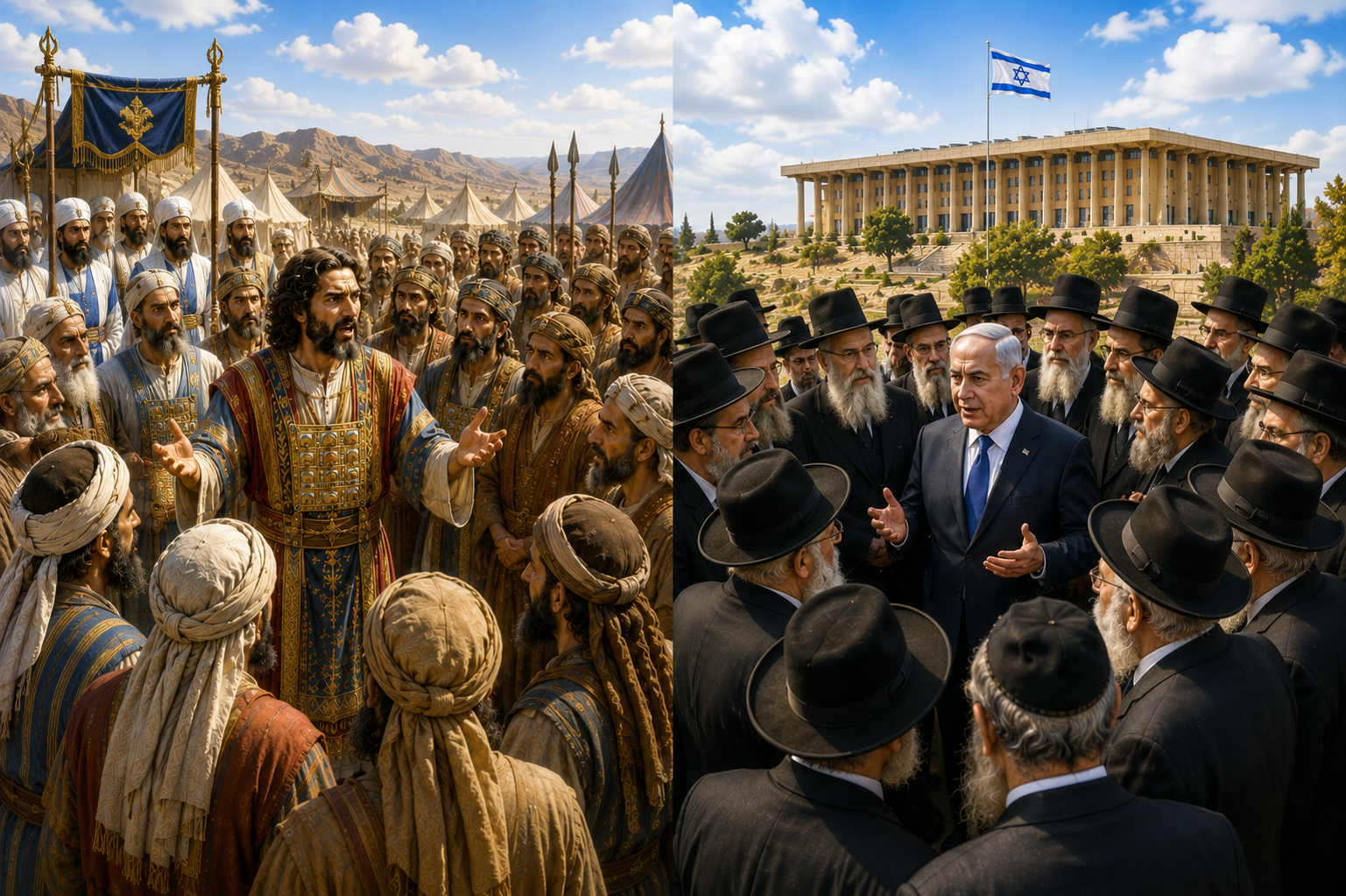
One of the most remarkable features of Korach’s rebellion is the extraordinary coalition he manages to assemble. At first glance, the various groups that join him seem to have little in common.
Korach himself is a Levite whose grievance appears to be that Aaron and his descendants have been granted the priesthood. Datan and Aviram, on the other hand, come from the tribe of Reuven and have no interest in the priesthood. Their complaint is political. Reuven was Jacob’s firstborn, and they may have felt deprived of the leadership role that had passed to Moses from the tribe of Levi and to Judah in the future. The 250 “princes of the congregation” appear to represent yet another group—tribal leaders who resented Moses’ authority and wished to increase their own influence.
What united these disparate factions was not a shared vision but a shared resentment. Each group had its own agenda, yet Korach succeeded in weaving them together under a single slogan:
“For the entire congregation is holy, every one of them, and the Lord is among them. Why then do you raise yourselves above the assembly of the Lord?” (Numbers 16:3)
At first glance, Korach’s claim sounds noble and even democratic. After all, had not God declared at Sinai that Israel would be “a kingdom of priests and a holy nation”?
But Korach’s argument rests on a profound distortion. The Torah indeed teaches that the entire nation is holy, yet holiness does not eliminate distinctions, responsibilities, or obligations. Not every Israelite is a priest. Not every Levite performs the same task. Not every leader has the same role. A holy society is not one without structure; it is one in which each person fulfills his or her unique calling in service of a higher purpose.
Korach transformed a truth into a falsehood. Yes, all Israel is holy. But from that truth he drew the false conclusion that all distinctions are illegitimate and all authority is suspect. His rhetoric of holiness concealed a coalition driven less by principle than by competing interests and personal ambitions.
Perhaps this offers a lens through which to view certain coalitions in our own day.
Many supporters of the current alliance between Likud and the Haredi parties describe it in terms of Torah values, Jewish identity, and the preservation of tradition. Yet one may ask whether the language of holiness sometimes conceals a very different reality. The various partners in the coalition often pursue very different goals. Some seek political power, others sectoral benefits, others the preservation of long-standing exemptions and privileges. What binds them together is not always a coherent vision of Torah or the common good, but a convergence of interests.
The issue is not whether Torah should have a place in public life. Judaism has always insisted that it should. The question is whether Torah is being invoked to serve the nation or whether the nation is being asked to serve political interests cloaked in the language of Torah.
This was Korach’s great mistake. He used the language of holiness not to elevate the people but to advance a political rebellion. His claim sounded righteous, but beneath the rhetoric lay a coalition united not by shared ideals but by shared grievances.
The Torah’s warning is therefore timeless. We should be wary whenever leaders invoke the language of holiness, sanctity, or divine purpose while assembling coalitions whose primary bond is political convenience. Genuine holiness is measured not by slogans but by responsibility, sacrifice, and service to the entire community.
The tragedy of Korach was that he spoke in the name of holiness while undermining the very values that make a community holy. The challenge for every generation is to distinguish between those who use Torah to serve the people and those who use the people in the name of Torah.
Shabbat Shalom.
Related Topics