
Fragmented Truths: Israel, Gaza, and Responsibility
I used to get angry when people abroad – actors, professors, politicians – condemned Israel’s military actions. I saw hypocrisy, selective outrage, and a refusal to acknowledge Palestinian culpability. I believed they ignored the complex truths Israelis face every day.
But something has shifted in me – because something fundamental in Israel has changed.
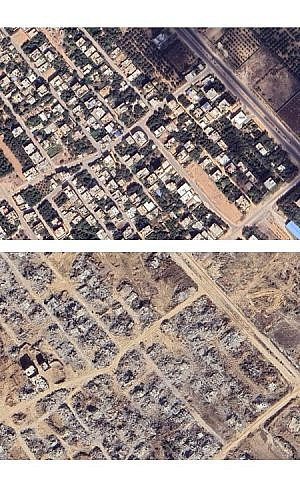
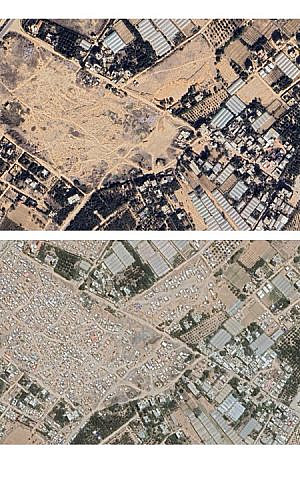
In the wake of the war in Gaza, especially in recent weeks, I can no longer blame those who express disgust at what they see. It’s no longer tenable to deny what’s unfolding on the ground. The asymmetry is undeniable: tens of thousands of Palestinians dead, entire neighborhoods razed, over a million displaced and facing disease and hunger, and an Israeli leadership that increasingly communicates not strategic necessity, but retribution and annexation.
This war may have started as self-defense. But it is now sustained by other forces: Netanyahu’s political survival (acknowledged by a majority of Israelis); the ideological ambitions of Smotrich and Ben Gvir, who envision a maximalist, ethno-nationalist “Greater Israel”; and a desire for revenge after the horrors of October 7.
These are hard truths. And yet, they coexist with another hard truth: Hamas is a genocidal, antisemitic, fundamentalist organization. Its fighters murdered, raped, burned, and kidnapped, and they continue to celebrate 7 October as a great victory. They deliberately embed themselves among civilians. They are not freedom fighters – they are war criminals. But Hamas’s crimes cannot justify Israel’s abandonment of international law, moral restraint, or basic humanity.
“Multiple things are true at once,” writes pro-Palestinian, anti-Hamas political analyst Ahmed Fouad Alkhatib. I concur. We need the courage to hold these multiple truths simultaneously.
Our leaders aren’t even trying to disguise their intentions. Netanyahu boasted about destroying homes to leave Palestinians “nowhere to return.” Heritage Minister Eliyahu suggested bombing food supplies. Smotrich calls for total destruction in Gaza. These aren’t accusations from foreign critics – they are the proud declarations of our own ministers. Should we then be offended when we’re accused of ethnic cleansing, even genocide?
While Israeli media often shields the public from the worst images and accounts – of what’s happening in Gaza and among our own soldiers – truths still penetrate. People are not blind. In a recent poll, 69% of Israelis would support a Trump-led initiative that would free the hostages and end the war. Israelis are beginning to understand the reality of our actions in Gaza. And it’s not one that inspires confidence, pride, or unity.
The government, meanwhile, continues to prioritize its own preservation over the lives of its citizens and hostages. Numerous statements from U.S., Israeli, and Egyptian officials confirm a tragic truth: Netanyahu’s coalition has repeatedly sabotaged or delayed hostage negotiations. Analysts and insiders alike have sounded the alarm. The same is true of the judicial “reform” campaign – a coup in slow motion – which has destabilized the nation and is breaking its democratic institutions. The irony is bitter: Israel once feared becoming isolated by global antisemitism. Today, we risk irrelevance not because of what the world thinks of us – but because of what our leaders have made us become.
International celebrities or campus protestors do not determine whether genocide is occurring. But their voices reflect a growing sentiment – one that Israel ignores at its peril. Of course, many protests are riddled with ignorance, bias, or antisemitism. But it is a profound mistake to respond to all criticism with dismissal or deflection, using the antisemitic brush to ignore all critical voices. The world is watching. And so are Israelis – and many of us are horrified at what we see.
There is space for nuance. The Israeli center and left, so often maligned, includes some of the most dedicated patriots, the loudest voices for peace, and simultaneously the fiercest defenders of Israel and its democracy. That same center and left – leaders of Israel before two decades of Netanyahu – once enjoyed strong bipartisan support in the US. That was before Netanyahu torched that bridge by aligning himself with Donald Trump and alienating half of Washington. Israel needs allies. And it needs to stop confusing loyalty to Netanyahu with loyalty to the state.
It’s a moral failure when we’re angrier at critics than at our leaders’ actions. When using a politician’s own words – his or her public declarations of intent – triggers denial or defensiveness, we are in trouble. The fact is that our far-right coalition does not hide its goals of forcing a million or more people out of Gaza by making life impossible for them. It celebrates them.
With our coup against democratic institutions and our never-ending war for “total victory”, we are looking more like Hungary, Turkey, or Russia by the day. And unlike those nations, we once had a powerful, pluralistic democracy that aspired for peace – flawed, yes, but real. We are losing it.
In this tragic moment, I want to hold space for grief – for our dead, for the murdered, for the hostages, for the civilians of Gaza. And I want to hold space for rage – at our leaders, at their cynical power games, at their disregard for life, dignity, decency and democracy.
Most of all, I want to hold space for truth – not the partial truths that comfort and obscure, but those that demand nuance, empathy, and wisdom.