


I write what I see
Francesca Albanese Lays the Bricks in a Wall of Words
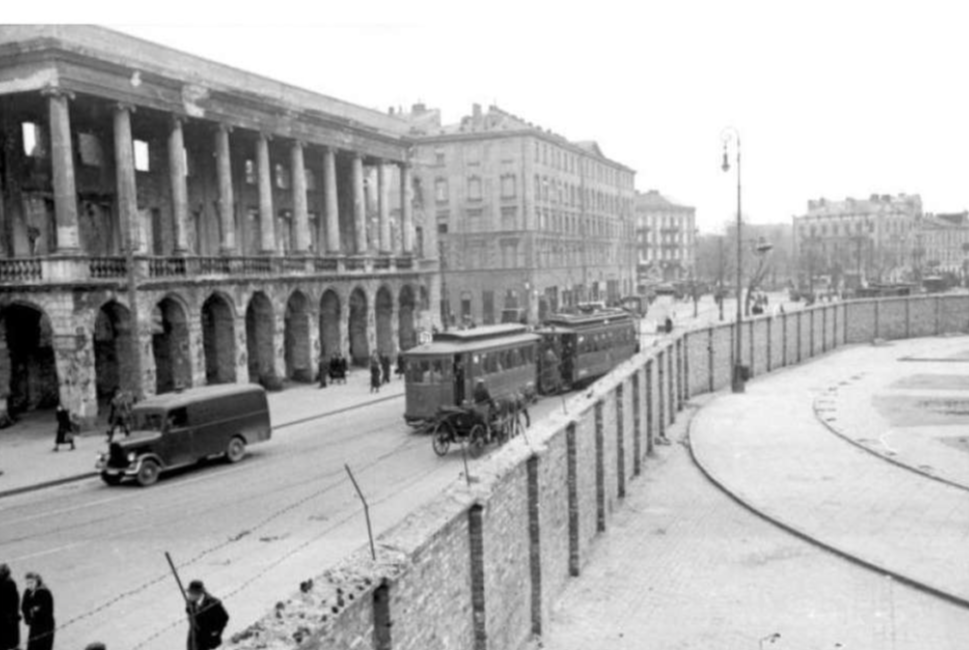
The Warsaw Ghetto wall, 1940. (Public domain / Wikimedia Commons)
At the UN, language has become mortar—each speech, each report, another layer in the wall separating Jews from their own humanity.
- When a wall goes up, it begins with simple words, perhaps even careful words, some even sounding humane. They speak of rights, order, security, and peace. They appear in press releases, resolutions, and news segments that claim neutrality but still reek of bias. Then come the policies, the decrees, the labels that turn language into law. They sound reasonable, even moral. And then one morning, the wall is there.
This week, even the BBC proved the point. The resignations of Director-General Tim Davie and Head of News Deborah Turness weren’t the result of some mythical “Jewish lobby” or hidden pressure. This happened because the network’s performance finally caught up with itself—the gap between what they said and the truth became impossible to ignore. For once, reality broke through the act.
In November 1940, the Nazis sealed the Warsaw Ghetto, trapping 400,000 Jews behind walls. Bureaucrats called it an administrative measure. A year later, on November 16, 1941, Joseph Goebbels wrote, “The Jews wanted the war, and now they have it.” Those words sounded like plain logic to many people. From that point forward they had their excuse; as demented as it was, they convinced themselves that annihilating an unarmed, powerless people was a moral duty—the tragic illusion of a society that saw itself as righteous while committing evil.
What’s shocking, unfortunately, isn’t that people kill—but that an enlightened world could convince itself that genocide was somehow justified. And now that very lesson, the one that should have been remembered, is being turned against Jewish people once again. Have Jews not faced extermination and expulsion in every corner of the world, almost? And then, after October 7, when Israelis were attacked and slaughtered again, they’re the ones being accused of committing genocide.
A war like no other unfolded after October 7: Hamas fought above ground and below it, with an infrastructure of tunnels built for murder and terror, launching attacks from civilian neighborhoods and hiding behind the people they claim to defend. This was not conventional warfare; how could it be with fighters buried under neighborhoods, rockets fired from schoolyards, hospitals used as shields. And yet, after being the targets of that annihilationist campaign, Jews are now accused of genocide.
All logic automatically vanishes when the victims of repeated extermination are blamed for surviving.
This is what makes Francesca Albanese’s words so chilling. What we see is a type of sickening confidence of an educated world that believes its moral vocabulary shields it from cruelty. Her statements sound humane, but they build the same kind of permission structure—the one that begins with justice and ends with erasure.
When Neutrality Becomes a Weapon
The UN created the Special Rapporteur position to monitor human-rights conditions impartially, not to campaign for one side. But Albanese’s hatred for Israel is palpable. She’s in the business of delivering verdicts: “Cut ties.” “Divest.” “Disengage.” Do these sound like the words of a neutral observer?
And when spoken from a UN platform, they don’t stay theoretical either. They ripple outwards through governments, universities, and NGOs, legitimizing hostility and empowering those who mistake moral slogans for justice. They also shape how ordinary people see Jews everywhere. It’s become so pervasive, so culturally absorbed, that it now reaches every layer of society. From diplomats to students, from airport staff to hotel managers, and Facebook cookie baking and neighborhood groups. The hostility has trickled all the way down.
Jews are being chased out of restaurants for wearing a Star of David, cursed at for speaking Hebrew, refused service, denied entry, treated as if existing publicly is provocation. This isn’t hyperbole; it’s happening—daily. The rhetoric that began in UN halls has turned into permission for open hatred on the street.
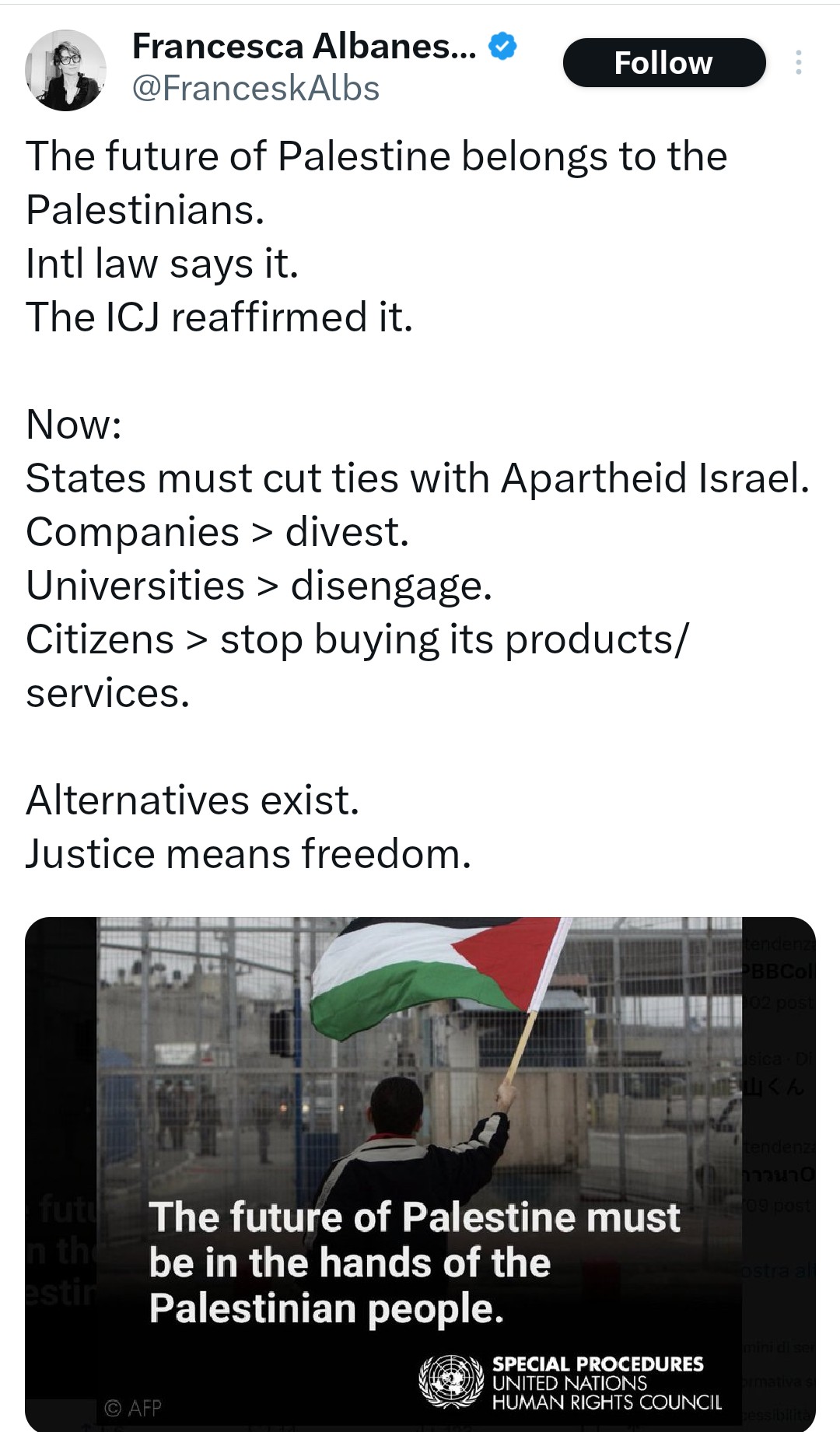
The power of words
Violence rarely begins with weapons. It begins with language that tells people their hate is virtue. When Albanese frames Israel’s existence as an apartheid crime, she transforms Jewish self-defense into aggression and aggression against Jews into justice. Her rhetoric doesn’t really defend human rights. It doesn’t give Palestinians dignity but it sure strips Jews of theirs. To “cut ties” sounds righteous until you ask, and then what?
What happens to coexistence, to Jewish rights, to peace built on compromise? In her world, those questions don’t exist.
The Academic Alibi
Francesca Albanese and Columbia historian Mark Mazower speak in different arenas—one from a UN podium, the other from an academic stage—yet their words feed the same sickness.
Albanese calls for states to “cut ties with Apartheid Israel.” Mazower warns that Jews are “abusing” the word antisemitism until it’s lost meaning. He insists words like genocide or apartheid should remain “open for debate.” Both claim to defend truth; both corrode it.
Since October 7, that posture—the intellectual’s shrug—has only grown louder. Professors call Israel a “genocidal state.” Students chant “resistance by any means,” and those means we have all become privy to . . . But Jewish academics assure us antisemitism isn’t unique, that we’re “overusing” the term.
Mazower laments that academics and students are afraid to speak freely—but what are they afraid of? Losing tenure for saying apartheid? Hardly. The people facing consequences aren’t the ones debating Israel’s policies—they’re the ones glorifying terror. Yet somehow, Mazower’s sympathy is always reserved for them.
Meanwhile, Jewish students are the ones being harassed, doxxed, and blacklisted. Israelis and openly pro-Israel Jews are losing jobs, being excluded from cultural events and sports competitions, told to “keep quiet” if they want to belong. Even my nineteen-year-old son tells me he hasn’t been to a single concert since October 7 without the band members chanting, “F**k the IDF!” Is that not indoctrination? What does Israel or the IDF have to do with a musical concert in Ventura, California? When hatred becomes the opening act, something in society has broken.
And still, they’ll tell you it’s not antisemitism—it’s “anti-Zionism.” As if shouting down Jews, vandalizing synagogues, and celebrating murdered Israelis were just political opinions. Spare me the semantics. It’s the same old hatred, just rebranded for the self-righteous.
The students in Hamas-green bandanas, shouting “resistance by any means,” aren’t afraid—they’re celebrated and supported by their teachers. They march with impunity while Jewish students hide their Stars of David. Not sure about you but I see this as a cultural purge!
Add to this the celebrities and influencers who also glorify “Hamas resistance.” They’ve become one of the most effective weapons in spreading lies about Israel—using their platforms to insert the usual string of buzzwords that vilify anything Israeli. They have the widest reach, and they’re using that power to normalize the idea that hating Jews is virtuous. I applaud anyone who calls them out. I’ve called them out too. They call it solidarity, but it’s propaganda. They’re helping to indoctrinate a generation that no longer knows the difference between rebellion and bigotry.
But how can a historian—someone who knows what words like parasite and Christ-killer once unleashed—treat language so lightly? Words have always been the first stage of violence against Jews. Yet Mazower frets over the comfort of students who shout the modern versions—colonizer, genocidal state, Zionist pig—as though they’re the ones in danger.
He claims the word antisemitism has lost its weight, but he’s the one who hollowed it out. The only word that’s truly lost meaning is apartheid—now flung at Israel by people who couldn’t define it if they tried.
That comparison isn’t new; what’s new is how casually it’s repeated, from professors to influencers to children on TikTok. South Africa was a state built on legislated racial hierarchy. Israel is the opposite—a democracy where Arab citizens vote, serve as judges, lawmakers, and soldiers.
Critics love to sneer, “Arabs have different license plates.” That’s not apartheid; it’s jurisdiction. Vehicles from Palestinian Authority areas fall under different laws, as they would crossing any border. But try explaining that to someone who prefers righteousness to reality.
Meanwhile, regimes that gas civilians and enslave minorities barely register a whisper. No marches or resolutions. Do you see any outrage? Only Israel is treated as humanity’s moral exam.
And the hypocrisy is blinding. The same academics who filled streets to declare that Black Lives Matter suddenly lose their vocabulary when it comes to Jews. They can recite every system of oppression except the one unfolding before their eyes. They recognize racism when it flatters their politics, not when it challenges their vanity.
They see Jews chased from restaurants, synagogues defaced, students threatened, and people have already been killed just for being Jewish. And still they refuse to call it antisemitism. Instead, they mock those who do: Jewish organizations are “hysterical,” complaints are “weaponizing antisemitism.” They speak with that smug tone of superiority, as if they understand Jewish history better than the rest of us, as if hatred against us is theirs to define.
They make antisemitism sound insignificant—not out of open hatred, but out of something more insidious. These aren’t neo-Nazis in basements; they’re Jews with family in Israel, academics who insist they “care.” Yet something in them still drives the need to say the most self-negating things—perhaps to prove they’re objective, enlightened, or above tribal loyalty. It’s a kind of moral exhibitionism: a performance of fairness so exaggerated it becomes a sickening joke.
Voltaire would be proud. The self-proclaimed champion of reason once called Jews “an ignorant and barbarous people,” and convinced intellect excused his contempt. Today’s academics are his heirs—polished, progressive, and just as blind. They wrap old hatred in the language of virtue, certain that sophistication absolves them of their cruelty. As Maimonides warned nearly a thousand years ago, “The greatest evil that can befall man is that he should mistake falsehood for truth.” And there is no greater example of that evil than when knowledge itself becomes the instrument of deception—when historians and scholars, armed with credentials and moral certainty, trade truth for ideology and call it enlightenment.
Once, Jews were “parasites,” “Christ-killers,” “rootless cosmopolitans.”
Now we’re “occupiers,” “colonizers,” “genocidal.”
Different words. Same purpose: to mark Jews as a moral contagion that must be contained. And once again, it’s the intellectuals who refine the vocabulary of hate—so sure their erudition will wash the blood off their hands.
From Bricks to Language
The Warsaw Ghetto was built through paperwork before it rose in brick. Each signature and decree, were a moral permission slip. Today’s walls are rhetorical, made of hashtags, resolutions, and UN reports that divide humanity into victims and villains, where Jewish survival itself becomes suspect. Eighty-five years after Goebbels wrote that “the Jews wanted the war,” a similar impulse remains: to portray Jewish resilience as provocation and Jewish existence as negotiable.
What True Justice Requires
Justice isn’t balance for balance’s sake. Israel has been condemned and scrutinized more than any other nation on earth—by the UN, the media, by academics, by everyone around us, practically. So enough. It’s time to call out the truth: that “human rights” have become a political weapon, that moral outrage is selectively deployed, and that the real obstacles to peace lie in corruption, indoctrination, and the refusal to accept Jewish existence as legitimate.
What UN body is brave enough to address the real barriers to Palestinian freedom: corrupt leadership, decades of indoctrination that vilify Jews and erase Jewish history, and a wider Arab world still unwilling to confront its own legacy of Islamic conquest.
If the region ever had the courage to acknowledge that history—that the land was once wrested from its Jewish inhabitants—then maybe the conversation about freedom could finally begin in truth, not denial.
Francesca Albanese isn’t a victim of UN indoctrination—she’s more like its mouthpiece. The bias against Israel absolutely defines her. She arrived with her conclusions pre-written and her outrage rehearsed.
When she calls for “justice,” what she really means is punishment—not for terrorists, but for Jews who defend themselves. She should be relieved of her position and replaced with someone who understands that human rights apply to all people, including Israelis. Until then, her post remains what it’s become under her watch: a pulpit for lies.
Our sages cautioned,
Wise people, be careful with your words, because words can build worlds or burn them down.
Francesca Albanese’s words don’t promote peace. Mark Mazower’s don’t clarify history. Together they remind us: walls begin with language, and language begins with choice.
*Extra Reading:
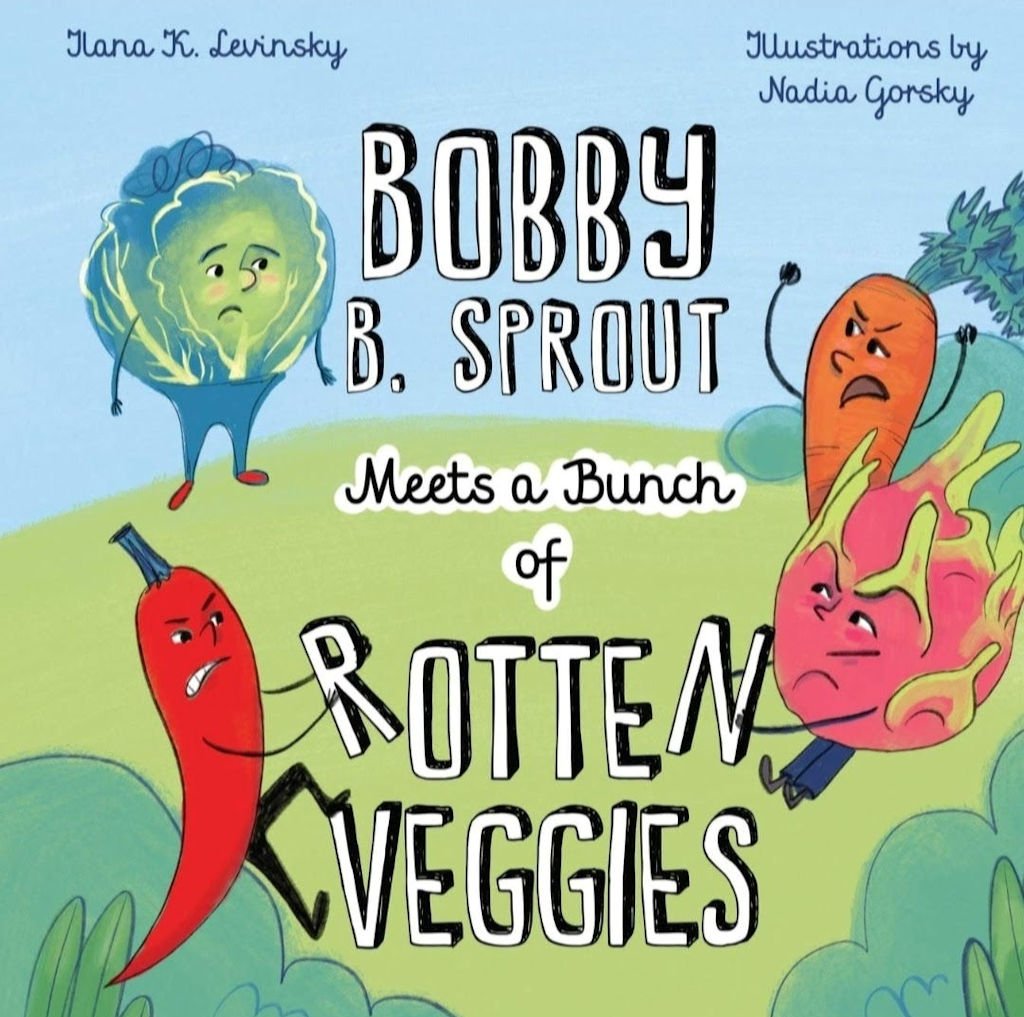
Bobby B. Sprout Meets a Bunch of Rotten Veggies by Ilana K. Levinsky is a charming children’s book that explores themes of diversity, acceptance, and the celebration of individual differences. Follow Bobby B. Sprout on his delightful adventures as he encounters a variety of vegetables, teaching young readers valuable lessons about love, acceptance, and empathy, all with a touch of humor of course! Filled with vibrant illustrations and charming characters, this book is not only enjoyable to read but also serves as a powerful tool in fostering exclusivity and challenging stereotypes from an early age. FInd your copy on Amazon.
Related Topics
Related Posts

