


François Rastier Interview | Alexandre Gilbert #339
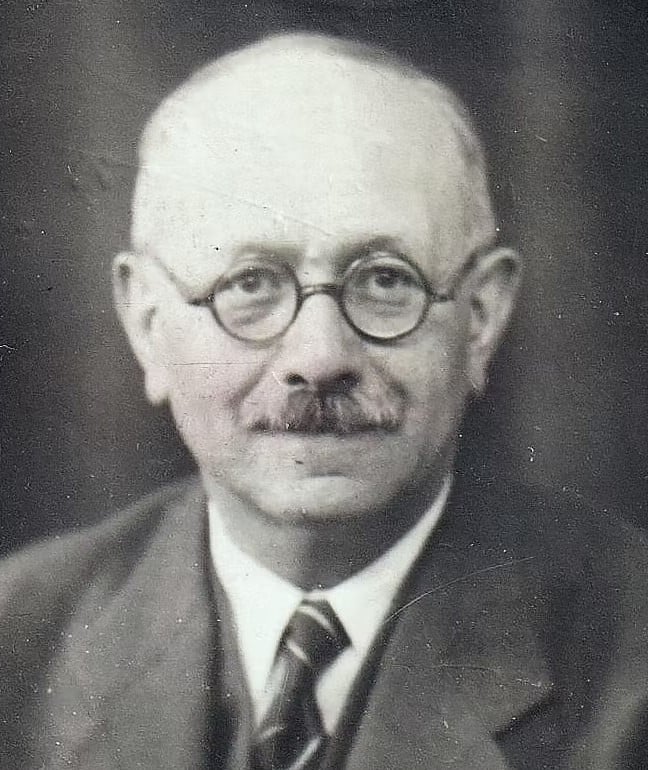
François Rastier, Research Director in Linguistics, specialist in contemporary identity discourses, from Nazism to decolonialism. this article was published on le ddv.fr on July 24, 2026 .
The “Zionist Question” and the Elusive Antisemitism
1/During a France Culture program devoted to Marc Bloch shortly before his induction into the Panthéon, Guillaume Erner raised the issue of contemporary antisemitism with his guest, Patrick Boucheron, professor at the Collège de France. Boucheron replied: “We’ll let you talk by yourself.”
This striking reformulation of the expression “Keep talking!” was all the more shocking because Marc Bloch’s entry into the Panthéon simultaneously honored both a distinguished scholar and a great Resistance fighter who became a victim of Nazi antisemitism.
A column signed by more than one hundred contributors subsequently appeared in Marianne under the title:
“The Return of Antisemitism: ‘What a Professor at the Collège de France Refuses to Discuss Must Be Said.(1)
It opened with a quotation from Marc Bloch, taken from The Historian’s Craft (Apologie pour l’histoire ou Métier d’historien), published posthumously in 1949:
“Misunderstanding the present is the inevitable consequence of ignorance of the past. But no less futile is exhausting oneself trying to understand the past if one knows nothing of the present.”
This quotation is, all things considered, conciliatory—even charitable—because Patrick Boucheron is not ignorant of the present (2). Rather, he adopts a political position that the newspaper L’Humanité praised enthusiastically:
“The historian and professor at the Collège de France has become the target of an offensive by numerous right-wing media outlets—Le Point, Atlantico, L’Express—and of a campaign of denigration on social media, largely fueled by pro-Israeli accounts.
His offense? Having refused to answer a question from Guillaume Erner on France Culture during a program dedicated to Marc Bloch’s induction into the Panthéon. The journalist sought at all costs to have Patrick Boucheron and his colleague Alya Aglan establish a connection between the antisemitism of the Second World War and its ‘resurgence,’ supposedly ‘under the guise’ of the struggle for Palestine, through the use of terms such as ‘Zionists’ or ‘genocidaires.’ Rejecting what he viewed as this crude instrumentalization, Patrick Boucheron replied: ‘We’ll let you talk by yourself.'”
2/Another statement made during the same France Culture interview deserves, in my view, just as much attention:
“So what? Are we supposed to say that Marc Bloch was a Zionist? That would be a historical mistake. […] A historian seeks the truth. On the Zionist question, we know what was in his library, and nothing documents the slightest interest in that question. He was French.”
What, then, is “the Zionist question”?
From Marx’s On the Jewish Question (1844) to Sartre’s Anti-Semite and Jew (Réflexions sur la question juive, 1946), the expression “the Jewish question” has remained deeply embedded in intellectual discourse, as illustrated, for example, by Élisabeth Roudinesco’s Retour sur la question juive (Return to the Jewish Question, 2009). Thus, the expression “the Zionist question” appears to be a direct linguistic calque of “the Jewish question.”
Without claiming expertise in doublespeak, it is well known that one word can conceal another. Heidegger, whose work is imbued with coded antisemitism, once confided to a friend that he occasionally used cover words (Deckname).
The substitution of “Zionist” for “Jew,” and of “Zionism” for “Judaism,” is widely documented. As early as 2011, Dieudonné declared on Iran’s Sahar television channel that “Zionism killed Christ.” Just as the Jew was portrayed as eternal (Der Ewige Jude was the title of a 1940 film personally supervised by Goebbels), Zionism likewise becomes eternal, bearing all of Israel’s sins, including the ancient crime of deicide.
Since doublespeak is not confined to the far right, cover words are also employed on the far left as sectarian signals recognizable to insiders, enabling speakers to avoid legal consequences and, at times, public disapproval. In circles eager to appeal to Muslim voters, “Zionist” appears to have become a cover term for “Jew.”
Thus Julien Théry, a professor at Lyon II University, recently published—in November 2025—a list of “genocidal Zionists to boycott.” Yet this list of alleged Zionists, consisting mostly of artists and media figures, includes only Jews, or people regarded as such (3).
It would still remain to explain why these individuals—placed at risk through public denunciation that no later sanction can truly erase—should also be considered “genocidal,” unless genocidal has itself become a near synonym for Zionist.
In short, a double semantic shift can be observed:
- “Zionist” comes to stand for “Jew.”
- “Genocidal” comes to stand for “Zionist.”
An “inversion of values” thus emerges. Whereas antisemitism had, so to speak, been discredited by the Nazis and associated with the far right, anti-Zionism is now presented as an exemplary struggle, carried out in the name of the oppressed and for the good of humanity (4).
Accordingly, any Jew identified as a Zionist is expected to condemn Israeli policy—or even Israel’s very existence. Such a person becomes an Israeli without realizing it, but at their own peril, for, as Houria Bouteldja, co-founder of the Party of the Indigenous of the Republic (5), once declared:
“One cannot be Israeli innocently.”
Another striking reversal concerns the old figure of the “cosmopolitan.” The uprooted individual whom Heidegger denounced for his lack of rootedness (Bodenlosigkeit) has now been transformed into an Israeli “of native stock,” even if that person has never set foot in Israel.
Indeed, for at least two decades every Jew has increasingly come to be viewed as a potential Israeli. Already in 2004, writing in the radical left journal Mouvements, Alain Dieckhoff argued in his “Reflections on the Zionist Question”:
“Israel is, in reality, the state of the Jews who have immigrated there (its actual citizens) and, virtually, that of the Jews of the diaspora who, although they already possess the citizenship of the countries where they reside, and although their subjective sense of belonging to the Jewish people varies greatly, are all potential citizens of the State.”
3/Why, then, would it supposedly be inappropriate to speak of antisemitism in relation to Marc Bloch?
Boucheron’s concluding remark deserves to be recalled:
“…nothing documents the slightest interest in that [Zionist] question. He was French.”
Yet the implied opposition between Jews—”Zionists”—and the French raises an obvious question.
Years ago, Frédéric Taddeï put essentially the same question to Éric Zemmour on Russia Today (6):
“The more Jewish one is, the less French one is?”
Although rhetorical, the question echoed precisely the principle embodied in the French law of October 3, 1940, establishing the legal status of Jews under the Vichy regime.
Nevertheless, the opposition between Jews and French people—even when reformulated today as an opposition between Zionists and French people—falls under the criticism that Marc Bloch himself expressed in The Historian’s Craft:
“The passions of the past, reflecting the prejudices of the present, reduce human reality to a picture painted only in black and white.”
4/People often refer to “the old antisemitism,” suggesting that antisemitism belongs to the past.
If Patrick Boucheron refuses to express a view on contemporary antisemitism—the phenomenon that Jean Améry already described in the 1970s as the new antisemitism (7), reshaped by the creation of the State of Israel—it is because antisemitism itself appears to have vanished, at least beneath more or less discreet forms of denial, such as the phrase:
“We’ll let you talk by yourself.”
Moreover, certain left-wing intellectuals, such as Mark Mazower, internalize and legitimize this supposed transcendence of antisemitism. According to this view, antisemitism may be obsolete, but the accusation itself is now allegedly instrumentalized by Zionists.
In his recently translated book Antisemitism: Metamorphoses and Controversies (La Découverte, 2025), Mazower argues that the concept of antisemitism has been broadened in order to stigmatize certain criticisms of Israel and Zionism (8).
However, well versed in the verbal paradoxes of deconstruction, the Columbia University professor bases his argument primarily on the history of the word antisemitism rather than on the history of antisemitic acts themselves (9).
Mazower thereby extends the rhetorical question posed by Scott Ury in 2018:
“Why has the traditional Zionist interpretation of Jewish history, society, and destiny returned over the last two generations to become the dominant academic and public framework for researching, studying, and explaining antisemitism (10)?”
Since Jews have been replaced by Zionists, antisemitism—the so-called “old antisemitism”—appears to have disappeared, giving way instead to anti-Zionism, now presented as a moral imperative.
One might welcome such a development, were it not for the fact that, under the banner of anti-Zionism, antisemitic acts continue to multiply both in France and abroad. They are spreading everywhere, including within cultural circles.
I shall cite only one recent example.
Patrick Boucheron served as the scientific director of the opening ceremony of the 2024 Paris Olympic Games. In that capacity, he knows Barbara Butch well, the DJ who headlined the ceremony’s eighth segment.
She has now become the target of what may be described as a campaign of cancel culture.
Responding to a call by a municipal councilor from La France Insoumise, and following a poster campaign depicting her covered in blood—implicitly Palestinian blood—approximately 150 activists carrying Palestinian flags disrupted her performance in Grenoble on July 18, 2026, shouting:
“Dirty Zionist!”
The expression is presented here as a transparent equivalent of “Dirty Jew!”
The demonstration was accompanied by bottle-throwing and the destruction of equipment.
Is this not, the author asks, a militant answer to the “Zionist question”? (11)
One may still ask what Barbara Butch’s alleged crimes were.
Was it being French, with a Sephardic father and an Ashkenazi mother?
Or was it having co-signed a petition supporting a legislative proposal—since withdrawn—aimed at combating “new forms of antisemitism”?
According to the author, the antisemitic activists who attacked her demonstrate that such legislation was far from unnecessary.
As has already been seen in the United States, cancel culture can lead to professional exclusion.
Notes:
2 See L’Humanité: “I usually say that I’m a historian interested in problems that have existed from the Middle Ages to the present day.” The medievalist historian and professor at the Collège de France, Patrick Boucheron, was a guest of Benjamin Patinaud from the YouTube channel “Bolchegeek,” and journalist Mejdaline Mhiri, on April 30, as part of Ça ira!, L’Humanité’s program broadcast live on Twitch. The full interview is available on video at humanite.fr.
3 All it takes to be included is having a Jewish father (like Charlotte Gainsbourg). A foreign-sounding surname can also do the trick, as with Pascal Bruckner’s name. As for Philippe Torreton, he is simply married to a French woman from a Jewish family, and he has additionally dared to criticize Hamas. Between patrilineal Zionists and Zionists by marriage, one enters into a casuistry that strongly recalls the one surrounding the lists of Jews of sinister memory.
4 See the author “Who is ‘the enemy of humanity’?”, Le Droit de vivre, online: https://www.leddv.fr/analyse/qui-est-lennemi-de-lhumanite-a-propos-dun-discours-conspirationniste-de-francesca-albanese-20260225
5 Regarding a Miss Provence whose name had a Sephardic sound to it.
6 As is well known, the policy of Russia Today, a channel suspended with good reason, consisted of turning differences into exclusive oppositions and then into contradictions: that’s fair play in hybrid warfare.
7 See Le nouvel antisémitisme [The New Antisemitism], preface by Eva Illouz, Paris, Les Belles-Lettres, 2025.
8 See the excellent review by Balázs Berkovits, “Antisemitism, a Political Fiction. Regarding Mark Mazower Revue K, en ligne : https://k-larevue.com/penser-lantisemitisme/?
9 The title of the English original is: On Antisemitism: A Word in History (Penguin, 2025). The cover states: “The term enters a zone of turbulence after the Shoah and the creation of a Jewish state in Palestine. While anti-Jewish hatred is declining or going underground in Western societies, attention is turning toward Muslim societies, described by some as the breeding ground for a ‘new antisemitism.'” This amounts to exonerating “societ[ies]…” [text appears cut off]
10 Scott Ury, “Strange Bedfellows? Anti-Semitism, Zionism, and the Fate of ‘the Jews,'” American Historical Review, October 2018, p. 1166.
11 Barbara Butch and her lawyer, Audrey Msellati: “The anti-Zionism invoked in Grenoble was merely the clothing of antisemitism,” Le Monde, July 22, 2026, online: https://www.lemonde.fr/idees/article/2026/07/20/barbara-butch-et-son-avocate-l-antisionisme-invoque-n-a-ete-a-grenoble-que-le-vetement-de-l-antisemitisme_6727479_3232.html. Barbara Butch’s short video is also worth watching: https://www.instagram.com/p/DXjhiJPDV9e/?utm_source=ig_embed&utm_campaign=embed_video_watch_again. Finally, touching on an iconic figure of the LGBT movement, this affair divides the intersectional left, and a critical op-ed was published on July 21 in Libération, signed by various cultural figures, such as Sandrine Rousseau, Pascal Blanchard… and Patrick Boucheron — who no doubt understood that the wind could turn.
See also:
19/7/2018: Dialogue avec François Rastier
*25/9/2019: Heidegger, Moïse et Moix
*18/2/2020: Témoignages et littérature
*18/3/2021: Race et décolonialisme
*7/9/2025: François Rastier Interview | Alexandre Gilbert #295 — « The UN and the ‘Economy of Genocide’ »