
Frankfurt’s Shame: Germany Bows to Tehran’s Threats
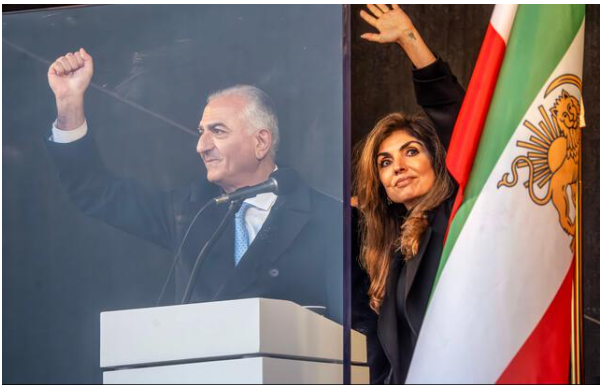
His Royal Highness Crown Prince Reza Pahlavi and His Gracious Lady, Yasmin Pahlavi, Berlin, Germany, 2025. Photograph from the personal Archives of Erfan Fard.—Radio California - Free for Publication on Any Platform.
The Frankfurt issue must be examined beyond a dispute over the holding of a speech. This case lies at the intersection of four issues: the transnational threats of the terrorist regime of the Islamic Republic, the German government’s security responsibility, the activities of espionage and intelligence networks in Europe, and political rivalry among factions ostensibly opposed to the Iranian regime (known as the 3 Corrupt Factions: the Mullahs, the Leftists/ Kurdish Separatists, and the Mojahedin).
The Friedrich Naumann Foundation will award the Freedom Prize to the Iranian people on Saturday, November 7, 2026, at Frankfurt’s historic St. Paul’s Church. Prince Reza Pahlavi, the upright and beloved representative of Iran and the Iranian people and the true leader of the Iranian national movement, will receive it on behalf of a nation. Frankfurt’s municipal authorities have anticipated approximately 30,000 participants at the main gathering and have changed its location for reasons of crowd safety. And it has become… Yet apparently, around 300,000 Iranians from around the world have arrived in Frankfurt.
On the other hand, German news sources have continued reporting on the Prince’s scheduled speech, and no publicly available official statement explicitly prohibiting him from speaking has been found. However, Yasmine Pahlavi’s video must be distinguished from the officially published decision. The German police and counterterrorism authorities, amid an entirely leftist environment connected to the Islamic Republic or the Three Corrupt Factions, are failing to fulfill their duties. The details of the specific threat in Frankfurt remain unclear. Interestingly, Belgium’s defense minister announced today that the Tehran regime had also threatened his country with serious consequences if HRH Reza Pahlavi delivered his speech; nevertheless, the speech took place. This news reinforces concerns about the Islamic Republic’s transnational pressure on European governments.
The psychological and security warfare of the regime and its terrorist, communist, and separatist partners is gradually achieving results through threats without carrying out an attack, further exposing the intellectual poverty and the absence of character and morality within the Iranian opposition.
Through the strategy of Coercion by Threat—coercion through threats and the spreading of lies. In this delusional model, the objective is not necessarily to carry out a terrorist operation. Sometimes, it is enough for an intelligence agency to create a credible and costly threat to force the host government to restrict the target’s political activities.
Yasmine Pahlavi’s account of the police warning makes clear that three possible objectives can be envisaged for those issuing the threats: preventing Reza Pahlavi from appearing publicly, creating anxiety among his supporters, and forcing Germany to accept the political cost of a security restriction. More importantly, the threat shifts from the individual to the crowd. When the person issuing the threat raises the possibility of harming innocent people, German decision-makers are caught between protecting citizens’ lives and safeguarding political freedom.
Yet, in reality, this entire threat of violence is based solely on a delusion. And Germany has humiliatingly surrendered to the threat of terrorism. In other words, threats from a speaker’s opponents have effectively led to the restriction of his right to speak. The Frankfurt threat was based on no specific intelligence-assessed information concerning a possible operation, but rather on a general security warning.
The role of the Islamic Republic’s three intelligence centers must not be overlooked. Within the threat structure, the three organizations whose activities in Germany have been documented by the country’s domestic intelligence service are the Ministry of Intelligence (MOIS), the IRGC Intelligence Organization (IRGC-IO), and the Quds Force. They operate through gathering information about opponents, identifying their connections, exerting pressure on individuals, examining surveillance networks, conducting infiltration operations, digital monitoring, and the possible activities of affiliated agents, as well as using intermediaries and proxy networks for threats or transnational pressure. However, attributing the Frankfurt operation to these three institutions is not rational; organized criminal networks are managed and operated by the 3 Corrupt Factions and the Islamic Republic’s allies.
The negative, ruinous, and destructive role of the Pahlavis’ political opponents in Europe has transformed from political pressure into security cooperation with the regime. These individuals have a history of terrorism. They are not engaged in lawful protests against Reza Pahlavi’s role or political efforts to prevent his presence, but rather have potential involvement in threats or illegal operations.
Over the past month, some Iranian notorious leftist groups and local German political parties, including the Greens, the Left, and Volt, have protested the selection of HRH Reza Pahlavi as the symbolic recipient of the Freedom Prize. Even one Iranian leftist group has formally called for reconsideration of his invitation to the Paulskirche.
From a counterintelligence perspective, I hope it will become clear that an organized connection exists between the opponents’ political campaigns, propaganda operations attributed to Tehran, and possible security warnings, and that there is certainly coordination between these protesting groups and the Islamic Republic’s intelligence agencies in threatening Frankfurt.
However, the German police cannot legally impose such restrictions. Under Article 14 of the Freedom of Assembly Act of the State of Hesse, when a direct threat originates from third parties, security measures must, in principle, be directed against those same parties. Restricting an assembly that is the target of a threat can be justified only under exceptional circumstances, upon establishing necessity, the inadequacy of alternative measures, and the existence of a serious danger to people’s lives and safety. Yet Germany has surrendered to the demands of terrorists with a propaganda apparatus.
The police have prevented the speech solely because of a potential threat from a foreign government. There is no necessity or proportionality in this decision. No classified intelligence indicating an immediate and specific danger that cannot be contained with existing resources, nor any police threat assessment, has been published and, without exaggeration, none exists. Therefore, Germany’s decision was illegal or merely political.
The strategic implications of this issue for European security are also at issue. This case must be examined within the broader framework of “Transnational Repression,” a phenomenon that Germany’s domestic intelligence service has identified in the Iranian government’s activities against opponents abroad.
Three potential consequences are noteworthy: first, a foreign threat aimed at preventing a speech, providing an opportunity for those issuing the threats to exploit the situation; second, the repetition of threats and the increasing burden of protecting political figures in European countries; third, assessing the degree of resistance of democratic institutions to foreign pressure.
But the intelligence assessment is that we face three levels of reality: First, the documented reality: the history of operations conducted by the Islamic Republic’s intelligence agencies against opponents in Europe. Second, Yasmine Pahlavi’s video concerning the Frankfurt police’s imaginary claim of threats against participants’ lives to prevent the Shah from attending and delivering his speech. And the analytical hypothesis: the Islamic Republic and the Three Corrupt Factions are using threats against civilians to restrict the political activities of their opponents on European soil. The German government must protect the lives of those present and simultaneously safeguard their lives and their right to freedom of speech against intimidation by a foreign power. Yet here, it has sacrificed one for the other.
If a foreign threat actor can achieve its objective merely by creating fear, the success of the operation will not necessarily depend on firing a bullet or detonating a bomb. This is precisely the danger that transforms the Frankfurt case from a policing dispute into an important issue in European national security studies.
The negative, ruinous, and destructive role of the Pahlavis’ political opponents in Europe has transformed from political pressure into security cooperation with the regime. These individuals have a history of terrorism. They are not engaged in lawful protests against Reza Pahlavi’s role or political efforts to prevent his presence, but rather have possible involvement in threats or illegal operations. Over the past month, some Iranian leftist groups and local German parties, including the Greens, the Left, and Volt, have protested the selection of Reza Pahlavi as the symbolic recipient of the Freedom Prize. Even one Iranian leftist group has formally called for reconsideration of his invitation to the Paulskirche.
From a counterintelligence perspective, I hope it will become clear that an organized connection exists between the opponents’ political campaigns, propaganda operations attributed to Tehran, and possible security warnings, and that there is certainly coordination between these protesting groups and the Islamic Republic’s intelligence agencies in threatening Frankfurt.
However, the German police cannot legally impose such restrictions. According to Article 14 of the Hessian Freedom of Assembly Act, when a direct threat originates from third parties, security measures must, in principle, be directed against those parties. Restricting an assembly that is itself the target of a threat can be justified only under exceptional circumstances, upon establishing necessity, the inadequacy of alternative measures, and the existence of a serious danger to people’s lives and safety. Yet Germany has surrendered to the demands of terrorists who possess a propaganda apparatus. The police have prevented a speech solely because of a potential threat from a foreign government; there is no necessity or proportionality in this decision. Classified intelligence indicating an immediate and specific threat that cannot be contained with available resources, and the police’s threat assessment, have not been published and, without exaggeration, do not exist. Therefore, Germany’s decision was illegal or purely political.
The strategic implications of this issue for European security are also at issue. This case must be examined within the broader framework of “Transnational Repression,” a phenomenon that Germany’s domestic intelligence service has identified in the Iranian government’s activities against opponents abroad.
Three potential consequences are noteworthy: first, a foreign threat aimed at preventing a speech, providing an opportunity for those issuing the threats to exploit the situation; second, the repetition of threats and the increasing burden of protecting political figures in European countries; third, assessing the degree of resistance of democratic institutions to foreign pressure.
But the intelligence assessment is that we face three levels of reality: First, the documented reality: the history of operations conducted by the Islamic Republic’s intelligence agencies against opponents in Europe. Second, Yasmine Pahlavi’s video concerning the Frankfurt police’s imaginary claim of threats against participants’ lives to prevent the Shah from attending and delivering his speech. And the analytical hypothesis: the Islamic Republic and the Three Corrupt Factions are using threats against civilians to restrict the political activities of their opponents on European soil. The German government must protect the lives of those present and simultaneously safeguard their lives and their right to freedom of speech against intimidation by a foreign power. Yet here, it has sacrificed one for the other.
If a foreign threat actor can achieve its objective merely by creating fear, the success of the operation will not necessarily depend on firing a bullet or detonating a bomb. This is precisely the danger that transforms the Frankfurt case from a policing dispute into an important issue in European national security studies.
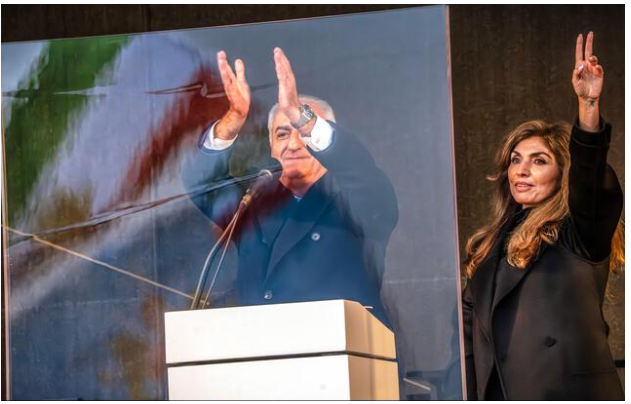
photograph from the Private Archives of Erfan Fard. Radio California /Freely Available for Publication on Any Platform.
May the resounding presence of patriotic Iranians make their demand for freedom and regime change heard across the world, while the shame remains with the German police and government for failing to defend freedom of speech and bowing instead to the threats of terrorism; for what greater disgrace can befall a democracy than to honor the threats of terrorists above the voice of a nation struggling to liberate itself from tyranny?
Related Posts