
Where Objectivity Meets Reality
Freezing the EU-Israel Association Agreement: Symbolism at a cost
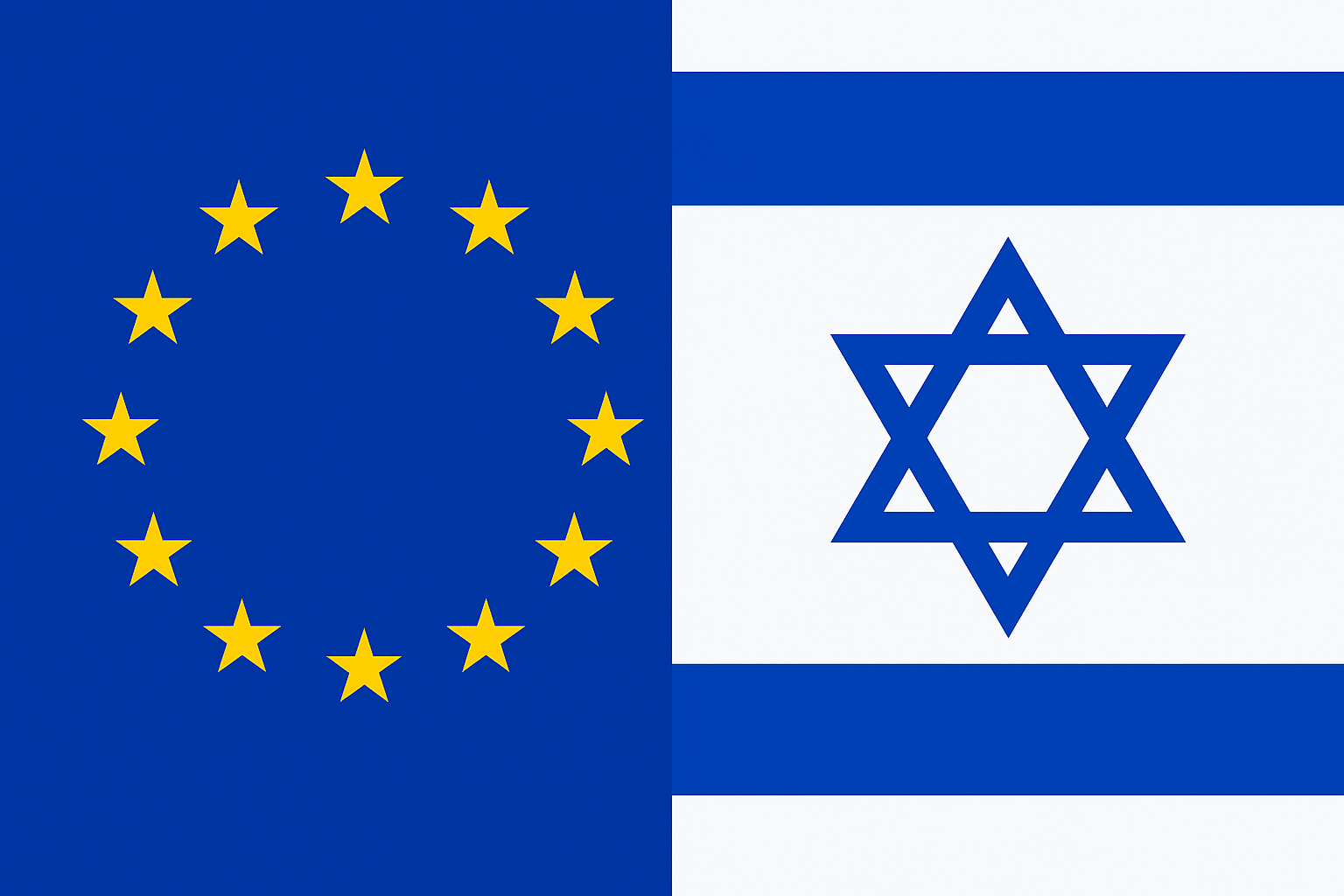
Calls to suspend the EU–Israel Association Agreement in response to the ongoing conflict in Gaza have grown louder in Brussels and other European capitals. On paper, this might look like a principled stance on human rights. In practice, however, such a move risks being short-sighted, inconsistent, and ultimately harmful to both European and Israeli citizens.
The Association Agreement, in force since 2000, is far more than a symbolic pact. It underpins trade, research, innovation, and political dialogue. To “freeze” it would not simply be a moral statement; it would have tangible effects on everyday life. In 2024, the bilateral trade in goods between the EU and Israel reached approximately €42.6 billion, with €26.7 billion in EU exports to Israel and €15.9 billion in imports from Israel.
These figures are not abstract. Israeli exports include high-tech components, medical devices, and pharmaceuticals. Many generic medicines used across European hospitals and pharmacies rely on Israeli production. Suspension of the agreement would likely increase costs, complicate supply chains, and put pressure on healthcare systems. In other words, the immediate “punishment” would be felt not in military circles, but in pharmacy shelves and hospital wards.
The cost of everyday products
The impact extends beyond pharmaceuticals. Israel exports fresh produce and specialty crops to Europe — including herbs, peppers, avocadoes, dates, and figs. In 2022, roughly 7.5 percent of EU imports in the category of avocadoes, dates, and figs came from Israel. Suspension of the agreement would disrupt these flows, resulting in reduced availability in supermarkets and higher prices for European consumers.
Meanwhile, research and innovation would take a major hit. Israel participates in Horizon Europe, the EU’s flagship research program, which has a total budget exceeding €95 billion. Israeli institutions have secured more than €1 billion in funding, much of which benefits European labs, start-ups, and joint ventures. Freezing the agreement would halt this collaboration, reduce funding, and fragment consortia, slowing down innovation in healthcare, climate technology, and digital industries.
In short, the price of symbolism would be borne by citizens — Israeli and European alike. European patients might pay more for essential drugs; European startups could lose partners; Israeli researchers and farmers would see reduced opportunities. Far from targeting government policies, such a suspension punishes ordinary people.
A question of double standards
Europe’s foreign policy is supposed to be grounded in consistent principles. Yet, when viewed in context, the EU rarely applies its standards evenly. Consider China: despite documented repression of Uyghurs and the systematic erosion of freedoms in Hong Kong, China remains Europe’s single largest source of imports, totaling over €517 billion in 2024, without calls to suspend trade.
Qatar continues to supply Europe with energy, even as migrant workers suffered and died building stadiums for the 2022 World Cup. Rwanda, widely criticized for its authoritarian governance and links to exploitation of resources in Congo, remains a partner in European programs for critical raw materials. And even Russia, under sanctions for the war in Ukraine, still exports oil to the EU through exceptions in the Druzhba pipeline to Hungary and Slovakia.
Against this backdrop, singling out Israel for suspension looks less like principled enforcement and more like selective politics. While China, Qatar, Rwanda, and Russia are handled pragmatically, Israel faces swift punitive measures. The result is the perception that Israel is held to a different standard, eroding the credibility of Europe’s moral authority.
Short-sighted politics
Proponents of suspension argue that it would signal moral disapproval and pressure the Israeli government. But signals cut both ways. Weakening ties with Israel does not bring peace closer; it shrinks Europe’s influence at a time when engagement is crucial. It also pushes Israeli innovation further into partnerships with Asia and the United States, leaving Europe at a disadvantage in technology and research.
The damage is concrete. Medical supplies become more expensive, essential crops scarcer, and research collaborations dissolve. European startups lose partners; Israeli small businesses lose markets. And the broader symbolic effect is counterproductive: ordinary Israeli citizens — the ones collaborating with European universities, the ones exporting produce and technology — feel the consequences far more than policymakers in Jerusalem.
Who bears the cost?
European citizens are not immune. Imagine paying more for avocadoes, herbs, or generic drugs. Imagine losing access to cutting-edge technology developed in joint EU–Israel labs. These are not theoretical inconveniences — they are real and measurable costs that directly affect everyday life. Israeli citizens, meanwhile, face the loss of economic and research opportunities that the Association Agreement makes possible.
Policy that targets an entire population for the actions of their government is both ethically and pragmatically questionable. It is collective punishment, not leverage. It undermines the very European values of fairness and consistency that are invoked to justify the suspension.
Conclusion
The EU’s credibility as a principled actor depends on consistent application of its values. If China, Qatar, Rwanda, and Russia can maintain strategic economic partnerships despite human rights issues, why should Israel alone bear the brunt of punitive measures? Freezing the Association Agreement risks reinforcing the narrative that Israel is judged by a different yardstick — not for its actions in Gaza alone, but simply because it is Israel.
This is not principled diplomacy; it is symbolic politics that punishes ordinary citizens and weakens Europe’s influence. In times of conflict, consistency matters. Without it, Europe undermines its own authority while inadvertently harming the very people it seeks to protect.
Factbox: EU–Israel Trade in 2024
-
- Total trade: €42.6 billion
-
- EU imports from Israel: €15.9 billion (pharmaceuticals, chemicals, high-tech)
-
- EU exports to Israel: €26.7 billion (machinery, transport equipment, fuels)
-
- Israel ranked 25th trading partner for the EU
-
- EU ranked 1st trading partner for Israel
Related Topics
Related Posts