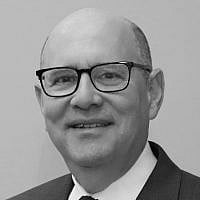
From Aliyah to Today: The Journey of Riva Hadary
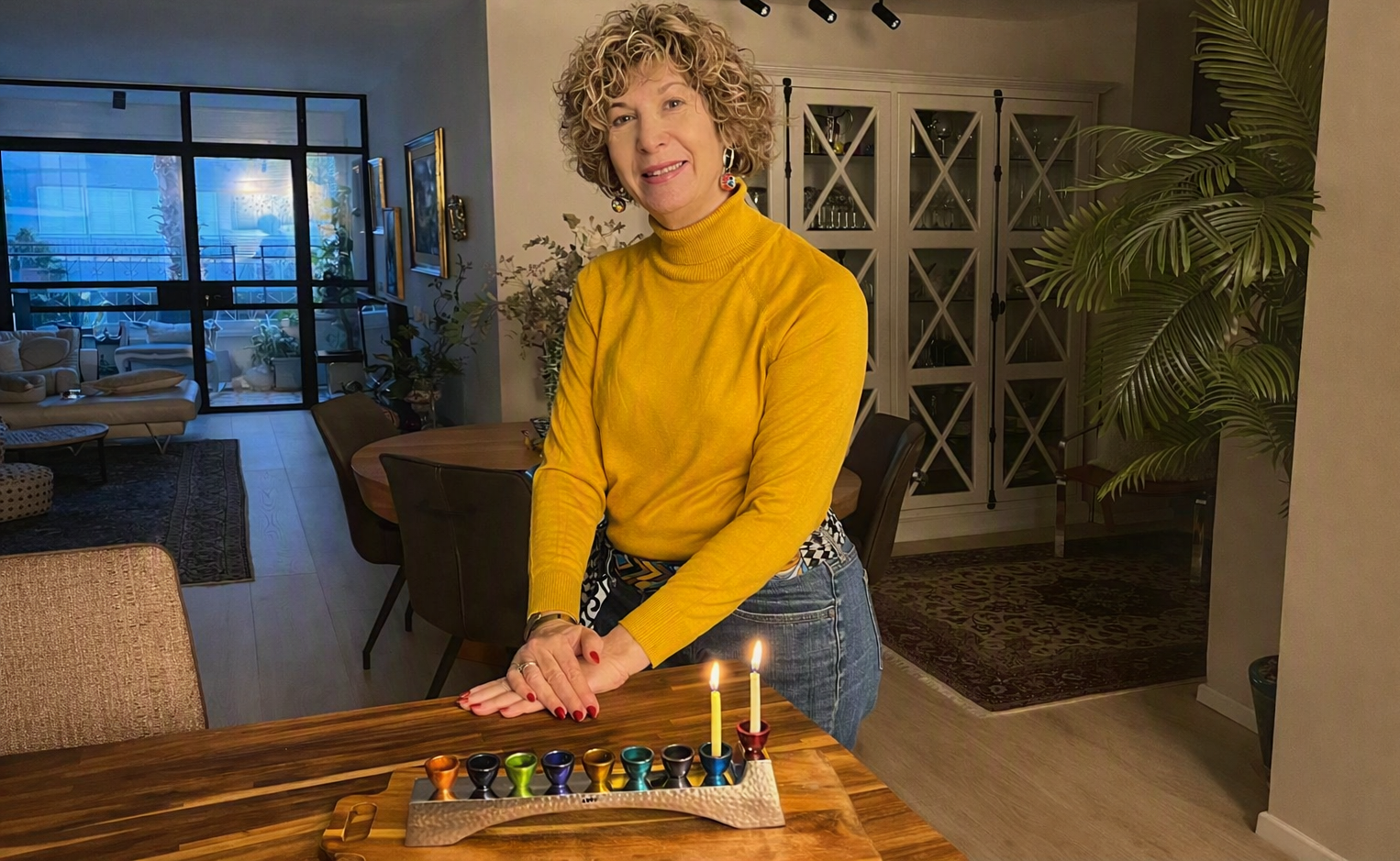
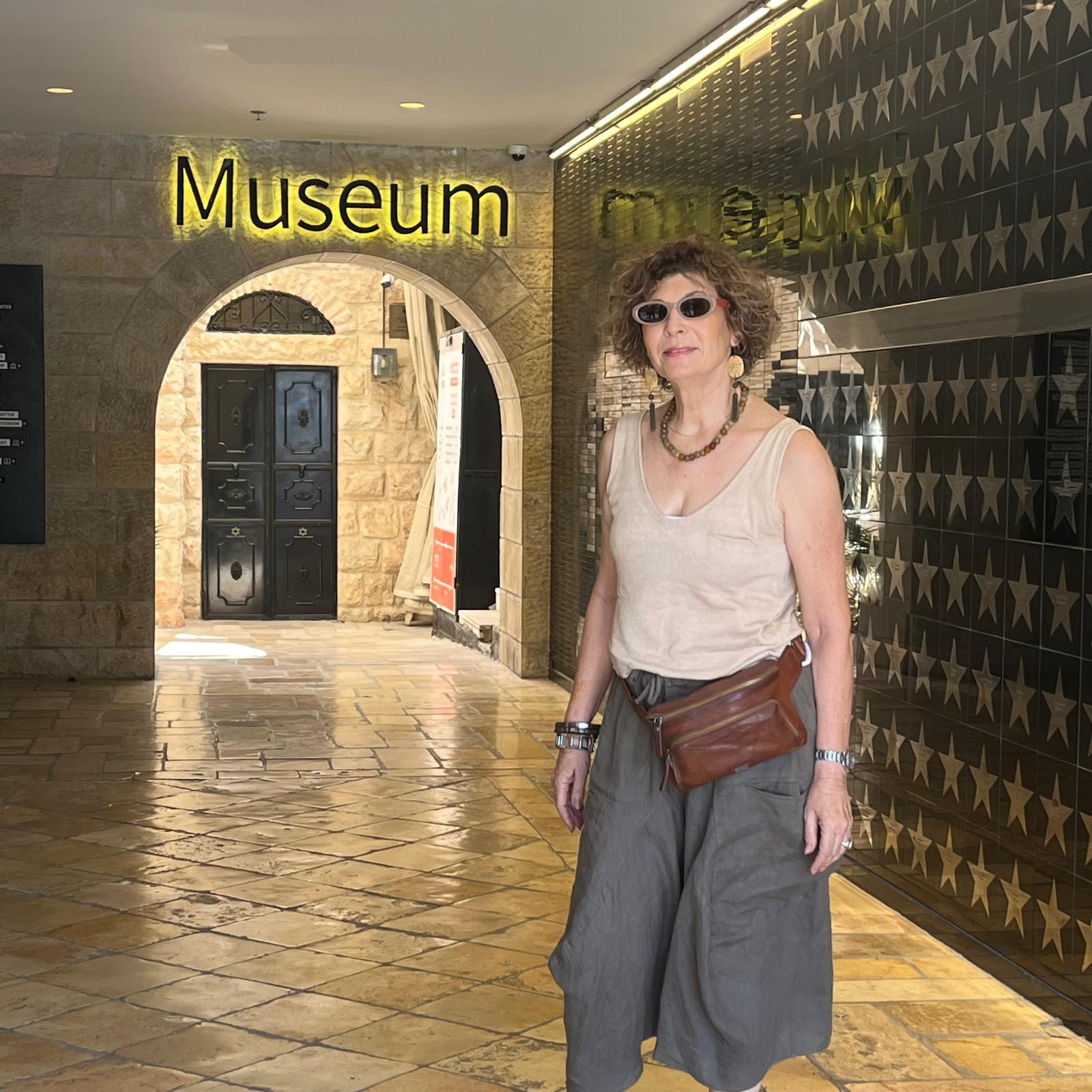
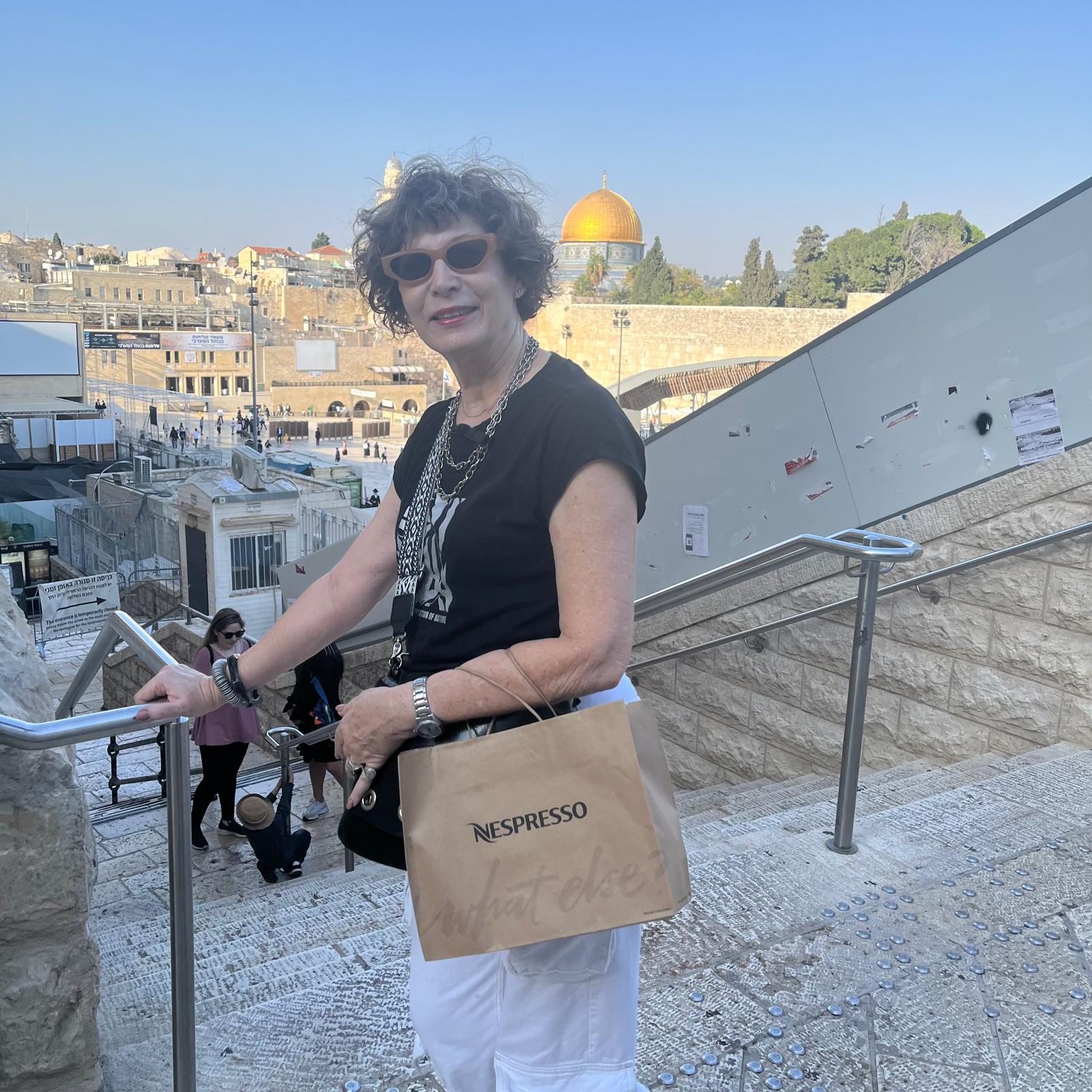
Riva Hadary is a licensed tour guide in Israel who has built a career marked by diverse experiences and a unique ability to connect cultures. Since 2014, she has led groups from Brazil, Portugal, and Italy, offering authentic and enriching experiences in partnership with travel agencies and Israel’s Ministry of Tourism.
In recent years, she has expanded her work into the digital sphere, producing audiovisual content and managing dynamic communication across social media, with the goal of keeping the connection between international audiences and Israeli reality alive.
Her professional journey also includes leadership roles in the cosmetics industry and the real estate sector, always with a focus on management, marketing, and human relations.
Educated in multiple fields—from business administration to mediation and specialized tourism—Riva holds certifications that reflect her pursuit of knowledge and cultural dialogue. She is currently pursuing a B.A. in Humanities, further deepening her perspective on the world and on people.
A polyglot, she speaks Hebrew, Portuguese, English, and Italian, with good proficiency in French. Her communication skills, combined with multicultural experience, make her a professional who moves naturally between different audiences and contexts.
1. Identity and Journey
Looking at your life today, how would you describe who Riva is and what values define her?
Riva is a Jewish woman, a guide in Israel, who studies and dedicates herself to learning more about the words of God and the Torah, bringing together history and archaeology to teach all those willing to learn. She also has a deep love for humanity and takes an interest in every person she meets—especially those in need—always striving to help in any way she can.
2. Languages and Culture
You are multilingual. How has this ability shaped your worldview and integration in Israel?
I don’t consider myself a polyglot, but I speak Portuguese (with an accent), Hebrew, English, Italian, and French. This ability makes it easier to communicate with people in their own language, breaking down barriers and building trust.
Every time I meet a foreign visitor in Israel, being able to converse without language difficulties makes all the difference. Explaining what Israel and the Jewish people are—in their own language—is very important.
One challenge I often face is Bible translation. Today, there are very few legitimate translations. Many translators don’t translate the words themselves but instead explain according to their own interpretation or opinion, which often leads to serious mistakes. My strength lies in Hebrew, and I always correct errors that can sometimes be fatal. This is a skill I developed here in Israel.
3. Personal Interests
Beyond professional and community life, what activities or passions bring you balance and inspiration?
I greatly enjoy physical activity. Every day I practice Tai Chi, I do Pilates twice a week, I walk almost daily, and I also use the elliptical machine I have at home. After exercising, I always meditate. I love dancing—wherever there’s good music, you’ll find me.
But my greatest passion is my grandchildren. I try to see them at least once a week. I have six grandchildren from my three children.
My other great passion is studying the Bible. I participate in an online course once a week, and this study inspires me deeply and strengthens my spirituality.
4. Aliyah and Roots
Your arrival in 1968 marked the beginning of a long journey. What feelings and challenges accompanied that decisive moment of making Aliyah?
The decision to make Aliyah was my parents’, and as a child I accompanied them. I remember it being very emotional for me because I was part of the Zionist youth movement Hashomer Hatzair. For me, it was an honor, and everyone looked at me with pride, as if I were fulfilling the dream of the movement.
But when we arrived in Israel, it was difficult. First, it was one of the harshest winters in many years—it even snowed in Tel Aviv—and we arrived at night. Everything seemed wet, and I wasn’t used to the cold. As we disembarked from the ship (yes, we arrived on the Theodor Herzl), government officials were waiting to give us our new documents as Olim Chadashim—New Immigrants. In fact, the word Olim means “to ascend.” To immigrate to Israel means to ascend spiritually.
The officials wanted to change my name to make it more Israeli, suggesting “Rivka.” I refused and said firmly: “My name is Riva!”
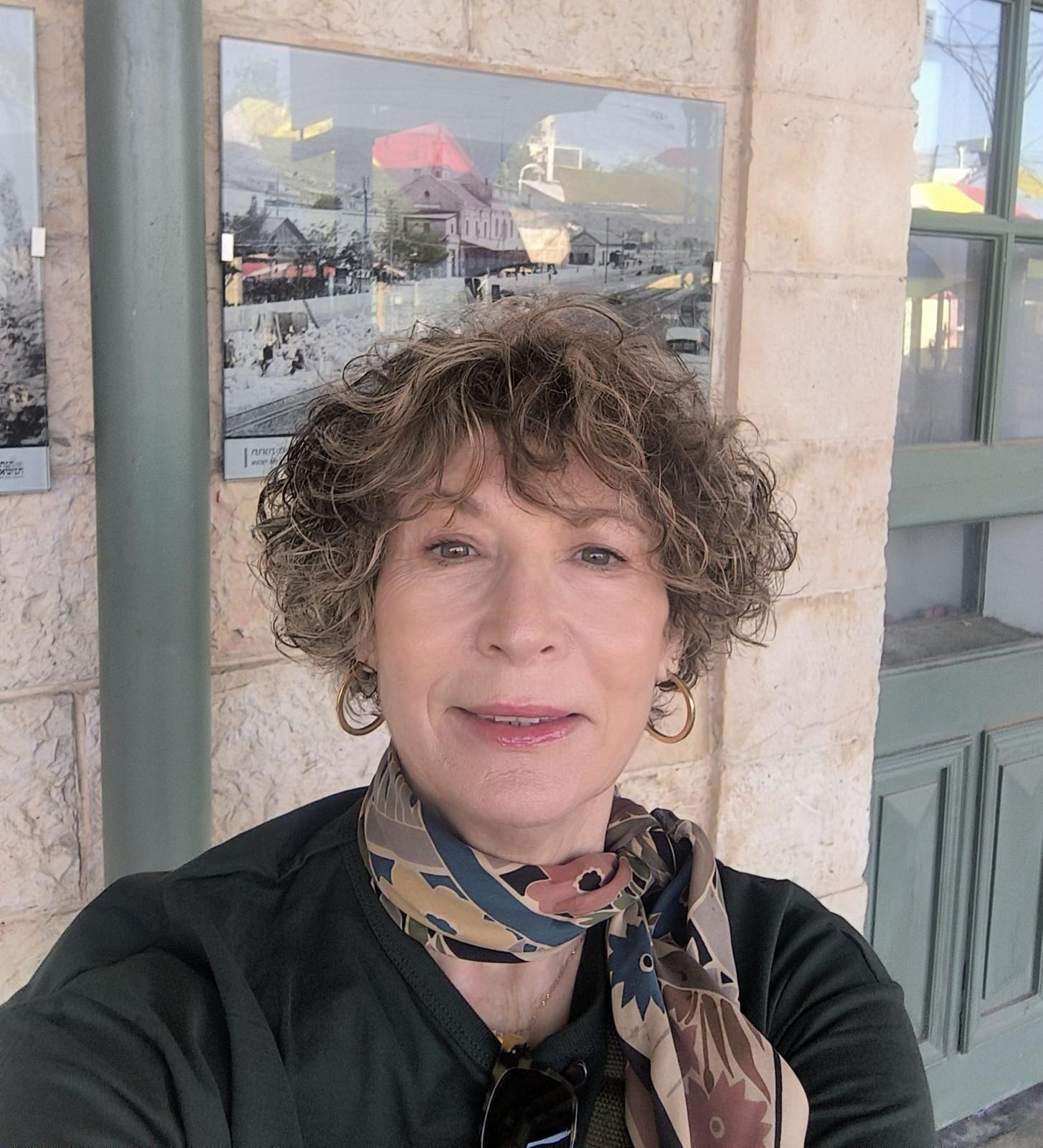
I remember waiting a long time until all the bureaucratic procedures were completed. Finally, we got into a car that seemed very old to me, and we traveled to our new life at Kibbutz Nir Am, located near the Gaza Strip. At that time, there were no problems because it was just after the Six-Day War, and the army was still present. I think my parents had no idea where this kibbutz was; they were simply told it was two minutes away from Kibbutz Bror Hayil, a Brazilian kibbutz where we had family.
5. Kibbutz Experience
The kibbutz was an important part of many Israelis’ upbringing. What memories or lessons from that experience remain with you?
For me, it was traumatic because this kibbutz had never received families who weren’t Israeli. It was founded in 1933 by young people from Eastern Europe, mainly Romania, before World War II. They had no idea how we lived in the Western world. They dressed like characters from 1940s–50s films I had seen on Brazilian television. In fact, they didn’t even know what a television or a family refrigerator was.
Our house was 50 square meters, with a kerosene heater, bathroom-tile flooring, spring beds, and everything very modest—so modest it felt like poverty to me. The smell of kerosene made me sick, but the cold was unbearable.
The next morning, I went to meet my class. At that time in the kibbutz, children didn’t sleep with their parents but in the Children’s House. Parents had no authority over their children; instead, each class had a caretaker. I was given a room shared with three other girls, only one of whom was my age. My clothes were stored in a cupboard outside the room, and showers were communal, without private stalls. For me, it was horrible, especially as I was beginning to show signs of maturity.
This system was part of the socialist education brought from Russia by the Zionist movement. Today it has completely changed, and children sleep with their parents. Back then, I only saw my parents in the afternoon and evening, after dinner in the kibbutz dining hall, before being taken back to the Children’s House. My life changed completely—I no longer had my mother by my side. If I was scared, I had to stay quiet or wait for the caretaker, who at night was someone else in charge of another Children’s House.
School was even worse. I was nine years old, and in Brazil I should have been starting third grade. But in Israel, the school year began in September, so I was behind both in material and in Hebrew. And as we know, children aren’t always kind—when they find someone different and vulnerable, bullying begins.
In Brazil, I had studied at Renascença School in Bom Retiro, São Paulo, and learned Hebrew, but not fluently enough to speak or understand everything. The worst was mathematics. My trauma with math began there because they studied without numbers, using colored blocks: a white square represented 1, a red square represented 2, and so on. They learned math without numbers, and I was completely frustrated.
I was given a private Hebrew tutor—a soldier whose military service was teaching. Her name was Hana. I began to progress in Hebrew, but math with those blocks drove me crazy.
Still, from Kibbutz Nir Am I have friends to this day, and we remain in contact, especially after October 7, 2023. After two years, we left the kibbutz and moved to Jerusalem, where I began to progress—it was a salvation.
That kibbutz experience taught me to defend the weak in society and showed me that cruelty exists everywhere, often rooted in lack of education and tolerance from childhood.
6. Military Service
What was it like to go through the army experience as a woman?
I loved it! It was a unique experience.
When young people turn 18, after finishing high school, each one has a date to be drafted. Mine was July 26, 1976, two weeks after finishing my university entrance exams (which I passed with good grades, even in math).
For two months, I stayed at a military base where we studied the history of Israel and trained with weapons. At the time, it was the Czech Mauser Vz 24 from World War II. It was very funny training with such a heavy weapon. Every morning at 4:00, we had to clean our room—shared by 20 girls—and clean the weapons thoroughly. If the commander found even a grain of sand, you were put on duty and couldn’t go home on Thursday, staying at the base until Sunday while everyone else was with their families.
We also practiced using compasses and maps without Waze. I even did night guard duty from 2 a.m. to 6 a.m.—it was very hard to stay awake and alert, especially with surprise visits from the commander.
After those two months, each girl was sent to a different base to serve two years, depending on her skills. Initially, I was assigned to military intelligence because I spoke French, Portuguese, and English. But since I wasn’t an Israeli citizen (at the time, Brazil didn’t allow dual nationality, and my parents weren’t sure we would stay in Israel), I couldn’t serve in sensitive positions. We were permanent residents as Jews, with identity cards but no voting rights or passports.
In the end, I was sent to the Air Force—not to secret areas, but to the dental clinic that treated all the pilots on the base. That period was wonderful because I gained a profession: dental assistant, trained by the best doctors with excellent equipment.
Another important aspect was being away from family, becoming independent, and meeting people I would never have encountered otherwise. The friendships from that time last a lifetime. You mature, learn to manage on your own without fear, and develop skills that young people elsewhere in the world often don’t acquire until much later, still sheltered by their parents.
7. Israel in Transformation
Comparing the country you encountered in 1968 with today’s Israel, what changes impress you the most?
Wow!! It’s another country entirely!
When we arrived, everything seemed old, worn, almost primitive—like the era of the War of Independence. But from the 1980s onward, everything changed. Israel became a super-modern nation, with almost everything automated. Homes now have robots that clean and wash the floors. In the 1970s, only those with financial means could afford to travel by plane; today, even children travel abroad with ease, and nearly the whole country spends vacations outside Israel. When Dubai first became attractive, Israelis were among the first to arrive. Cars are the latest international models.
Truly, a Start-Up Nation!
We cannot forget that Israel exports its expertise in desalination—taking water from the sea, removing the salt, and producing drinking water. Another vital industry is wastewater treatment, which provides clean water for agriculture. Thanks to this, even in the Judean Desert near the Dead Sea, there is farming, and Israel exports vegetables and fruits to Europe during the winter.
Another detail is that almost everyone speaks English. Children begin learning it as early as second grade. Communication flows easily because Israel is a country of immigrants from many nations, most of whom speak English and other languages as well.
8. Brazil and International Relations
You maintain ties with Brazil. How do you see the country’s current moment and the obstacles to a stronger connection with Israel?
We are in a very difficult diplomatic moment between Israel and Brazil. But as a guide for Brazilian groups for 15 years, I have many friends in Brazil, and they think differently—especially those who visited Israel for the first time, and even those who have come eight times and love this country.
It is very hard to compete with the media, which needs to sell stories to attract audiences. The industry depends on money to survive, and good news about love and peace doesn’t sell—only conflict, misconduct, and violence.
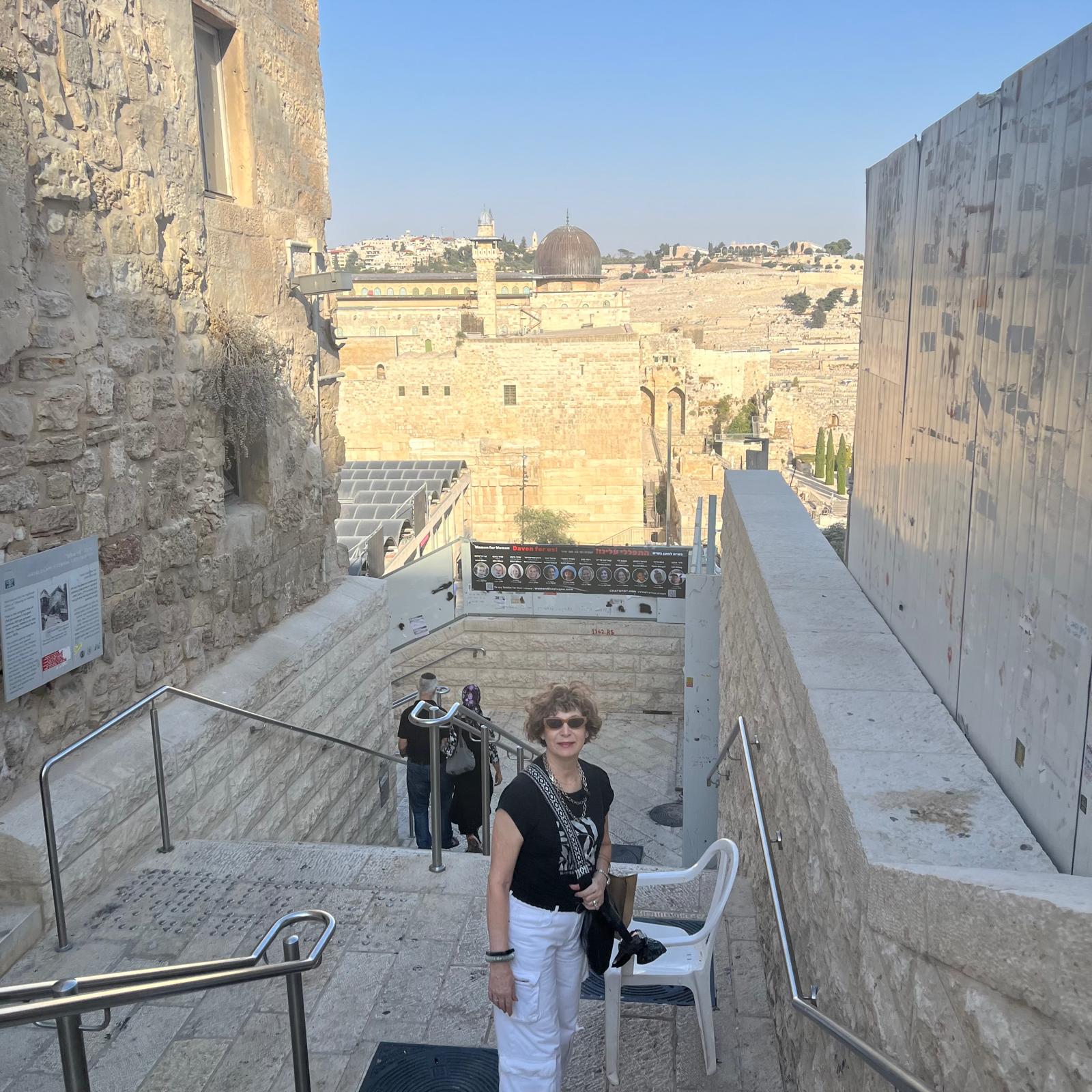
That’s why I don’t get involved in the disputes. Whoever wants to see the truth, I invite them to visit Israel and witness the relationships between Israelis and Arabs. Not everything is perfect, but it is not as the media describes.
9. Contemporary Europe
Europe is experiencing political and social tensions. What is your perspective on the continent’s role in facing global challenges?
This is a very dangerous question. In my opinion and studies, it seems Europe is going through a crisis similar to the one before World War II.
Today, the danger lies in Muslim immigration from various countries. Many do not respect local laws, and wherever they settle, violence eventually follows. Europeans do not understand Arab mentality or the philosophy of their religious leaders, who preach that according to the law of Muhammad, Islam is the true religion, and Christians must die so that the entire world becomes Muslim.
But in the end, the ones who will be blamed are the Jews. I believe many Jews will, and already are, moving to Israel. In France, antisemitism has already crossed the line—11 Torah scrolls were stolen from a synagogue in the outskirts of Paris.
European citizens are protesting against Muslims because cities no longer feel safe. What will happen is that the radical right will rise to power—and we have lived through this story 85 years ago.
Financially, Europe’s situation is in the hands of Arab countries and China, and the debt is enormous.
10 Prosperity and Antisemitism
Israel ranks among the most prosperous countries in the world. How do you reconcile this progress with the troubling reality of rising antisemitism in different regions, where governments are supporting authoritarian states?
This antisemitism against Israel and the Jewish people worries me deeply. It has become very difficult for Israel’s public image—and for Jews worldwide—to confront these absurd and false accusations. It feels as though we are back in the era when The Protocols of the Elders of Zion was published in the early 20th century. Not to mention Hitler’s Mein Kampf, which has been found in several places in Europe, with people reading it and agreeing with its content.
In my opinion, showing the world what happened on October 7, 2023, and letting people see the videos filmed by Hamas, helps them understand who these people are and what their program for Israel truly is.
On Israel’s side, we must continue to be a prosperous country, so we can demonstrate to the world that we are here to stay. Another important point is to remind antisemites to open their cupboards or drawers at home and check where the medicines that save their lives—or those of their families—come from. If we are “monsters,” then how is it that more than 220 Nobel Prizes have been awarded to Jews, including 14 Israeli Jewish citizens?
11. Final Message
What reflection or message would you like to leave for readers who follow your story and worldview?
First, I want people to know that Israel is a fascinating country, and I invite each reader to come and enjoy this Promised Land.
Second, I believe there are no inherently bad people, but rather situations and education that teach children to be cruel, and later, violent adults.
Third, communication: we must understand that every human being is a world of their own, with different behaviors and cultures. We need to accept these differences and respect each person.
At the Church of All Nations in Jerusalem, located at the Garden of Gethsemane—where Jesus/Yeshua (his name in Hebrew meaning “savior”) experienced his anguish before being betrayed by Judas Iscariot—there is a mosaic on the façade. It depicts a child holding a book, with the Latin word IGNORUS. In my opinion, the greatest disease of humanity is ignorance, and the cure for this disease is education.
That is my message: we must invest in the education of children and young people. Instead of developing weapons to kill and destroy, we should print books and encourage people to become teachers with vision.
I want to conclude with the words of Yeshua, quoting from Leviticus 19:18, repeated in the New Testament in Matthew 23:37–40:
“Love your neighbor as yourself.”