CEO of Time to Stand Up for Israel
Ungrateful
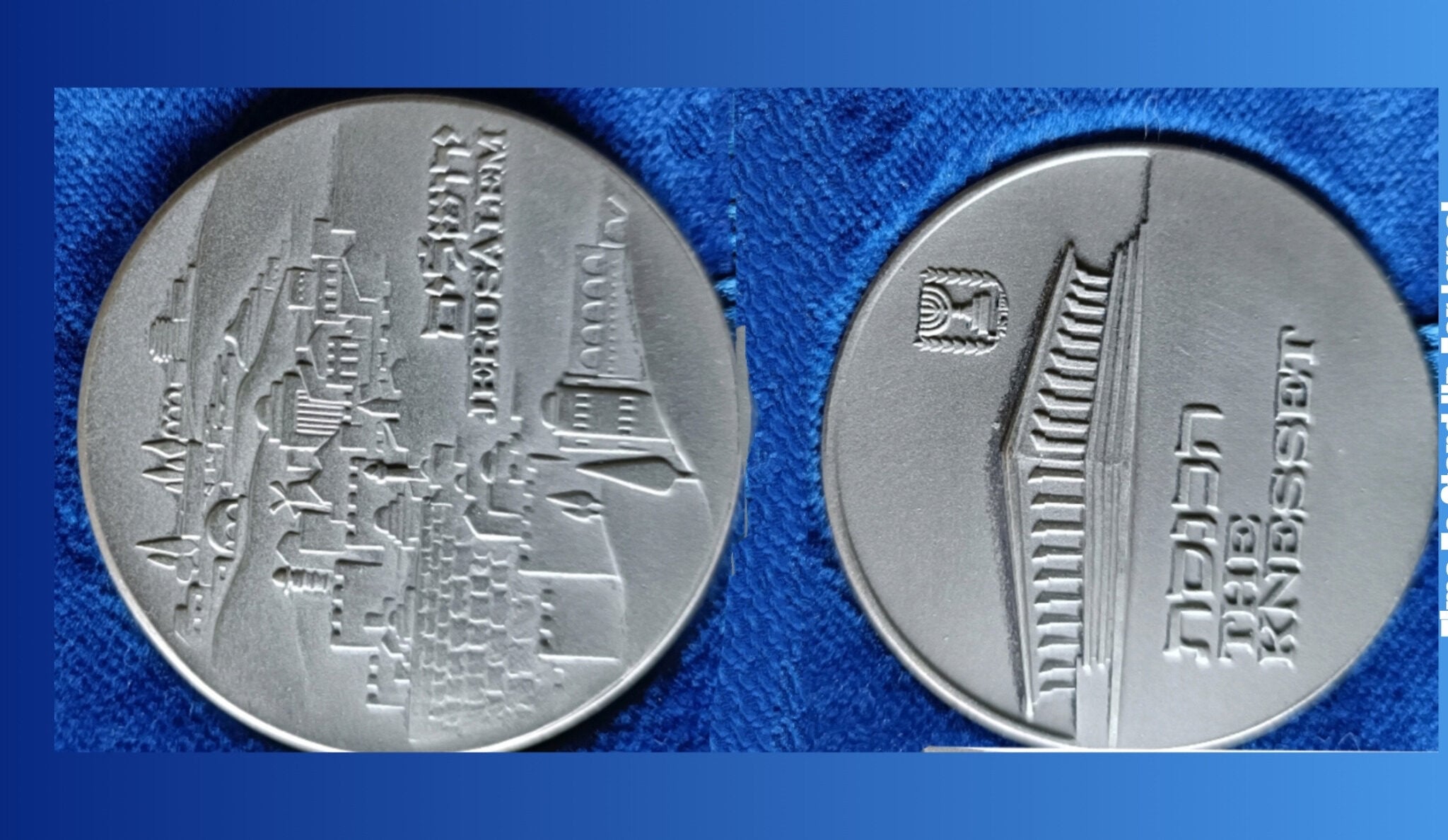
Photo Credits: Sabine Sterk
Another Inconvenient Truth About Israel
Fate. Belonging. Principles. Justice. Admiration. Love.
These are the foundations of my relationships with people, but even more importantly, they are the reasons I have devoted decades of my life, unconditionally, to Israel.
I am a highly sensitive person. Stubborn, outspoken, fiercely loyal, and impossible to fit neatly into any box. And I have absolutely no intention of changing that.
When I believe in something or someone, I go above and beyond. I do not calculate what I might gain. I do not ask what is in it for me. I give everything I have because I believe it is the right thing to do.
That does not necessarily make me a person with many friends.
People often do not understand me. They do not share my determination, my intensity, or my relentless drive. Some call me obsessed. Others, strangely enough, mostly women, have even called me a narcissist.
Why? Because when my principles are at stake, especially when Israel is concerned, I refuse to compromise simply to make other people comfortable.
They call it narcissism. I call it commitment, conviction, and determination.
Fine by me.
There is something else about me that people frequently struggle with. I am brutally honest. I am certainly no diplomat. I do not wrap uncomfortable truths in beautiful paper to protect someone’s feelings. But when I am wrong, I take responsibility, acknowledge my mistakes, and try to make things right.
And that brings me to the State of Israel.
For the past twelve years, Israel has literally dominated my life. Not occasionally. Not when convenient. Not when there was something to gain.
Every single day. Almost twenty four hours a day.
Demonstrations. Conferences. Hostile public events where I confronted misinformation. Thousands of social media posts, written from early morning until deep into the night. Articles, research, networking, campaigns, and countless hours helping other advocates and organizations.
I have supported and assisted organizations such as Shurat HaDin, Ad Kan, and the Jewish National Fund, among others.
All voluntarily.
All without asking for anything in return.
And the price?
Thousands upon thousands of euros. Lost opportunities. Professional sacrifices. Relationships. Love. Personal security. Time I will never get back.
But I never complained about the price because I believed in the cause.
I believed in Israel.
I believed that loyalty, justice, courage, and extraordinary commitment still meant something.
Apparently, I was wrong to expect those principles to be reciprocated.
When Loyalty Becomes Worthless
My desire to move to Israel is not some romantic fantasy about sunshine, beaches, or Mediterranean living.
It is increasingly a matter of personal safety.
My outspoken advocacy for Israel has made me highly visible in the Netherlands. And that visibility comes with consequences.
I have Jewish ancestry, but proving it through the documentation required for immigration has become an almost impossible task.
The relevant family records are scattered across Poland, the Czech Republic, Lithuania, Germany, and possibly elsewhere. I simply do not have the money or time to travel across Europe searching for documents that may no longer exist.
I have substantial indirect evidence of my family history, but indirect evidence does not automatically satisfy the legal and religious requirements governing eligibility under Israel’s Law of Return.
So, despite everything, I cannot establish my eligibility for Aliyah.
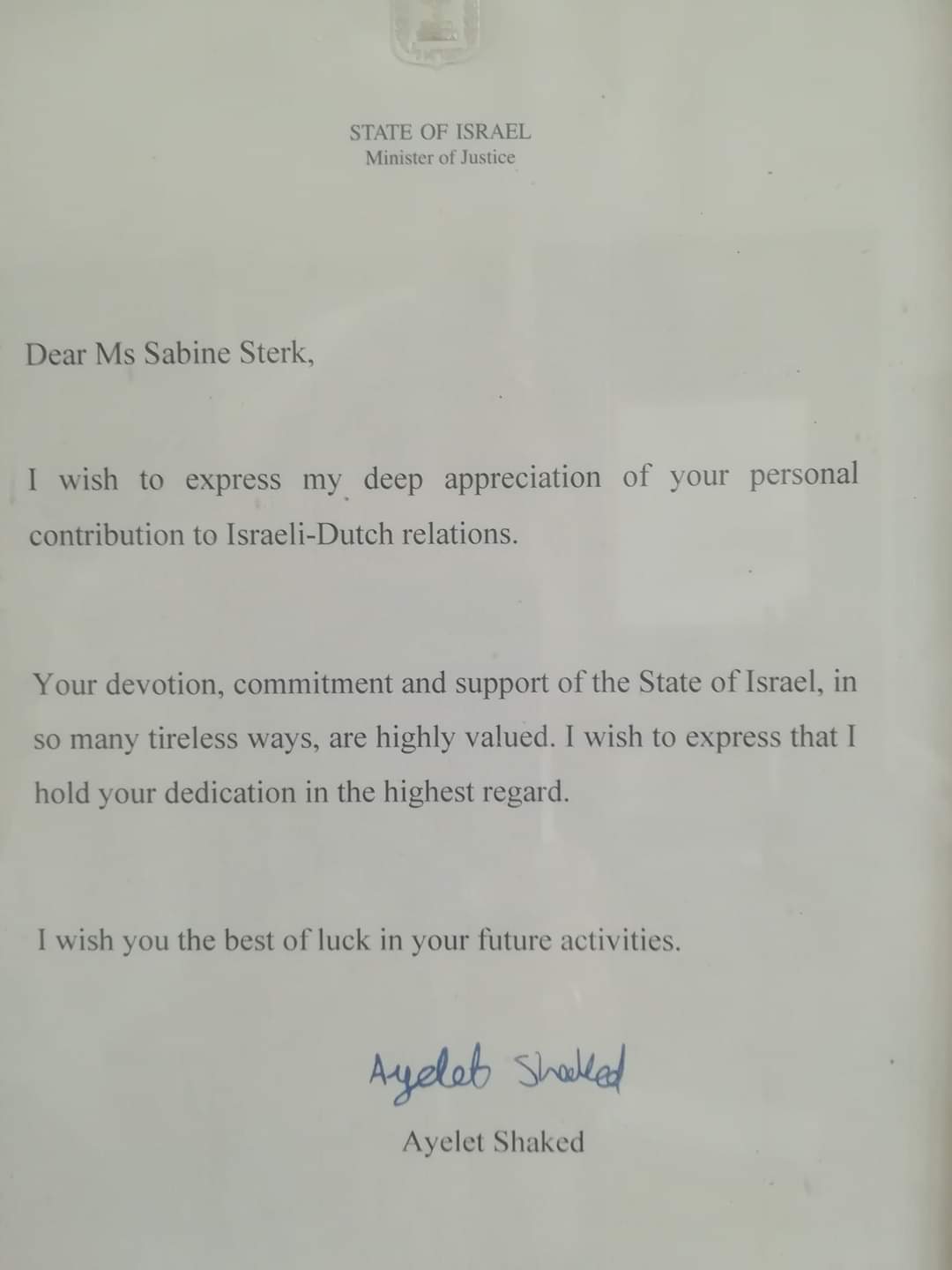
A dear friend managed to have my personal request for residency presented to an assistant in the office of the President of Israel.
This was my last desperate attempt after three previous emails to the President’s office and one to the Prime Minister’s office had gone unanswered.
Not even the basic courtesy of a reply.
And what happened when my request finally reached someone?
According to the response relayed to me, the answer was essentially:
Just convert already.
Just like that.
No serious examination of my circumstances. No apparent interest in my family’s history. No meaningful consideration of my years of voluntary service to Israel.
Just convert.
I was furious.
Not because I believe Israel should abandon its immigration laws for me, but because I expected something better than such a dismissive response.
I was effectively being encouraged to pursue religious conversion for reasons that had nothing to do with religious conviction.
Not because I had discovered faith.
Not because I wanted to embrace a religious life.
But because conversion might provide an immigration opportunity.
How can a country that places such enormous importance on Jewish identity so casually suggest turning religious conversion into an administrative solution?
I had previously approached two Orthodox rabbis, openly explaining my motivations. Both also suggested conversion.
I was astonished.
I had always understood that conversion to Judaism was supposed to reflect sincere religious commitment, not opportunism.
Perhaps I am old fashioned. Perhaps my principles are inconvenient. But I refuse to pretend to believe something merely to obtain a passport.
And I refuse to compromise my integrity to satisfy a bureaucracy.
The Betrayal That Hurt Most
Yet the rejection of my own efforts was not even the most painful part.
What shattered me was the apparent dismissal of my parents’ extraordinary commitment to Israel in 1978 and 1979.
My parents did not merely express sympathy for Israel from the comfort of their living room.
They took risks.
Serious risks.
While living in Damascus, Syria, they undertook activities intended to help Israel, including gathering information about military installations, uniforms, missile systems, and other sensitive matters.
They received no payment.
They sought no recognition.
They did it because they believed in Israel.
And they were not only risking their own lives.
They were risking the lives of their children, my brother and me.
Had their activities been discovered by the Syrian authorities, the consequences could have been catastrophic.
I still remember the Hanging Square in Damascus.
That was not some abstract danger.
It was the reality surrounding us.
Nearly fifty years later, I am trying to reconstruct that history with fragmentary evidence, childhood memories, and the few surviving objects connected to those years.
Among them is a Yad Vashem Knesset coin, which my parents received through their contacts from Teddy Kollek, the former mayor of Jerusalem.
But there are no accompanying documents explaining the circumstances.
The people involved are elderly, deceased, or impossible to trace.
And I certainly do not expect intelligence agencies to provide convenient certificates acknowledging people who may have assisted them decades ago.
So what remains?
My word.
My family’s history.
My unwavering commitment.
And apparently, none of it is enough even to deserve a serious hearing.
Ungrateful.
That is the word that keeps returning to my mind.
Ungrateful toward people who took extraordinary risks without demanding anything in return.
Ungrateful toward a family whose loyalty did not begin yesterday.
Ungrateful toward people who believed Israel was worth defending long before social media, public recognition, or political fashion entered the equation.
Another Door That May Never Open
A dear friend, a highly respected senior military figure, pointed me toward another possible avenue.
Section 9 of Israel’s Citizenship Law provides for discretionary naturalization in certain circumstances. There may also be exceptional residency possibilities worth examining.
I believe my parents’ historical contribution deserves consideration through whatever lawful discretionary route may be available.
But there is a devastating obstacle.
Proof.
Nearly fifty years have passed.
Those who knew the details are disappearing, and the records may be inaccessible or nonexistent.
How do you prove loyalty that was deliberately kept secret?
How do you document sacrifices that were never intended to become public?
And how do you persuade an indifferent bureaucracy to investigate a story when nobody appears interested enough to listen?
My entire adult life has been shaped by Israel. For more than a decade, my public commitment has been visible to anyone willing to look.
Yet I find myself begging for something as basic as serious consideration.
Not automatic citizenship.
Not special privileges.
Just the dignity of being heard.
Apparently, even that is too much to ask.
The Illusion of the Volunteer Route
Another possibility presented to me was a volunteer visa, including the B/4 category.
Wonderful.
Except that it does not solve my problem.
I am not looking for a temporary adventure.
I want to live in Israel permanently. I want to contribute until the day I die.
I am single. I raised four children largely on my own. I have no substantial savings, and I cannot afford to abandon my income for a temporary arrangement with no guarantee of a future.
Moreover, volunteer visas generally depend on an approved sponsoring framework.
What about my own foundation?
What about Time To Stand Up For Israel, the registered organization I founded and have built through years of relentless unpaid work?
Does my work suddenly become irrelevant because it does not fit neatly into someone else’s approved organizational structure?
Am I supposed to abandon my own mission, my own network, and my own foundation just to become a volunteer under another organization’s umbrella?
I have spent years creating something that serves Israel.
And now I am expected to act as though that work barely exists.
Ungrateful.
But Surely the Israeli People Are Different?
A friend tried to comfort me.
“It is the government. They are bureaucratic. Many Israelis love you.”
Perhaps.
I would genuinely like to believe that.
But experience has made me question even that comforting explanation.
For four years, LinkedIn restricted my access to an important company page connected to my advocacy work.
I repeatedly asked people for help.
Individuals. Israeli contacts. Organizations. People with influence. People who knew my work. People and organizations whom I had helped without expecting anything in return.
And what happened?
Silence.
Indifference.
People who were perfectly happy to benefit from my efforts suddenly became remarkably difficult to reach when I needed something.
I was left standing in the cold.
Not everyone, of course. There have been exceptional individuals whose kindness and loyalty I will never forget.
But far too many disappeared when the relationship stopped being convenient.
Ungrateful.
And before someone tells me that genuine advocacy should never expect anything in return, let me make something absolutely clear.
I never expected money, fame, status, or rewards.
But I did expect basic human decency.
There is an enormous difference between expecting payment for loyalty and expecting people not to turn their backs on you when you desperately need help.
Principles for Some, Opportunities for Others
I fully understand that every sovereign nation has immigration laws.
Israel has every right to establish and enforce its own rules.
I have never disputed that.
But I also believe that laws and discretionary decisions should be administered with humanity, consistency, and moral seriousness.
Recently, I came across a Jerusalem Post article featuring a young, attractive, non Jewish woman from the Netherlands who had been volunteering in Israel for approximately a year.
She received a public platform to share her experiences.
Good for her.
I do not begrudge her the opportunity, and I do not know her personal circumstances or intentions.
But the contrast hurt.
Here I am, approaching sixty, after decades of emotional attachment to Israel, years of relentless advocacy, substantial personal sacrifices, and a family history involving serious risks taken on Israel’s behalf.
And I cannot even secure meaningful consideration of my request.
A temporary volunteer may receive public recognition while someone who has devoted years to defending Israel struggles to obtain a response.
Of course, publicity and immigration eligibility are different matters.
I understand that perfectly well.
But understanding the legal distinction does not make the moral contrast any less painful.
It raises a deeply uncomfortable question.
Does Israel truly value commitment, or does it simply appreciate commitment when it is useful and costs nothing?
I have defended Israel against accusations of hypocrisy for years.
I have challenged double standards, misinformation, and selective outrage.
I have insisted that Israel should be judged fairly.
And now I find myself demanding exactly the same fairness from Israel.
My Love for Israel Is Not a License to Humiliate Me
The most devastating consequence of this experience is not the possibility that I may never become an Israeli resident or citizen.
It is what this experience has done to my trust.
When I learned that even a personally delivered letter, handed over through someone I deeply respect and regard as a genuine hero of Israel, had apparently been dismissed so quickly, something inside me broke.
I cannot adequately describe that feeling.
It was not ordinary disappointment.
It felt like betrayal.
It made me question everything I had believed about loyalty, belonging, justice, and gratitude.
And yes, it has made me reconsider my advocacy.
That is an incredibly painful admission.
For twelve years, my foundation and my work for Israel have been inseparable from my identity.
I have defended Israel when doing so was unpopular, uncomfortable, and personally costly.
I have defended Israel when others remained silent.
I have defended Israel when people advised me to stop for my own safety.
I never demanded that Israel love me back.
But I never imagined that asking to live in the country I had devoted so much of my life to would leave me feeling so utterly insignificant.
Some will undoubtedly accuse me of selfishness.
Others will say that genuine love should be unconditional.
I have heard it all before.
But unconditional love does not mean unconditional acceptance of disrespect.
Loyalty does not require surrendering your dignity.
And commitment does not oblige you to remain silent when the very people or institutions you defend treat your sacrifices as irrelevant.
I am not asking Israel to break its laws for me. I am asking Israel to examine whether its laws offer a legitimate solution and to treat my circumstances with the seriousness they deserve.
Is that really such an outrageous request?
I am tired of hearing how grateful I should be simply because Israel exists.
I am grateful that Israel exists.
I have demonstrated that gratitude through decades of commitment and twelve years of relentless public advocacy.
But gratitude is not supposed to flow in only one direction forever.
A nation that expects loyalty should understand the value of loyalty.
A nation that celebrates courage should recognize courage.
And a nation that demands justice from the world should be prepared to demonstrate justice toward those who have stood beside it.
I still love Israel.
That is precisely why this hurts so much.
But I am no longer prepared to confuse love with submission.
I will not convert for the wrong reasons.
I will not invent a religious identity to satisfy an administrative requirement.
I will not pretend that my parents’ sacrifices never happened.
And I will not apologize for expecting to be treated with dignity.
I have spent years standing up for Israel.
Now I am asking a much more uncomfortable question.
When someone who has stood up for Israel for decades needs Israel to stand up for them, who is actually prepared to do it?
Because I may love Israel unconditionally, but that does not mean I will allow myself to be treated as a doormat.
Not by friends.
Not by men.
Not by organizations.
And certainly not by the State Israel.
Related Topics
Related Posts