Creator of Hiking the Holyland
From Auschwitz to Aliyah: Papa’s Victory at 96
At 96, Holocaust survivor Jerry Stein chose Jerusalem over safety - and showed us what Jewish victory really looks like
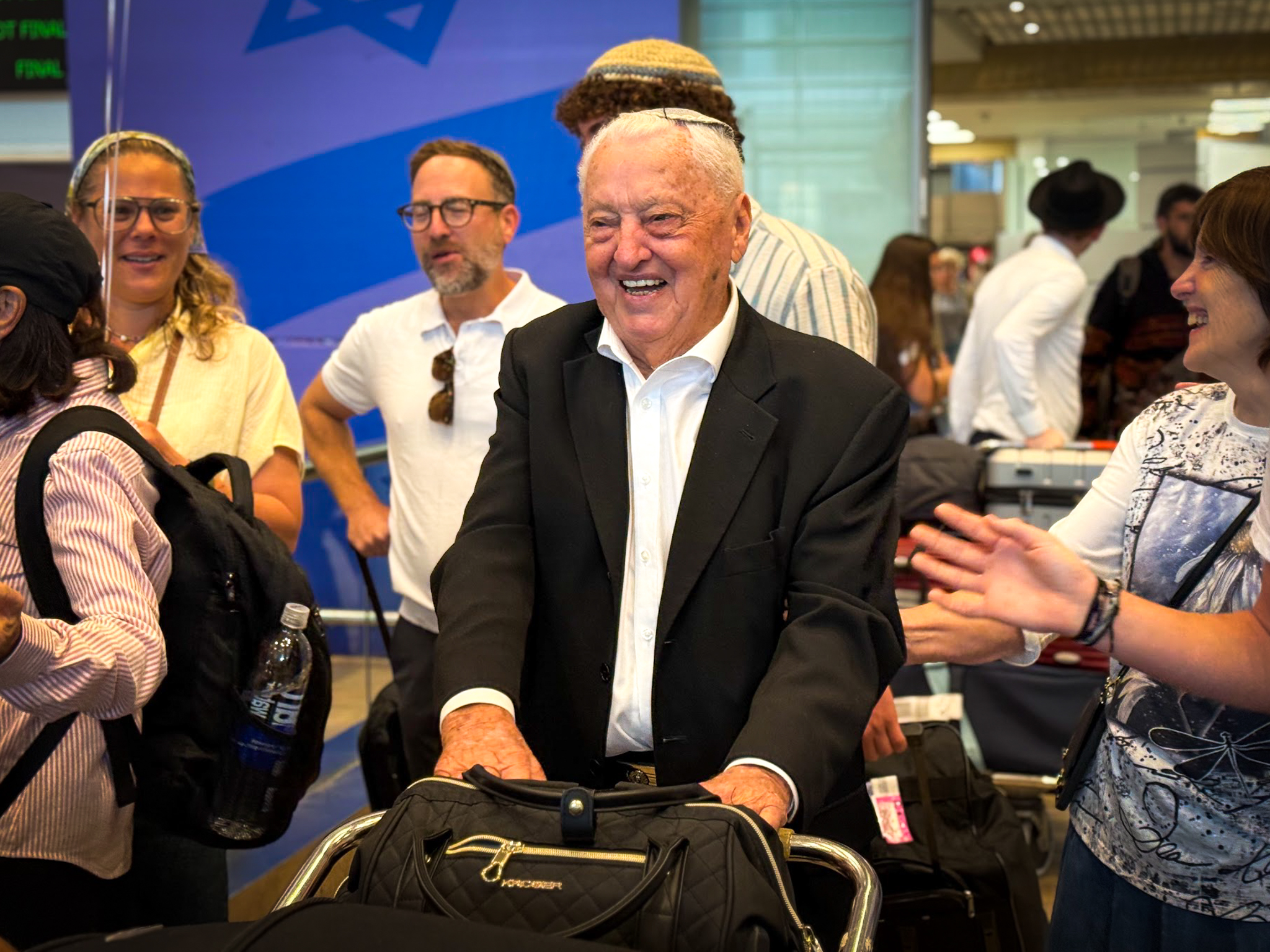
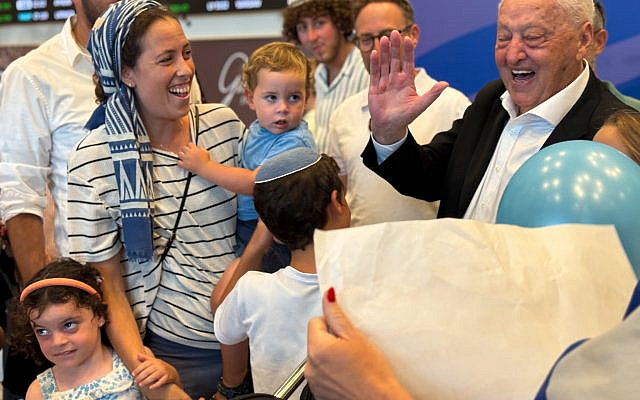
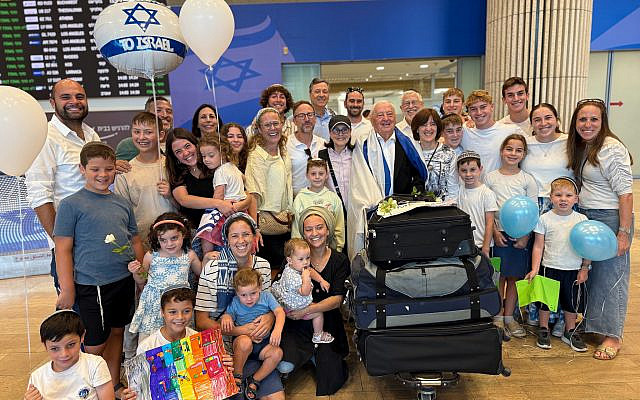
Thirty voices singing Hebrew songs of welcome filled the Ben Gurion arrival hall as Papa stepped off the plane into the loving arms of his family. Jerry Stein—aka Gedalia Dan, aka Papa—our 96-year-old patriarch who had survived the inferno of Auschwitz, was coming to Israel. And this time, he was here to stay.
As grandchildren, great-grandchildren, and great-great-grandchildren surrounded him, Papa wore a starched white button-down shirt, a pressed blazer, and that warm, serene smile that characterizes his everyday appearance. We took turns going in for hugs and kisses, producing a worthy fanfare to mark the end of Papa’s incredible journey home.
This was happening at a time when Israel was struggling, when tourism had plummeted, when making aliyah seemed like the last thing anyone would choose. But Papa had a different perspective entirely.
From Majdan to Manhattan to Jerusalem
Papa’s long journey to Israel was especially remarkable. As a child from the small town of Majdan, Czechoslovakia, this man had lost his mother, father, and four siblings in the gas chambers of Auschwitz. He had survived on sawdust bread and potato peel soup for months on end, endured harsh labor, and marched for days through a frozen forest in a death march that far too many had taken before him.
Before the horror, Papa had been Gedalia Stein, one of thirteen children in a prosperous family. His father owned the biggest store in town and held the liquor license. Their wooden house filled with voices every Shabbat as the whole family gathered around the dining room table, singing zemirot and enjoying their mother’s cooking from the hearth. After school, he’d stop by his grandmother’s house with his cousin Kushi for freshly baked cookies and attention. Life was safe, secure, happy—until one morning when good relationships with their non-Jewish neighbors couldn’t protect Jewish families anymore.
Miraculously, Papa survived the horrors of the Holocaust, as did most of his older siblings. After Papa recovered his strength, he desperately wanted to go fight in Israel’s War of Independence—he could think of no greater mission than defending the Jewish people from enemies who threatened the nation’s survival.
Papa’s sisters had other ideas. They sent word that he was to join them in the United States, safely out of harm’s way. There, Papa built a beautiful life in America, met his wife Lore, established a successful business,, and raised his family in their home in Washington Heights. Years passed, careers changed, generations were born, and Papa persevered—until age 96, when he was once again given the opportunity to fight for the Jewish people by setting up life in the Holy Land.
The Homecoming
Papa’s first days in Israel were like those of many people who place ideals over the comfort of familiarity when starting fresh in Israel. Bit by bit, he began getting the lay of the land. He sat by the window in his apartment in Jerusalem’s Wolfson Towers, taking in the sweeping view of Gan Sacher park below. When he ventured down for walks with his daughter, he was stopped countless times by passersby—some who knew him, others who had simply heard his story.
All of these moments brought him joy. But true to his character, nothing put a smile on his face like those visits from grandchildren and great-grandchildren on Friday afternoon before Shabbat.
Papa tried out different synagogues in the Rehavia neighborhood on Shabbat. Saturday night, he ventured out to Jerusalem’s Great Synagogue to hear the choir perform the traditional Selichot service—an outing which he enjoyed immensely.
“Thank You for My Welcoming Party”
Days later, we gathered for Papa’s welcoming party in a Jerusalem garden, hosted by my husband’s cousin who lives just ten minutes from Papa’s new home. Surrounded by four generations of family, Papa absorbed every detail—the children’s laughter, the Hebrew music swirling around him, the impossible reality that he was finally here. His white hair caught the Jerusalem moonlight, and his entire presence radiated that familiar wisdom and kindness.
When we gathered to sing “Veshavu Banim” and brought out a celebratory cake printed with his airport arrival photo, Papa’s warm smile deepened. Then he rose slowly, and thirty voices fell silent.
“Thank you for my welcoming party,” he said, his soft voice carrying across the garden. “I wish Bemi”—his wife—”was here with us, but I think in spirit she is here.”
In that moment—simple, profound, utterly Papa—he had completed his transition to Israel. Here was a man whose very presence reminds us what resilience looks like, what choosing hope over fear accomplishes.
“Thank you for everything,” he concluded, settling back into his chair with that radiant smile, finally home.
The Ultimate Victory
There’s something I’ve heard Papa say before, something he shared during interviews about his Holocaust experience. Papa looks around at his family—children, grandchildren, great-grandchildren, great-great-grandchildren—and says quietly: “This is how I show that we won.”
A little over a decade ago, my husband’s family organized a reunion and discovered there were over 500 descendants of Papa’s parents. All of these people came from a family that the Nazis tried to exterminate. Hundreds of them gathered together in a hall for that family reunion.
Now, sitting in that Jerusalem garden, watching Papa surrounded by multiple generations of his family in the Jewish homeland, I understood what he meant. Every Shabbat dinner, every holiday celebration, every grandchild who visits his apartment overlooking Gan Sacher—this is the revenge. This is victory.
Not just survival, but flourishing. Not just memory, but presence. Not just the past, but an active choice to keep building the future.
A Man Who Chooses Purpose
In his simple and understated way, Papa had made the transition to Israel. He approaches every new experience with genuine appreciation, whether it’s the view from his Jerusalem apartment window or the choir at the Great Synagogue or the face of another great-grandchild stopping by for a visit.
At 96, in the middle of a war, surrounded by uncertainty, he chose to come home. Not because it was easy or comfortable or safe, but because this is where his family is building their lives. This is where his great-grandchildren will serve in their own army, not someone else’s. This is where the story that began in Majdan continues.
Some battles are won with weapons. Others are won with weddings, births, bar mitzvahs, and the daily choice to keep building Jewish life in the place where it all began.
Papa made his choice. At 96, he’s finally home, and every day he spends here is both a personal triumph and a testament to something larger than any of us: the unbreakable promise that the Jewish story will continue.
“This is how I show that we won.”
He’s absolutely right. And at 96, Papa’s just getting started.
Related Topics
Related Posts