From Civilian to Soldier at 44: When Life Calls You to Service
A personal reflection on answering a call I never expected to hear
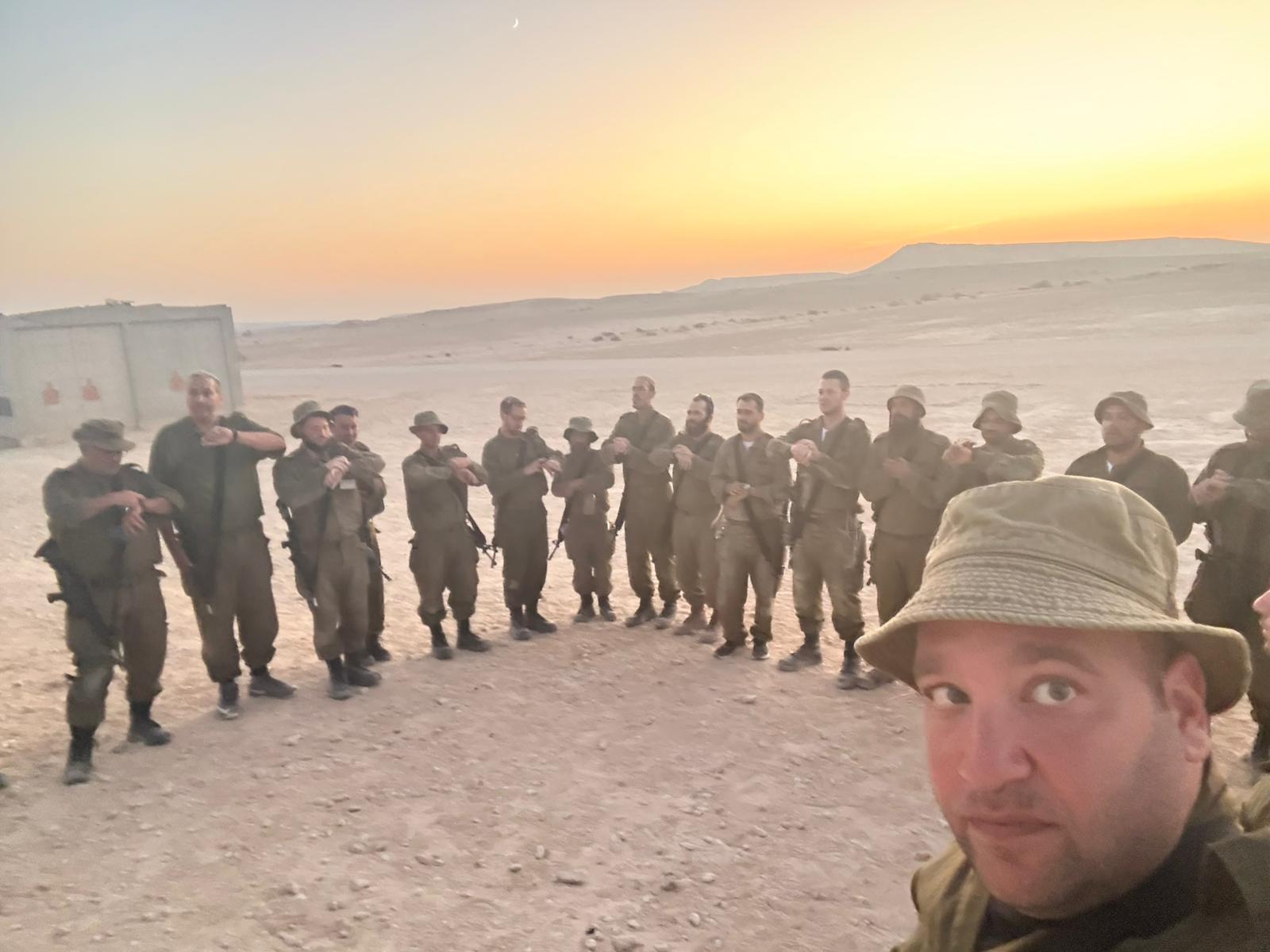
This morning marked the end of one of the most transformative experiences of my life. After two grueling weeks of basic training, I stood alongside 64 extraordinary men as we completed our journey from civilians to soldiers. But for me, this moment carried additional weight. At 44 years old, I had just become one of the oldest new recruits in the Israel Defense Forces.
When Life Takes an Unexpected Turn
Six months ago, if someone had told me I’d be crawling through obstacle courses, learning to field strip weapons, and sleeping in army barracks, I would have laughed. With an established career and family responsibilities, military service seemed like something for younger people, something that belonged to a different chapter of life.
But life doesn’t always follow the scripts we write for ourselves. Sometimes, circumstances arise that call us to do things we never imagined we’d need to do. For me, that call came in the form of a war that demanded more from all of us than we thought we had to give.
The Reality of Starting Over in Your Forties
I won’t lie: being older in a group of mostly younger men presented unique challenges. While some of my fellow trainees bounded up hills with the energy of youth, I found myself drawing on decades of life experience to push through when my body wanted to quit. When younger soldiers recovered quickly from intense physical training, I needed every minute of rest I could get.
But maturity also brought unexpected advantages. The mental toughness developed through years of work pressures, family responsibilities, and life’s inevitable setbacks served me well. When younger soldiers struggled with the psychological aspects of training, I found myself drawing on reservoirs of resilience I’d built over two decades of adult life.
The Men Who Left Everything Behind
As I look back on these past fourteen days, what strikes me most isn’t the physical exhaustion or the mental challenges we overcame. It’s the stories of the men who stood beside me, each carrying their own burden of sacrifice.
There was the father who left in the middle of training, not to escape, but to marry off his son, returning immediately after the ceremony to continue serving alongside us. Another man left behind a wife and ten children, trusting her to manage their entire household while he learned to serve his country. A small business owner shuttered his company for two weeks, putting his livelihood on hold. Countless others kissed goodbye to newborns and infants, missing precious first moments they can never reclaim.
As someone more established in life, I understood these sacrifices in ways I couldn’t have at eighteen. These weren’t men who had nothing to lose. These were men, like me, who had everything to lose and chose to serve anyway.
Breaking Barriers, Building Bridges
What makes this story even more remarkable is the background many of these soldiers come from. Most hail from families and communities where military service has traditionally been discouraged or even forbidden. Many faced pressure in their youth not to draft, to find alternatives, to stay within their communities.
But they’re here now. We’re all here now.
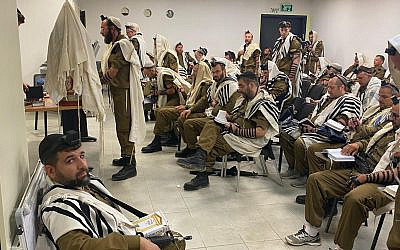
This represents something profound. A bridge being built between communities that have historically remained separate, united by a shared recognition that protecting Israel isn’t someone else’s responsibility. It’s ours. And it doesn’t matter if you’re eighteen or older, if you come from a religious or secular background, if you’ve been preparing for this moment your whole life or if it caught you completely off guard.
Understanding Why We Fight
We began our second week with visits that every IDF soldier makes, first to Yad Vashem, then to Har Herzl. These weren’t just ceremonial stops; they were essential to understanding why we have an army in the first place.
At Yad Vashem, standing in those halls of memory, the phrase “Never Again” took on visceral meaning. This wasn’t history class anymore. We were preparing to be the guardians ensuring those words remain true. Having lived through decades of world events, understanding the fragility of peace and security, the weight of that responsibility settled on my shoulders in a way that felt both heavy and necessary.
At Har Herzl, we paid tribute to those who paid the ultimate sacrifice to protect us and our homeland. Walking through the cemetery, many of us found connections to the newer graves, soldiers who had fallen in this current war. Stories emerged as we moved through the rows of headstones, each man sharing what he knew about those we’d lost, personalizing the names etched in stone.
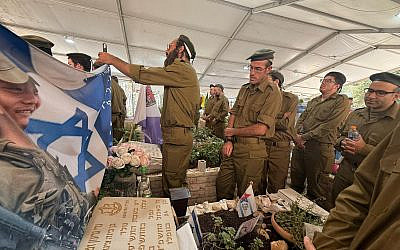
One of the most touching moments came when I overheard a small group of Charedim in our unit reading the names and ages of fallen soldiers. In quiet voices, with deep reverence, I heard one say: “These are the real tzadikim (righteous people).” In that moment, the barriers between different segments of our society dissolved completely. Age, background, previous assumptions about who serves and who doesn’t, all of it became irrelevant. We all understood we were standing on sacred ground, inspired by sacred sacrifice.
Two Weeks of Transformation
After those profound visits that grounded us in purpose, the training itself was everything you’d expect military preparation to be, and then some. Our days began before dawn with runs that pushed our cardiovascular systems to their limits. At 44, I quickly learned that pride had no place on these morning runs. If I needed to pace myself differently than a 20-year-old, so be it. The goal was to finish, not to prove I was still young.
We spent hours on shooting ranges, learning not just to fire weapons but to respect them, to understand their weight and responsibility. Physical conditioning was relentless: pushups until our arms shook, planks that tested our core strength, rucksack marches that taught us to keep moving when everything in our bodies screamed to stop. Our training officers seemed to have an endless creativity when it came to finding new ways to push us beyond what we thought were our limits.
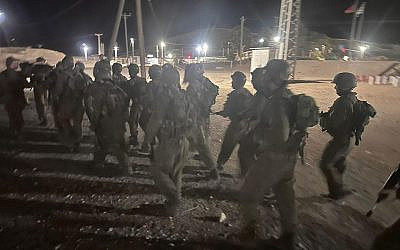
But the training wasn’t just about building physical strength. We spent equal time in classrooms, diving deep into Israel’s history, understanding the significance of our flag and what it represents, learning the halachot (religious laws) that govern army service, and grasping how this massive military machine actually functions. These sessions weren’t just educational. They were transformational, helping us understand not just what we were doing, but why it mattered.
From Strangers to Brothers
The most unexpected part of this journey was how quickly and deeply we bonded, despite our diverse ages and backgrounds. It started with shared exhaustion and mutual encouragement during the hardest physical challenges. It grew through late-night conversations about our families, our fears, our hopes for what we were accomplishing.
I found myself in the unique position of being both student and inadvertent mentor. While I learned from younger soldiers about technology, new perspectives, and youthful energy, they often turned to me for advice about handling stress, managing family concerns from a distance, or simply for the reassurance that comes from someone who’s navigated life’s challenges before.
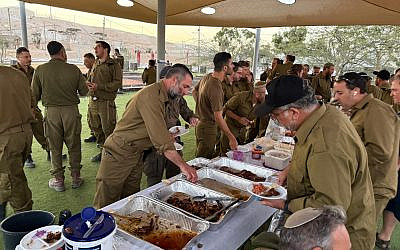
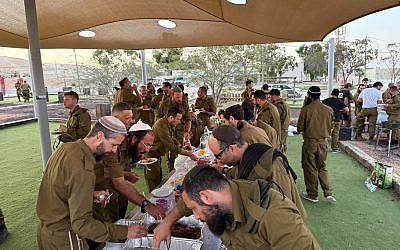
By the end of our training, when we gathered for a celebratory barbecue, something beautiful had happened. The rigid hierarchy of training had softened into something more human. We found ourselves talking to our officers not as intimidating authority figures, but as friends and mentors who had guided us through this transformation. The connections we built run deep, bonds forged in sweat, determination, and shared purpose that I know will carry forward to whatever bases we’re assigned to next.
One Unit, Ready to Serve
This morning, at our graduation ceremony, I looked around at these 64 men and realized something profound had occurred. We had started as 65 individuals from completely different backgrounds, carrying 65 different stories about what brought us here. We came from different communities, different professions, different generations, different life experiences.
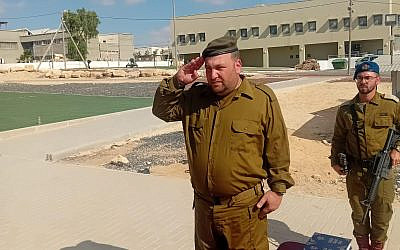
But standing there this morning, we weren’t 65 separate people anymore. We were one unit, unified in purpose, ready to serve. The 44-year-old business owner stood shoulder to shoulder with 20-something students, religious and secular, experienced and naive, all of us transformed by the same crucible.
The Road Ahead
This Sunday, the real work begins. Our reserve duty starts, which means another stretch of weeks away from our children, leaving our businesses and jobs behind again, asking our spouses to shoulder everything alone once more. None of us had adequate time to prepare for this reality, but neither did the thousands of other soldiers currently serving. It’s wartime, and war doesn’t wait for convenient timing.
At 44, I understand the complexity of this sacrifice in ways I couldn’t have at 18. I know what I’m asking of my family, my business, my carefully constructed adult life. I also know why it’s necessary.
Final Thoughts
As I write this, I’m struck by how this experience has changed not just my perspective on military service, but on what we’re capable of when we’re called to do something extraordinary at any stage of life. These two weeks weren’t just about learning to be soldiers. They were about discovering what we’re made of when everything comfortable is stripped away.
At 44, I thought I knew myself pretty well. I thought my major life transformations were behind me. I was wrong. Sometimes life calls us to growth and service in ways we never anticipated, at ages when we assumed we were done with dramatic change.
The journey is just beginning, but I’m honored to begin it alongside these remarkable men. We didn’t just complete basic training together; we became brothers in service to something larger than ourselves. And I’ve learned that it’s never too late to answer a call to serve, even when it comes at the most unexpected moment of your life.
That realization alone makes all the sacrifice worthwhile.