An Aging Jewish Feminist
From Detours to Destiny: Finding the Authentic Voice in Parashat Balak
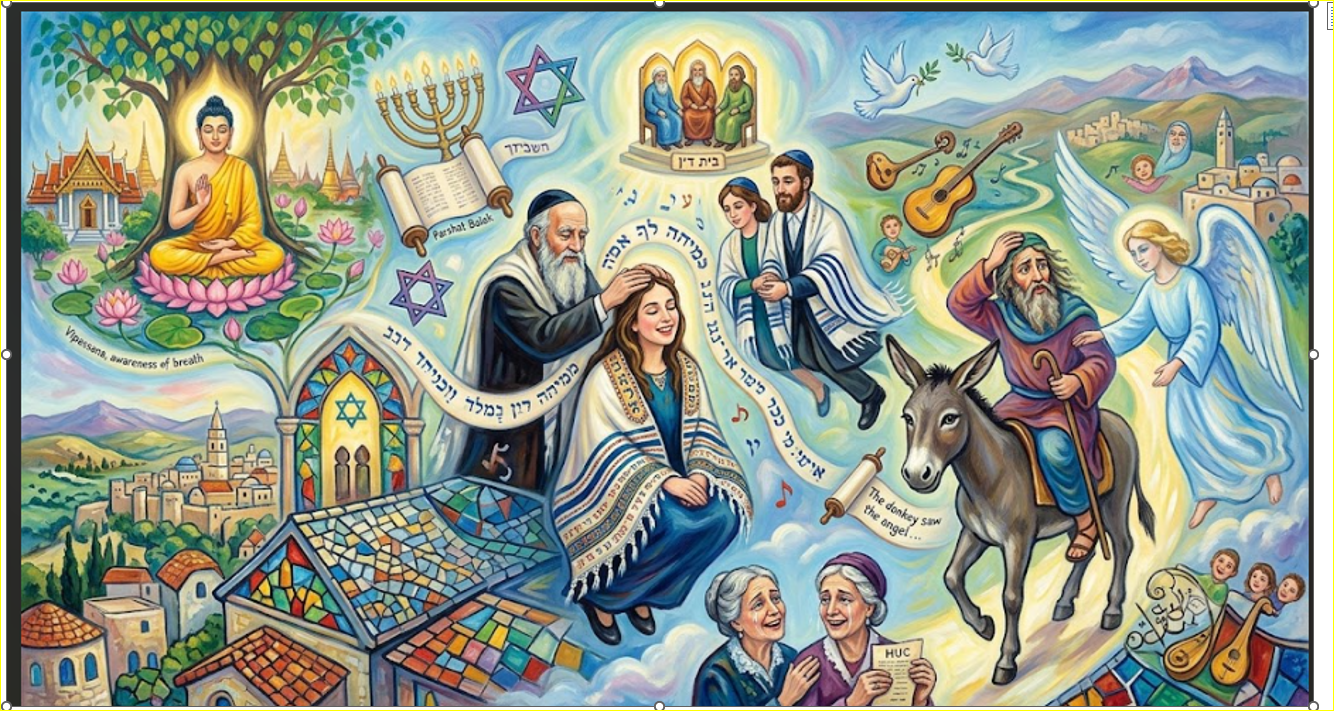
I am very proud to have my daughter be a “guest” writer this week. Avigail, is being ordained as a rabbi this Thursday afternoon, joining her brother, a Conservative rabbi and sister, a Reform rabbi. She is seen here wearing my sister’s tallit. We have joked that now they will constitute a beit din, a judicial court of three.
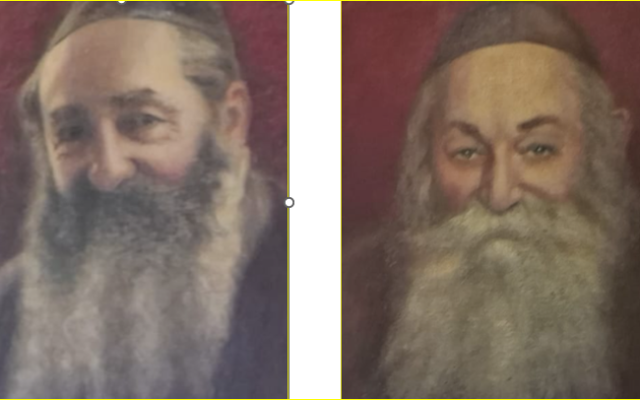
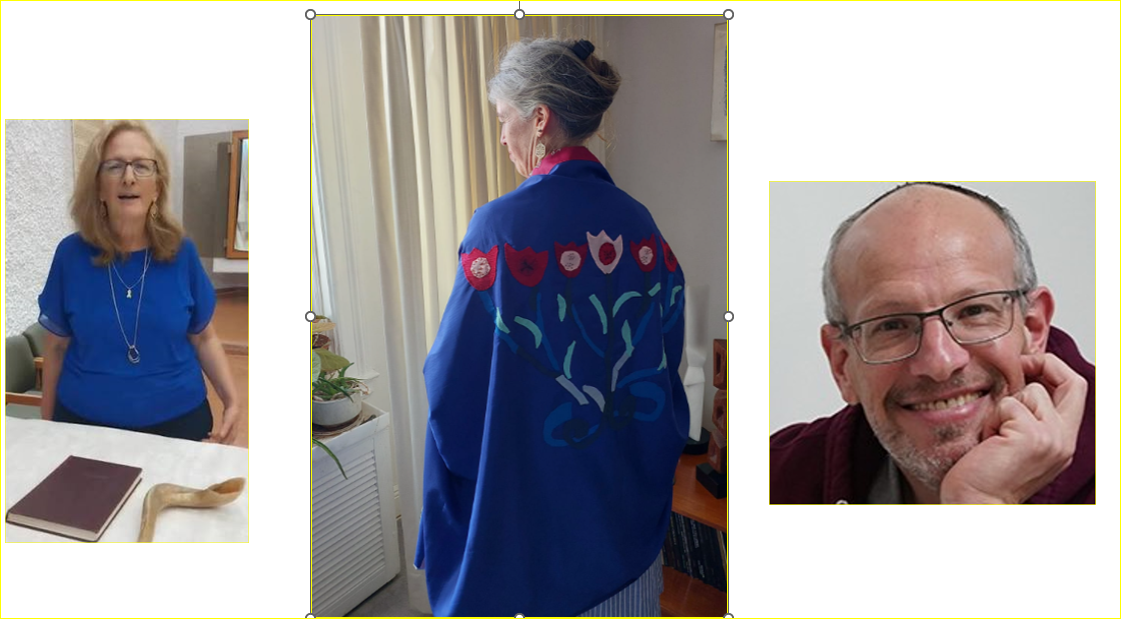 My late husband who was a rabbi would surely approve and be exceedingly proud of her. And so would my late sister, whose birthday is tomorrow and whose tallit she will wear for the ordination. It is so fitting because, both my sister and I toyed with the idea of becoming rabbis in the early 80’s and she actually applied to HUC in New York, but was rejected because she kept kosher and would not drive on shabbat. When moving out of my home, I came across the letter she received from them. I too have a letter from Shechter in Jerusalem, which at the time was not ordaining women. As to my two ultra-Orthodox grandfathers, I’m not sure what they would think about women rabbis. Perhaps, they would approve of their great granddaughter’s ordination.
After Avigail shared her drasha on this week’s parsha, I asked her if I could use it this week, in my blog, and so, here it is.
Parashat Balak: A Little Dust in the Eyes**
Avigail Graetz
One of the strangest and most beautiful stories in the Torah appears in Parashat Balak. Balaam, a prophet renowned for his extraordinary powers of vision, sets out on a journey, and at precisely the moment when he ought to see more clearly than anyone else, he is blind. The one who sees in his place is the donkey he rides.
Three times the verse repeats: “The donkey saw the angel of the Lord.” Three times she notices what stands in the path, turns aside, stops, and presses herself against the wall. And three times Balaam sees nothing and strikes her. Only afterward are we told: “Then the Lord uncovered Balaam’s eyes, and he saw the angel of the Lord.”
It is worth reflecting on this gap. The angel is there the entire time. The angel does not change. Balaam is not given a new pair of eyes. What changes is his capacity to see.
In the Buddhist tradition, it is said that after his awakening, the Buddha hesitated before teaching. He wondered whether the truth he had discovered was simply too profound for others to understand. Then he realized that among human beings there are those who have only “a little dust in their eyes.” Not everyone is equally blind. Sometimes all it takes is for the dust to settle a little for us to see what has been in front of us all along.
This dust is not merely ignorance. At times it is made up of our fears, our desires, and the plans to which we cling. Sometimes we become so preoccupied with what we think should happen that we stop listening to what is already happening.
One can imagine Balaam setting out filled with resistance. After all, he had already refused Balak’s invitation twice. He did not want to be there. Perhaps he is asking himself why he is doing something he does not want to do. And then, as if that were not enough, the Torah tells us: “God’s anger was kindled because he was going.” God sends him, and then becomes angry that he goes. It is a situation every human being knows: walking a certain path while simultaneously doubting it. Wanting something and fearing it. Feeling attraction and aversion at the very same time.
Walking a meaningful path almost always awakens doubt, fear, anger, and sometimes even envy. We want our thoughts to align with our wishes, and when they do not, it seems as though something is wrong with us. Yet if our thoughts truly belonged to us, and if they possessed some fixed essence of their own, we could simply command them to behave differently. Take a moment of silence and try not to think about a talking donkey. Or, if you belong to a certain generation, try not to think about the donkey from the movie Shrek (2001). You will quickly discover that thoughts do not obey orders.
Meditation does not teach us to control our thoughts. It teaches us to see them. In the Vipassana tradition, we practice returning again and again to the senses, to the breath, to bodily sensations, and to what is happening right now. Rather than fighting what arises, we learn to become familiar with it. Rather than automatically believing every thought, we investigate what the body has to tell us.
Perhaps that is why it is the donkey who sees. She represents the simple, direct, unpretentious part of ourselves, the part that senses something before the intellect has had time to explain why it is wrong. She stops because she sees. Balaam strikes her because he does not.
And when the donkey finally speaks, she does not deliver a grand teaching. She asks only a simple question: if I have never behaved this way in all the years you have known me, perhaps you should stop and ask why.
There is something profound in that question. How many times in our lives does an inner voice ask us to pause? How often does the body signal, the heart hesitate, some deeper part of us know, and yet we continue beating the donkey, demanding that it move faster?
Perhaps the donkey represents precisely that quiet inner voice, that compass grounded not in control but in listening. Not a perfect voice, nor a supernatural one, but a kind of inner wisdom capable of holding all the voices within us.
Only after Balaam listens to the donkey, only after his eyes are “uncovered” and he sees what was there all along, can he continue on his way. And then something remarkable happens. When he begins to speak, he blesses rather than curses. On the verse “He took up his discourse,” the Or HaChaim comments that the words came “from himself and from his own understanding.” It is precisely when Balaam stops struggling against himself that his authentic voice can emerge.
This story also reminds me of the legend of King Midas, who had donkey’s ears and spent his life ashamed of them. Only his barber knew the secret. How much energy do we spend trying to hide our own metaphorical donkey ears, the parts of ourselves we are ashamed of, our contradictions, our embarrassments, the aspects of ourselves that do not fit the image we wish to present to the world?
Perhaps that is why I love the story of Balaam and the donkey so much. For years I hated being a rabbi’s daughter. Perhaps I feared the spiritual authority my father held within his community. Perhaps I envied it. Perhaps I longed for such spiritual power myself and could not admit it. I turned toward a different path, toward Buddhism and meditation, and there, to my surprise, I discovered the very same spirit. Not the same language, nor the same rituals, but the same human search for truth, freedom, and compassion.
The Japanese Zen master Ikkyū Sōjun, known for his irreverent humor and refusal to present himself as a saint, sometimes referred to himself as “the blind donkey.” There is something deeply liberating in that image. Instead of striving to become an all-seeing prophet, we can agree to be a donkey; awkward, mistaken, limited, yet still walking the path. Perhaps wisdom is not seeing everything. Perhaps wisdom is being willing to admit that we do not.
Meditation teaches something similar. We sit with our eyes closed, and yet the practice is aimed at seeing. Not seeing sights and forms, but seeing more clearly what is happening within us: the breath, bodily sensations, fear, anger, love, longing. It is often when the eyes close that another kind of vision begins to open. Sometimes it feels as though we are seeing for the first time what has been present all along.
Now, as I prepare to become a rabbi myself, I understand that my journey was not a mistake or a detour. It was the path. Like Balaam, I found myself led somewhere I never expected to go. And instead of feeling that something in me must change in order to be worthy, another possibility occasionally appears: a moment of grace. A moment when the dust settles, and I can see. I can see my strengths and my weaknesses. My fears and my gifts. The donkey ears and the blessing together.
And I also understand that I did not leave the Dharma in order to return home to Judaism. I continue to walk the Dharma path. I continue to practice and teach within the Vipassana tradition, grounded in awareness of breath, body, and life as it is. Yet today I can see how this path converses with the Jewish home in which I was raised, with Torah, prayer, and a tradition stretching across generations. If I once thought I had to choose between these worlds, it now seems that my calling is to help weave them together.
Perhaps that is why I find comfort in Balaam’s story. The hero of the story is not the prophet who sees far into the distance, but the person whose eyes are opened late. The person who discovers that truth has been waiting for them all along. The person who learns to listen to their donkey.
And perhaps this is one of the deepest teachings of Parashat Balak: freedom is not born from becoming someone else. It is born in the moment we stop beating the donkey, agree to listen to it, and finally see what has been there all along.
I couldn’t have said it better. My daughter, Avigail is a award winning novelist, a poet, a playwright, in addition to being a certified mindfulness teacher. And now, as of this evening, she is a rabbi, following in the path of her maternal great grandparents, her father and her two siblings. If you are curious about the Buddhist path and the Vipassana tradition you can study with Avigail at her new digital course, “Introduction to Buddhist Meditation”, The course is filmed in Thailand and is a self-paced enriching approach that will improve one’s ability to see more clearly. I am so proud of her. Shabbat shalom
**The purple insertions are mine.
Related Topics
Related Posts