
From Ganimi Kava to Artificial Intelligence: Evolution of Asymmetric Warfare
More than 400 years ago, when Shivaji was a prince in western India, he pioneered and perfected Ganimi Kava, a form of guerrilla warfare, against a much larger, better-equipped, and technologically superior adversary: the mighty Mughal Empire. He relied on swift hit-and-run attacks, disruption of supply lines, superior knowledge of terrain, surprise, and deception to offset the enemy’s numerical and material advantages carving out his Hindavi Swaraj and eventually being crowned Chattrapati.
Guerrilla warfare, however, was not unique to India. Throughout history, European societies employed similar methods when confronted by stronger opponents. During the Roman era, tribes in regions such as Hispania and Germania often avoided pitched battles and instead relied on ambushes and difficult terrain to harass Roman legions. The Battle of the Teutoburg Forest, in which Germanic warriors annihilated three Roman legions through surprise and terrain advantage, remains one of the most famous examples.
During the Peninsular War (1808–1814), Spanish irregular fighters waged a relentless campaign against the armies of Napoleon Bonaparte. In fact, the term guerrilla itself derives from the Spanish expression for “little war.” Similar tactics appeared during the Scottish Wars of Independence and, later, throughout the Second World War, when resistance movements across occupied Europe—including the French Resistance, the Yugoslav Partisans under Josip Broz Tito, and various Polish underground organizations—used sabotage, intelligence gathering, assassinations, and ambushes against occupying armies.
What distinguished Chattrapati Shivaji’s achievement was not merely his use of guerrilla tactics, but their systematic integration into statecraft and military doctrine. This principle has continued to evolve over time. From the US occupation of Iraq and Afghanistan to the campaign against ISIS, both state and non-state actors increasingly rely on asymmetric warfare in an era where decisive victory is no longer assumed. Instead, prolonged stalemate and the preservation of the status quo have become common outcomes when a stronger military power confronts a weaker but determined opponent.
The Russia-Ukraine war, which President Vladimir Putin initially described as a “special military operation,” has continued for more than four years with no clear end in sight. Likewise, the US and Israeli strikes against Iran, which many expected would trigger regime change or at least weaken the government sufficiently to enable internal opposition forces, have produced far more limited results than anticipated. The conflict in Yemen offers another example. Poorly equipped Houthi forces, supported by Iran, were expected to be swiftly defeated by Saudi and Emirati forces that possessed greater resources, superior equipment, and overwhelming air power. Instead, they proved remarkably resilient.
Despite the emergence of nuclear weapons and extraordinary advances in military technology, asymmetric warfare has repeatedly demonstrated that determined state and non-state actors can frustrate, outlast, and sometimes prevail against much stronger adversaries. David continues to challenge Goliath.
In many ways, non-state actors and authoritarian regimes enjoy advantages that democracies do not. They are often unconstrained by law, ethics, public scrutiny, or international conventions. Democratic governments, by contrast, frequently fight with one hand tied behind their backs, facing not only external adversaries but also constant scrutiny from opposition parties, traditional media, social media activists, and public opinion.
Information warfare has evolved alongside digital connectivity. Beyond perception management, propaganda, and disinformation campaigns, cyber warfare has become a central battlefield. Hackers can target communications networks, infrastructure, and government systems to spread chaos, disrupt services, and undermine public confidence. As transportation, healthcare, electricity grids, financial systems, and education become increasingly connected to digital networks and cloud infrastructure, the vulnerability of modern societies grows.
Digital sovereignty, once a largely theoretical concept, has become a strategic necessity. The recent decision by the United States to restrict access to certain advanced artificial intelligence models for national security reasons demonstrates how AI has entered the realm of geopolitical competition. Artificial intelligence is now being applied to offensive military operations, drone warfare, defensive systems, intelligence analysis, healthcare diagnostics, and countless civilian sectors. It is rapidly becoming a cornerstone of modern power and, consequently, of asymmetric warfare.
While the United States and China remain the dominant players in both conventional and asymmetric warfare, the rapid development of emerging technologies—particularly artificial intelligence—is beginning to level the playing field. Countries such as Italy, Israel and India, despite lacking the military scale of the superpowers, possess strong technological and industrial foundations that could allow them to narrow the gap.
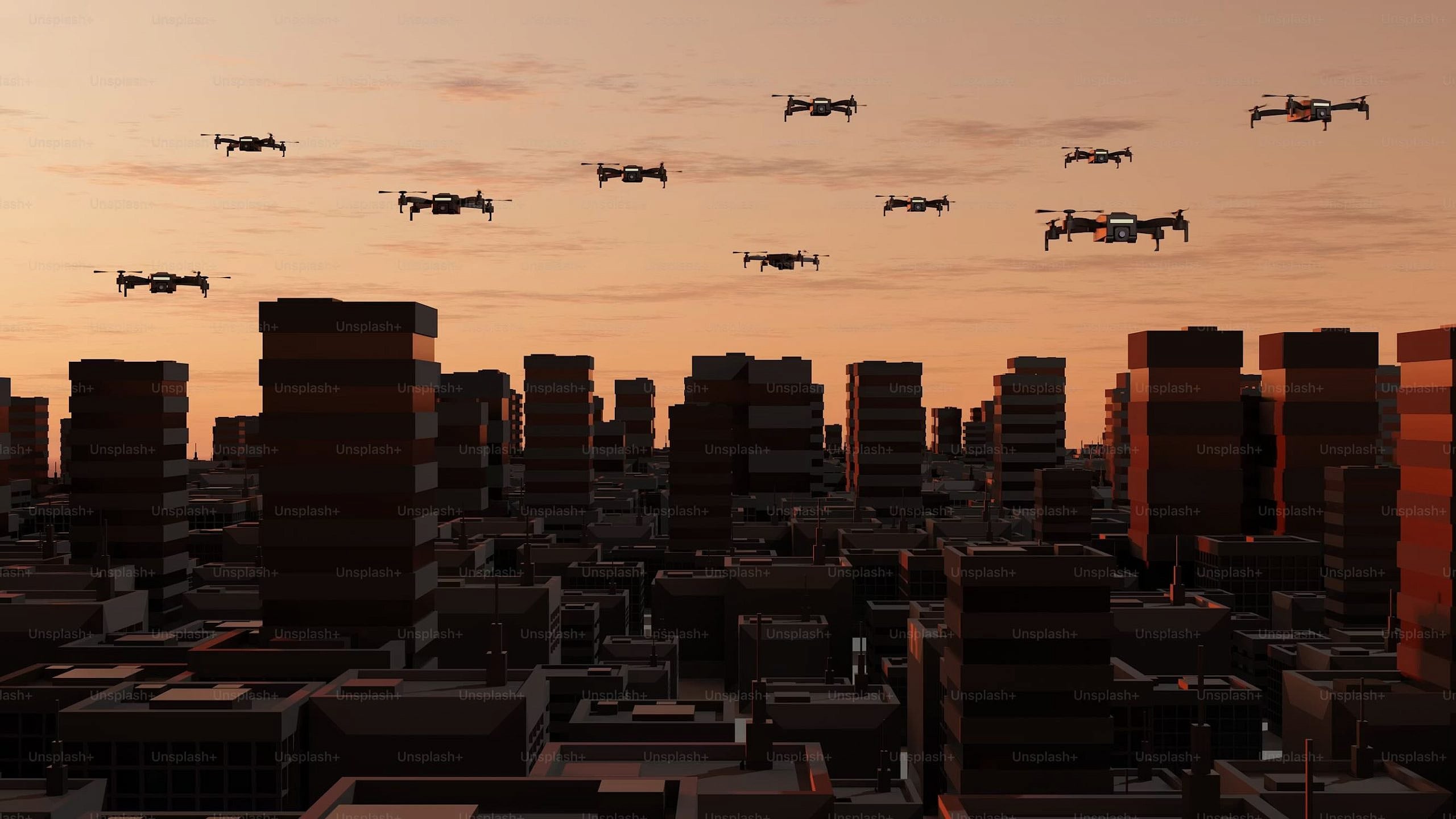
The wars in Ukraine and Iran have shown that traditional military power—air forces, navies, armored formations, and expensive weapons systems—can be challenged by relatively inexpensive unmanned platforms operating in the air, on land, at sea, and underwater. Dedicated cyber operators can disrupt satellites, defeat jamming systems, and compromise critical networks. Malicious code can inflict damage on civilian infrastructure, generating fear and uncertainty far beyond the battlefield.
The foundations of modern asymmetric warfare are no longer measured solely in tanks, ships, and aircraft. They increasingly depend on computing power, bandwidth, technological talent, innovation, and access to affordable energy. In many respects, the information age is bringing warfare back to an artisanal model, where individual innovators and small teams can create capabilities once reserved for industrial powers. The industrial age concentrated power; the digital age is beginning to distribute it.
What, then, must nations prioritize if they wish to maintain an advantage over both state and non-state adversaries?
First, they must invest in technological resilience and recycling. While critical minerals remain important today, technological evolution is steadily reducing dependence on scarce resources. New materials such as graphene may eventually supplement or replace silicon in key applications, while improved recycling technologies could recover many strategic materials from existing industrial waste.
Second, they must secure access to affordable and reliable energy. Recent conflicts have highlighted the strategic importance of energy independence. Renewable energy will remain part of the solution, but improvements in storage technology and reductions in mineral dependency will be essential. In the medium term, nuclear power—and particularly Small Modular Reactors (SMRs)—may offer one of the most practical paths toward energy security.
Third, they must protect bandwidth and communications infrastructure. Undersea cables have already become targets for both state and non-state actors. At the same time, high-capacity wireless communications will increasingly determine who controls information flows and battlefield awareness in the digital era.
Despite growing political resistance to immigration across much of the developed world, three categories of workers will remain strategically indispensable: manual laborers, healthcare professionals, and highly skilled STEM specialists. The latter, in particular, will become the warriors of the information age. The eventual battle will be to create societies which will attract the best talent, in all three categories. The demographic bonzanza or demographic winter will neither be an advantage or disadvantage, the ability to attract talent will depend on the quality of life, the protection of liberty and social happiness.
Future militaries will not prevail through brute force alone. Their success will depend on operators capable of commanding drone swarms, disrupting enemy communications in real time, defending critical networks, and reprogramming autonomous systems operating across land, sea, air, and space. We are approaching a world in which GPS itself has become a vulnerability rather than an advantage, forcing nations and armies to develop alternative methods of navigation and positioning.
Humanity is entering a new renaissance. The technologies transforming daily life are also redefining war and peace. Asymmetric warfare is no longer a tactic employed by the weak; it is becoming the dominant framework through which power is projected, contested, and ultimately exercised in the twenty-first century.