Author, publisher, community-builder
From Generation to Generation: Why Jewish Children Need Jewish Heroes
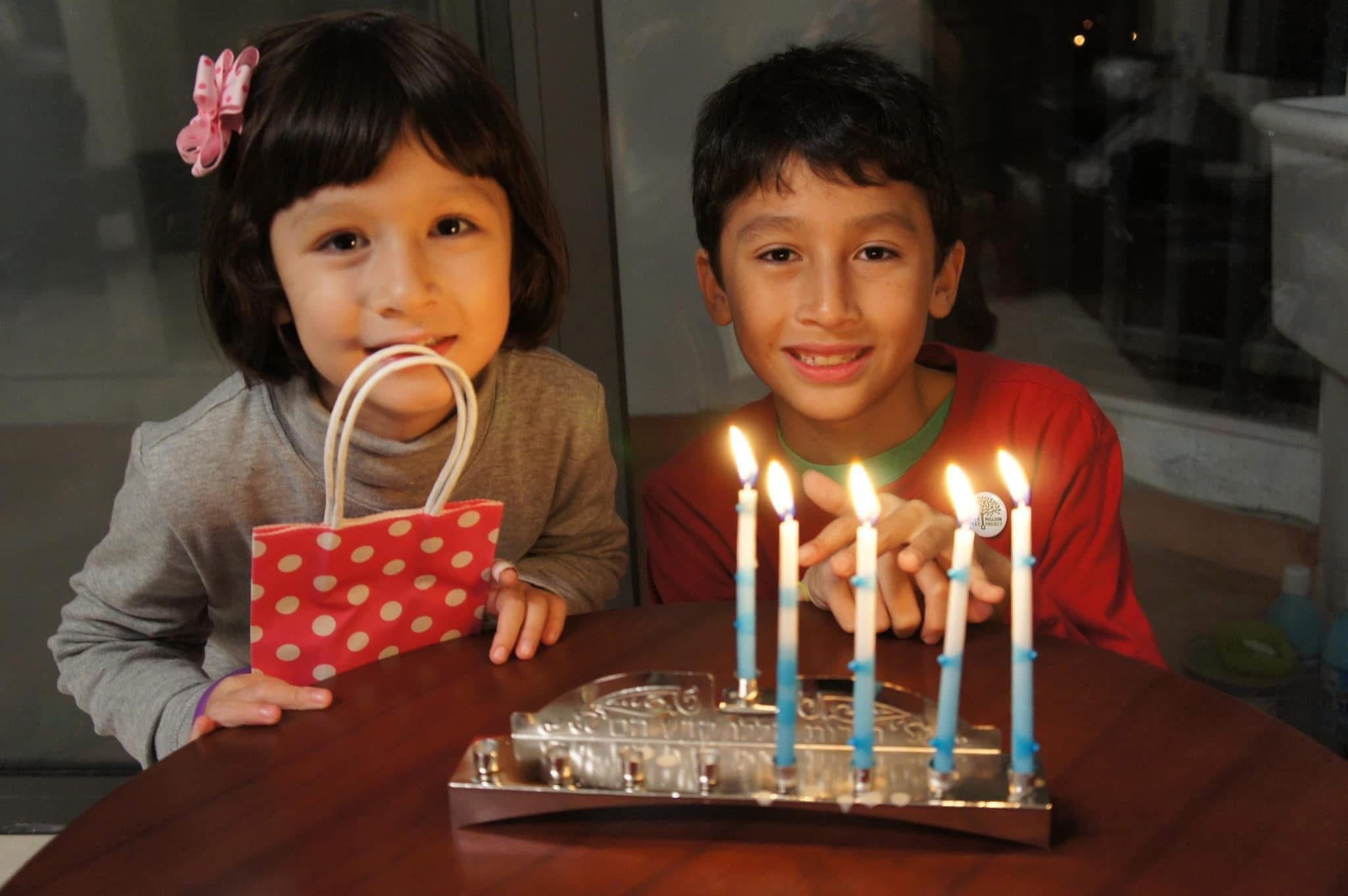
My children celebrating Hanukkah at our home in Shanghai, where we lived from 2006 to 2011.
When my children were young, they loved reading biographies of famous people. I often bought them illustrated chapter books that introduced young readers to some of history’s most remarkable figures.
Over time, though, I noticed something that bothered me. Apart from a handful of well-known Jewish figures, Jewish men and women were largely absent from these books. Where were all the Jewish scientists, inventors, writers, artists, entrepreneurs, and leaders whose achievements had helped shape the modern world?
This wasn’t an abstract question for me. Both of my children were born in Taiwan, and we spent five years living in Shanghai when they were young. Raising Jewish children in these two Asian cities was a very different experience from my own childhood in South Florida, and a world away from established Jewish communities like New York and Los Angeles, with their wide range of schools, community organizations, and cultural activities.
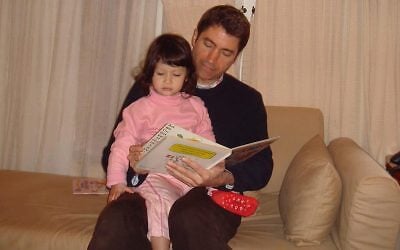
My children are also Taiwanese, and I wanted them to appreciate both sides of their heritage. I also knew that childhood was probably the one period in their lives when I could directly shape what they learned about being Jewish. As they grew older, they would develop their own interests, beliefs, and identities. While they were young, I wanted to give them a foundation they could carry with them wherever life took them.

We attended synagogue for Shabbat services and celebrated all the major Jewish holidays, along with some less widely observed ones, like Lag B’Omer. Both children studied intensively with private tutors to prepare for their bar and bat mitzvahs, and I’m pleased to report that they both did an excellent job reading their Torah portions.
But there was something else I wanted them to understand about being Jewish.
One Big Jewish Family
Jews sometimes refer to one another as mishpacha, the Hebrew word for family. We are, in a very real sense, one enormous global family. We don’t all look alike, speak the same languages, observe the same traditions, or hold the same beliefs, and we certainly don’t agree on everything. But we are connected by a shared history, heritage, and sense of belonging.
I wanted my children to feel that they belonged to this family every bit as much as children growing up in Jerusalem, London, or Fort Lauderdale, and to know how much its members had contributed to the world.
At the time, I was reading biographies written for adults and discovering one fascinating Jewish life after another: stories of ambition, creativity, perseverance, and courage. I wanted my kids to discover these people the same way they discovered so many other famous figures: by picking up a book, becoming absorbed in a life story, and perhaps coming away inspired to pursue something of their own. Yet few of these stories had been told for children. I saw what seemed to me a glaring gap in the market, and I made a promise to myself that one day I would do something about it.
That was twelve or thirteen years ago.
More Than a History of Persecution
Since the horrific events of October 7, 2023, and the surge in antisemitism that followed, Jewish communities around the world have faced a deeply troubling rise in hostility, hatred, and discrimination. As a father and as a Jew, I find this enormously disturbing, and like many others, I’ve asked myself what I can do, in my own small way, to respond.
Much of Jewish education today understandably focuses on antisemitism, the Holocaust, and the long history of persecution that Jews have endured. The books, programs, museums, and initiatives devoted to these subjects serve an essential purpose and deserve our full support. If anything, we need more of them, not fewer.
But Jewish history isn’t only a story of persecution and survival. It is also an extraordinary story of creativity, discovery, intellectual curiosity, and contribution to humanity.
Jews make up less than two-tenths of one percent of the world’s population, yet people of Jewish ancestry account for roughly one-fifth of Nobel laureates. Jewish scientists have helped unlock the mysteries of the universe and developed treatments and vaccines that have saved countless lives. Jewish writers, artists, composers, filmmakers, and musicians have enriched the world’s culture. Jewish entrepreneurs have built companies that transformed industries, while Jewish lawyers, judges, and civil rights advocates have fought to advance equality and justice.
Of course, the value of the Jewish people isn’t measured in Nobel Prizes or companies founded. But these accomplishments are part of our collective history, and they offer children a powerful way to appreciate their heritage. Some of these men and women were deeply religious; others were secular. Some dedicated their lives to serving the Jewish people, while others transformed science, medicine, literature, the arts, or public life. Many did both. Often in the face of tremendous obstacles, they challenged conventional wisdom and pursued seemingly impossible dreams. Their stories offer lessons worth learning and examples worth following, and they can become a powerful source of Jewish pride.
One Book at a Time
It has taken more than a decade to act on the promise I made to myself, but I’ve finally begun to fulfill it. Over the past two years, I’ve spent countless hours researching, writing, editing, guiding professional illustrators, learning new software tools, and navigating the unfamiliar world of independent publishing. It has been challenging, sometimes frustrating, and enormously rewarding.
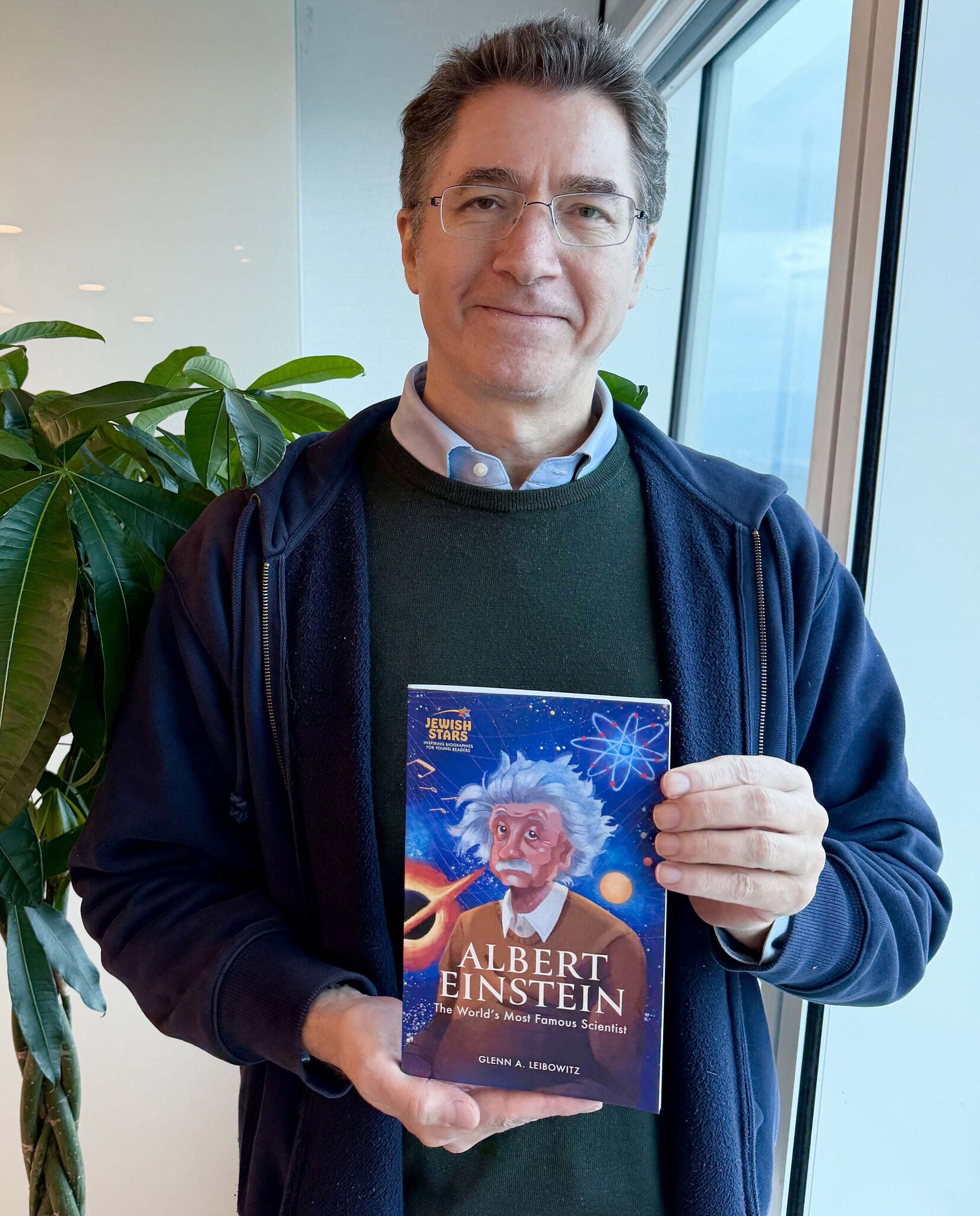
The result is Albert Einstein: The World’s Most Famous Scientist, which has just been published. It’s the first book in Jewish Stars, a new series of illustrated biographies for young readers ages 9–13. The next will tell the story of Golda Meir, and I hope to introduce many more scientists, inventors, artists, writers, leaders, entrepreneurs, and pioneers in the years ahead. Jewish Stars is the first initiative of Jewish Life Press, a new independent publishing venture I’ve launched to share the stories of remarkable Jewish lives with a wider audience.
Stories That Connect the Generations
There’s a Hebrew phrase that captures much of what has motivated me throughout this journey: l’dor v’dor, meaning “from generation to generation.” It speaks to the passing of Jewish knowledge, memory, values, and identity from parents to children and from teachers to students, a transmission that has sustained the Jewish people for thousands of years. It happens in synagogues, in classrooms, and around the holiday table. It also happens through the stories we share.
That’s one of the things I appreciate most about biographies. They make history personal, introducing children to real people with childhood dreams, setbacks, and breakthroughs. Young readers can see something of themselves in these lives and begin to imagine what they might achieve. When those people are Jewish, there is an added connection: the knowledge that these remarkable individuals belong to the same extended family they do.
That’s the connection I wanted my own children to experience, and it’s one I hope to help nurture in other Jewish families. Our children need to know what the Jewish people have endured. But they also deserve to know what the Jewish people have accomplished.
That’s the gap I hope to help fill through Jewish Life Press and Jewish Stars. One book at a time.
Glenn A. Leibowitz is the founder of Jewish Life Press and the author of Albert Einstein: The World’s Most Famous Scientist, the first book in Jewish Stars, a new series of illustrated biographies for young readers ages 9–13. Learn more at Jewish Stars.
Related Topics