From Hostages to Healing: Dreaming a New Dream – B’reisheet 5786
There are moments you never forget.
Moments in history so searing, you remember exactly where you were when you heard.
For some here this morning, it was President Kennedy’s assassination. You remember where you were standing, who told you, the way the world suddenly shifted.
For me, it was September 11th. I know exactly where I was — the disbelief, unreal.
And now, it’s October 7th.
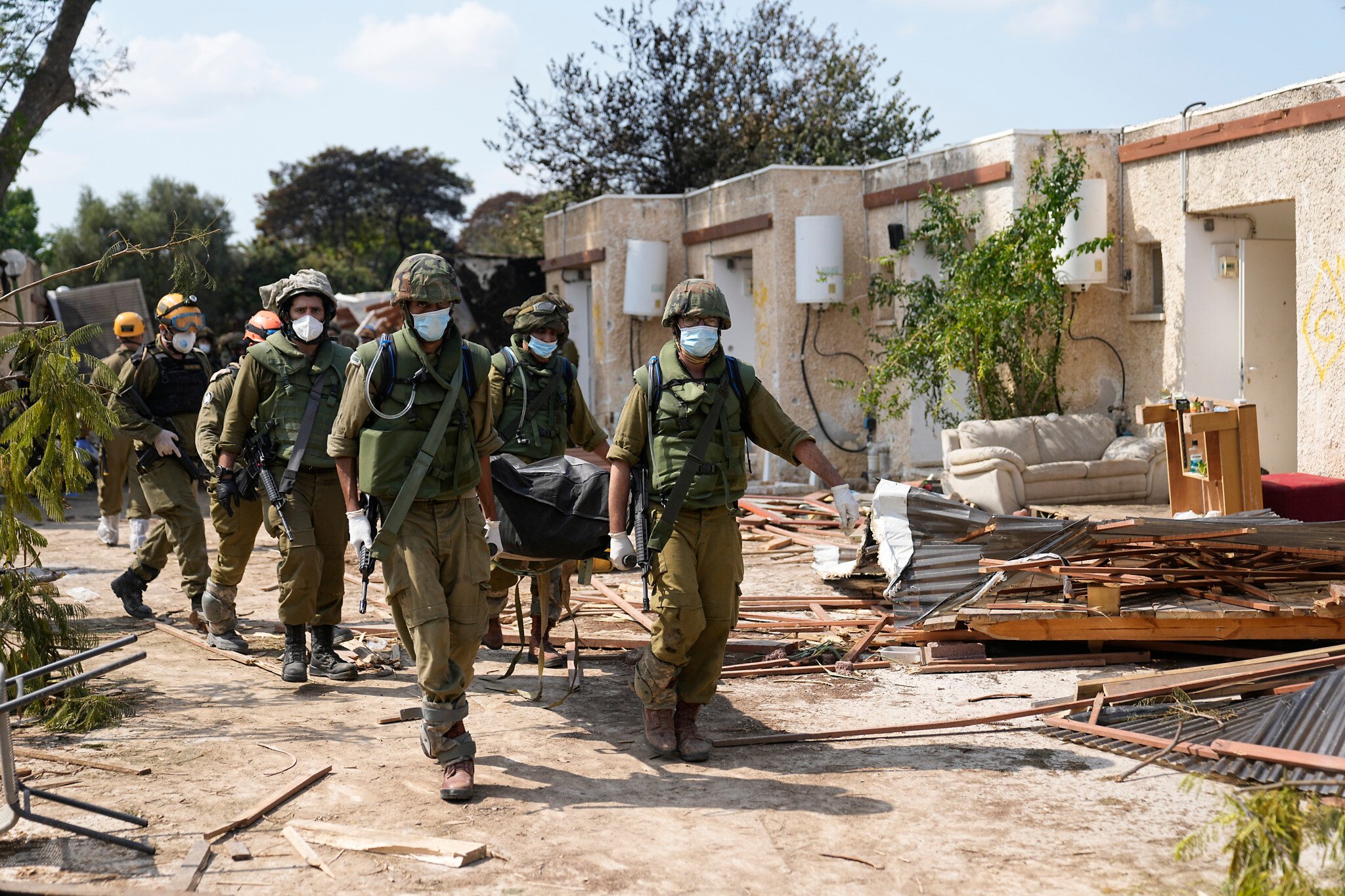
That day two years ago, I stood right here, hearing that there had been a “lo tov,” a “not good” terrorist attack in Israel.
During services, people whispered more details, and by that night — Simḥat Torah — we knew it was much, much worse.
We canceled our live music and toned down the celebration.
We danced, yes — but less energetically — mostly, so our children would still appreciate the holiday.
 And then came two long years.
Two years of hell for the hostages.
Two years of war for our siblings in Israel.
Two years of devastation for Gaza.
And we could not breathe.
It was as if the air itself had grown heavy — tohu va-vohu — chaotic.
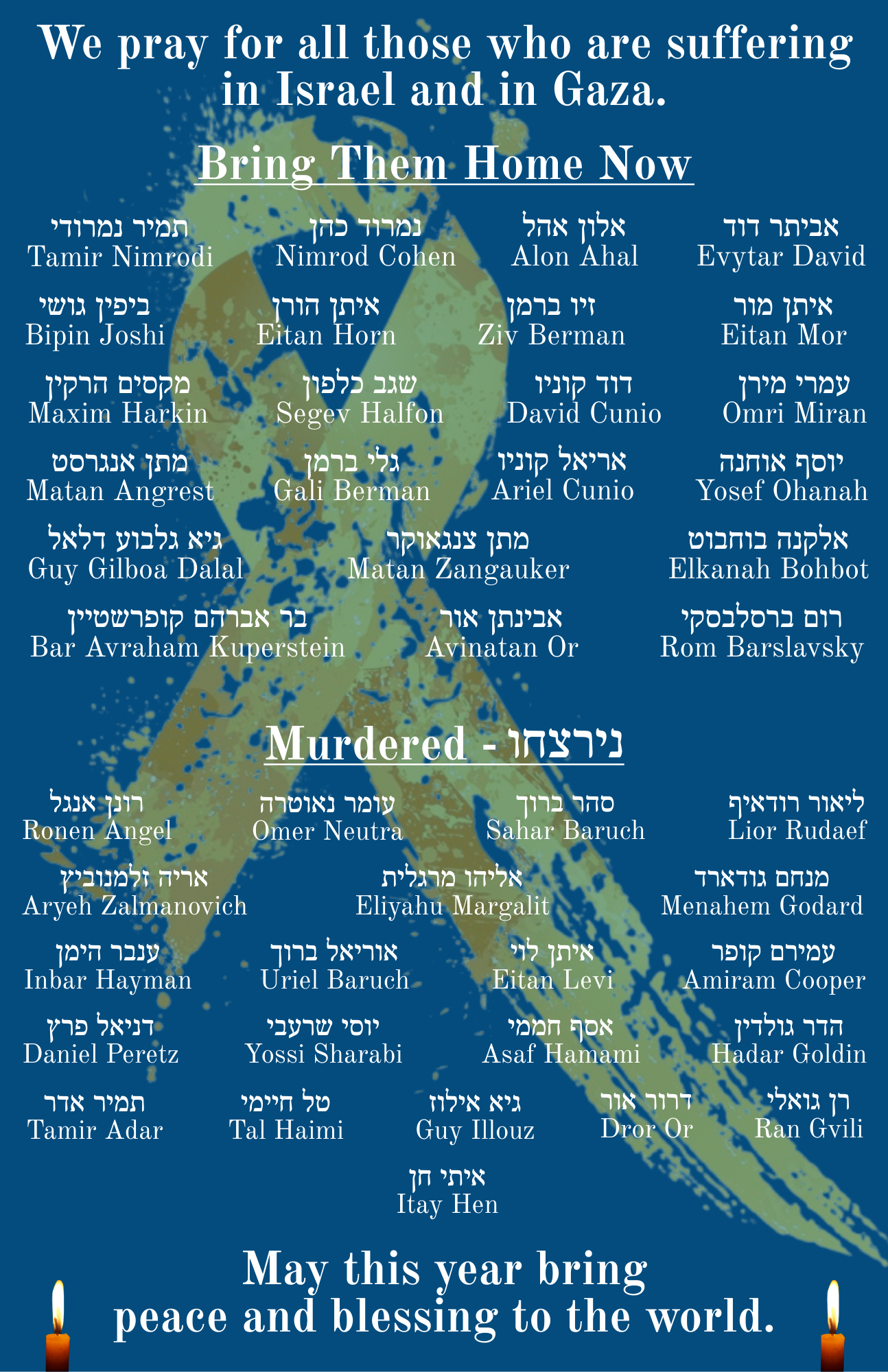
There were vigils and empty chairs, blue and yellow ribbons, tables with the names of the hostages, and their faces everywhere.
Every service, we lifted their names — twice a day, for 738 days.
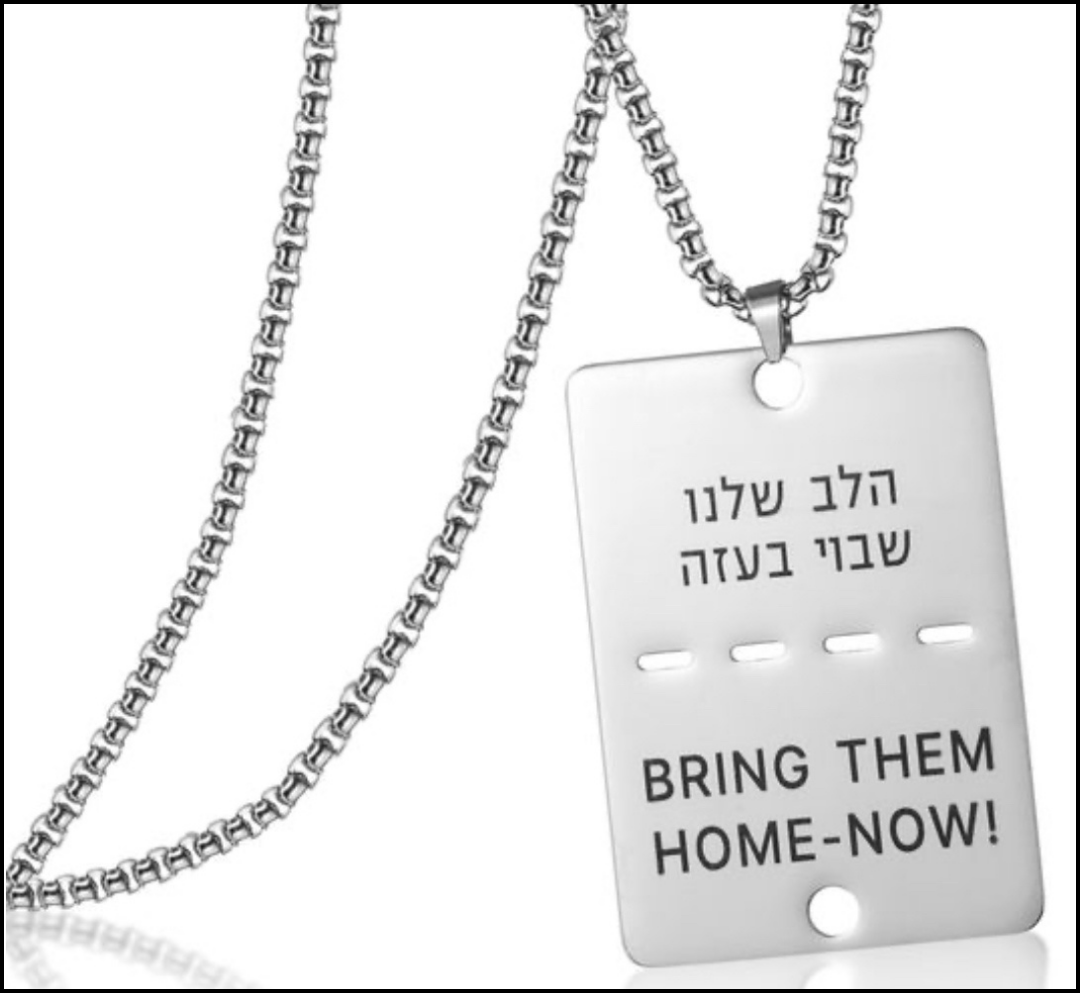
I wore this small silver necklace, given to me by the son of a hostage I met in Tel Aviv’s Hostage Square. When I asked what I could do, he said simply, “Wear this.”
And I did.
Every day.
This week, I finally took it off.
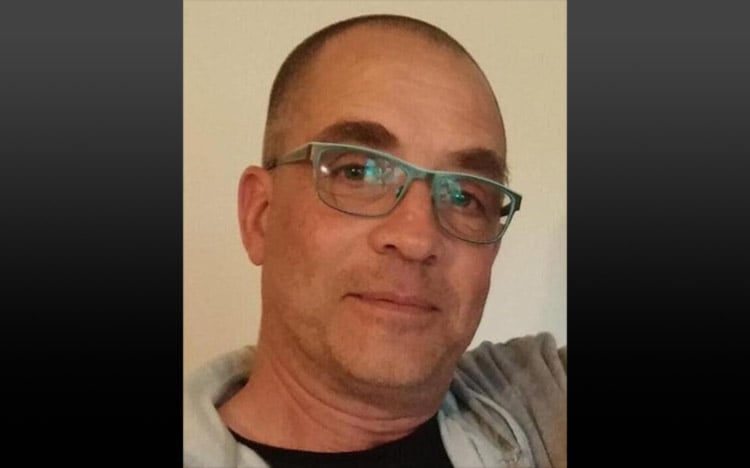
But then I checked; and Lior, his father, still is not home. He was killed defending his kibbutz; his body was taken into Gaza and never returned.
So today, as we rejoice with the families whose loved ones have been freed, we also carry those who still wait for closure, who cannot yet bury their dead.
For the living, we say Barukh Matir Asurim — Praised is the One who frees the captives.
And for the dead, we whisper El Malei Raḥamim — may their souls be bound up in the bond of life.
* * *
And then, on Tuesday night, Simḥat Torah night — exactly two years later on the Hebrew calendar — Israel could finally breathe again.
The remaining living hostages were home.
The scenes were almost impossible to believe:
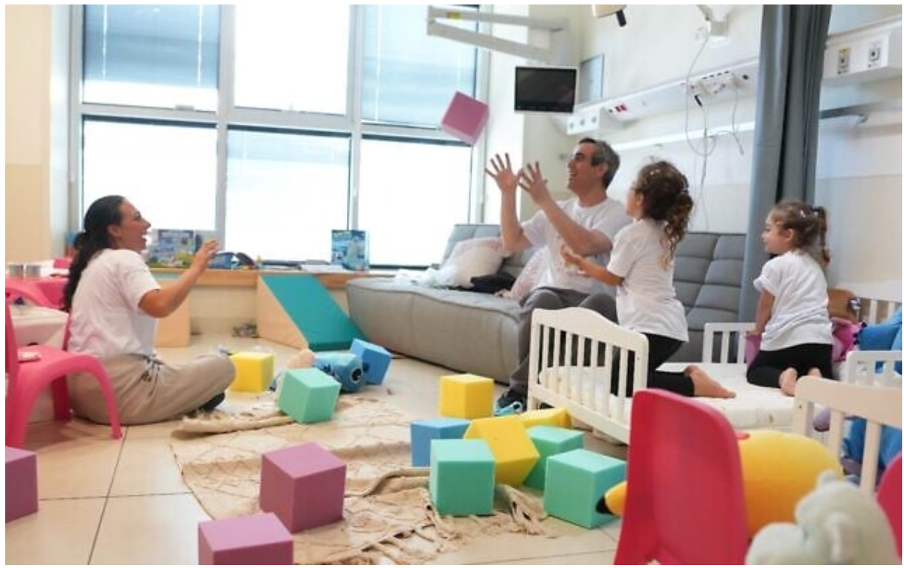
A father embracing the daughter he had last seen as a six-month-old.
A young couple, Noa Argamani — she had been dragged away on a motorcycle — and her boyfriend, Avinatan Or, reunited, against all odds.
It was, as the Psalmist writes, “Shir ha-Maʿalot — B’shuv Adonai et Shivat Tzion, hayinu k’holmim” — When God brought back the captives of Zion, we were like dreamers (Psalm 126).
That psalm was written by our ancestors returning from Babylonian exile 2,500 years ago, and it became part of Birkat Ha-Mazon — the Grace after Meals — because every moment of fullness, every time we are gathered safely around a table of food, recalls that miracle of coming home.
And this week felt like that — a return from exile, a dream fulfilled.
Tears became laughter.
Lament turned to song.
But as powerful as that dream is, it is not the end of the story.
It is not enough to wake from the nightmare; now, we must begin to dream anew.
* * *
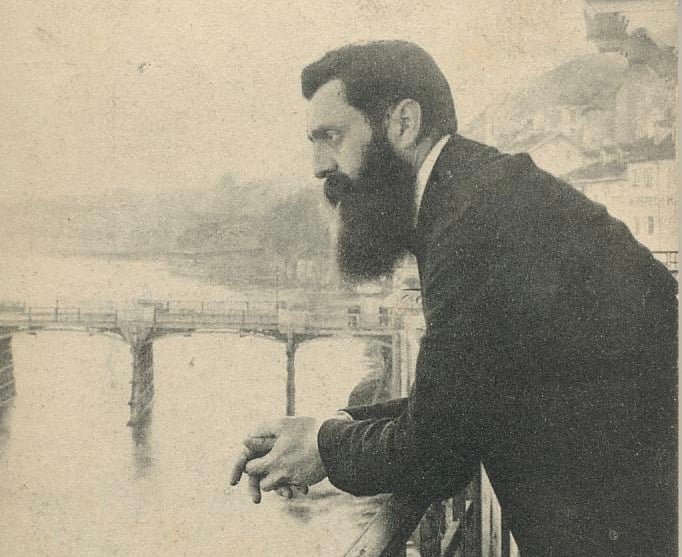
Our original Zionist dreamer was, of course, Theodor Herzl.
When he published Der Judenstaat in 1896, his idea seemed absurd — a sovereign Jewish state? After centuries of exile?
The world laughed.
Jews laughed.
Herzl wrote in his diary: “At Basel I founded the Jewish State. If I said this out loud today, I would be met with universal laughter. Perhaps in five years, certainly in fifty, everyone will know it.”
Fifty-one years later — in 1947 — the United Nations voted for partition, and Herzl’s dream took form.
His famous phrase still echoes: “Im tirzu, ein zo aggadah” — If you will it, it is no dream.
Herzl dreamed of a safe, democratic, vibrant home for the Jewish people.
So, today, we must ask: who will be our new Herzl?
Who will dare to dream again — not of statehood, which we, thankfully, have, but a dream of healing?
Of a homeland not secure only for Jews, but one that can coexist with dignity for Palestinians?
Because, as it stands, this reality is not sustainable.
* * *
Right now, Israelis and Palestinians live with layers of trauma and mistrust.
When I speak with friends in Israel, they tell me they can’t yet think about “the day after.”
The wounds are too raw, the fear too close.
And I imagine many in Gaza feel the same.
Yet something subtle has shifted.
For all the devastation, Israel today is qualitatively safer than it was on October 6, 2023.
Hamas has been dismantled, Hezbollah deterred, the Houthis have been held in check, and Iran’s regional power shaken.
Israel’s technological and intelligence capabilities are quite formidable. The existential fear — while never gone — has lessened significantly.
And when a people begins to feel even a little safer, they can begin, just begin, to imagine taking risks for peace again.
So now that our hostages – at least the living – are home, we ask: Where do we go from here?
* * *
Dr. Judith Lewis Herman, a pioneering psychiatrist and author of Trauma and Recovery, teaches that healing unfolds in three stages:
- Safety and Stabilization
- Remembrance and Mourning
- Reconnection and Reintegration
After trauma, she writes, survivors must first restore a sense of safety — physical and emotional.
Then they must remember and grieve what was lost.
And, finally, they must reconnect — to others, to community, to hope.
Israel — and the Jewish people — have and are moving through the first two stages.
There is greater safety than there was two years ago. Mourning continues, and remembrance is active — in ritual, in art, in testimony, in prayer.
What remains is the hardest step: reconnection.
How do we re-weave the torn fabric (which was never that well woven) between Israelis and Palestinians, between Jews and Muslims, between our own fractured communities?
* * * * * * *
This week’s Torah portion, B’reisheet, begins in darkness and chaos:
“Ve-ha-aretz haytah tohu va-vohu, ve-ḥoshekh ʿal p’nei tehom — The earth was unformed and void, and darkness was upon the face of the deep.”
A rabbinic midrash (Genesis Rabbah 1:1) teaches that before creation, God looked into the Torah — into wisdom itself — and said, “Let there be light.”
Out of chaos came cosmos; out of tohu va-vohu came order, life, and meaning.
Other midrashic layers explain that the world was created out of love.
Why?
Because God desired relationship — a world in which free beings could choose kindness, justice, compassion. Creation itself was an act of hope — a divine risk that out of confusion could emerge connection.
And so it is with us.
The world after October 7 is messy, and even now, with a fragile ceasefire, it remains very much half-formed.
There is no clear plan, no council of peace as of yet, no multinational force yet to guarantee security or governance.
Hamas is rearming and has killed Israeli soldiers; Israel remains in parts of Gaza and has attacked in response.
And yet — the Torah invites us to begin again.
B’reisheet bara Elohim — In the beginning, God created…
Or perhaps, God began to create. The verb is imperfect — ongoing.
Creation was not a one-time act.
It is a process — God’s and ours.
Every generation is called to create the world anew.
* * *
Our tradition understands that healing after rupture is holy work.
When two people are estranged, the Talmud teaches (Yevamot 62b) that reconciliation is so great it brings the Divine Presence back into the world.
“When love departs, the Divine departs; when peace returns, so does God.”
Isaiah imagines a day when “They shall beat their swords into plowshares and their spears into pruning hooks.”
While some say that verse is naïve, maybe we can reframe it as aspirational. It insists that human beings, having known war, can choose creation instead.
We are not there yet.
But the first step is to see one another’s pain.
Not to equate every suffering, but to acknowledge that pain is real on both sides, and that denial dehumanizes us all.
* * *
Dr. Herman’s most recent book, Truth and Repair: How Trauma Survivors Envision Justice, builds on her earlier work. She argues that healing is inseparable from justice — and that justice, for trauma survivors, is not retribution but recognition: truth-telling, accountability, and repair.
That idea resonates deeply with Jewish ethics. The Hebrew word teshuvah means not only repentance but return — a turning back toward relationship, toward wholeness.

This is the vision behind initiatives like the Parents Circle – Families Forum, the group of bereaved Israeli and Palestinian parents who have lost children to the conflict and who choose, instead of revenge, to speak together for peace.
They remind us that empathy is not weakness; it is moral courage.
We cannot erase the past. But we can, through truth and repair, transform it.
* * *
So what would reconnection look like in reality?
It would mean that Israel, now more secure, dares to imagine a new architecture of peace:
- An international coalition — perhaps including the UAE, Saudi Arabia, Egypt, Jordan, and Western partners — to guarantee borders and reconstruction.
- A pathway toward a demilitarized Palestinian homeland, where young Palestinians can dream of building.
- A Truth and Reconciliation Commission, modeled on South Africa’s, to allow testimony, acknowledgment, and healing.
- And an Israel that remains strong, Jewish, democratic, and safe, with the compassion to recognize the image of God in its neighbors.
That is the dream.
It feels distant, maybe very distant…
But then again, so did Herzl’s dream.
* * * *
Two years ago, on Simḥat Torah, the music stopped.
This year, we danced again.
With full hearts.
With full joy.
With the resolve of those who have lived through the darkness of the abyss and still, still we choose life.
We don’t forget the trauma.
But we cannot live trapped inside it.
* * *
The Torah begins with chaos and ends with Moses looking into the Promised Land — a vision not yet fulfilled.
Every year we return to B’reisheet because creation is never finished; hope is never obsolete.
Herzl wrote: “Dream and deed are not as different as they seem. All deeds of (men) [people] are only dreams at first.”
So let us dream again — of a world where Israelis and Palestinians find peace; where trauma leads not to retribution but to vision.
If we will it — im tirzu — it will not be a dream.
* * *
As we begin reading the Torah again this Shabbat B’reisheet, may we, like God, bring light from darkness.
May we, like the Psalmist, become dreamers once more.
And may we, like Herzl, dare to believe that even the most impossible dream can become reality.