
Journalist, Commentator on Middle East Issues
From Hostility to Development: How a Democratic Iran Could Reshape the Region
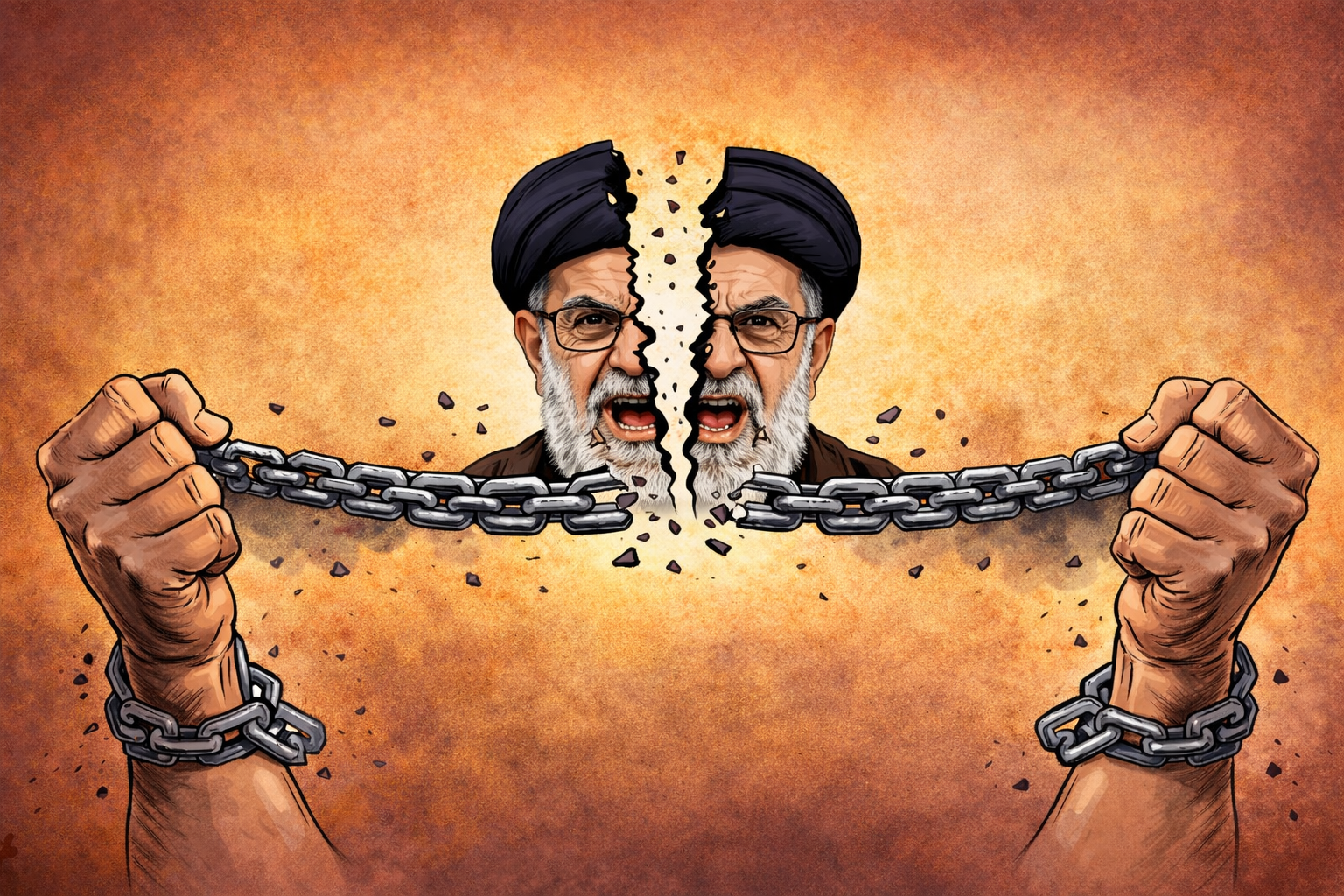
AI Creation (my prompt)
The prospect of Iran transforming from a revisionist theocratic regime into a national democracy seeking economic development and global integration would represent far more than a mere change of government. It would amount to a geopolitical earthquake. Since 1979, under the leadership of Ali Khamenei and the revolutionary establishment, Iran has functioned as an ideological power striving to reshape the regional order through proxies, militias, and ambitions of hegemony. A transition to pragmatic democracy would replace the logic of “resistance” with the logic of growth.
A Regional Paradigm Shift
A democratic Iran, in need of foreign investment, technology, and access to global markets, would likely prioritize stability over confrontation. This would mean reduced support for proxy organizations, less incentive to escalate maritime tensions in the Gulf, and diminished friction with neighboring states. Such a scenario could open the door to new regional security arrangements, and perhaps even a collective security framework in the Persian Gulf.
The removal of the Iranian expansionist threat would also reduce Arab states’ dependence on external deterrence and allow them to redirect resources toward development. In turn, the normalization process launched during the presidency of Donald Trump under the framework of the Abraham Accords could deepen, this time not as a defensive coalition against Iran, but as a broad economic and technological partnership that might one day include Tehran itself.
Implications for Israel
Israel’s strategic standing has long rested in part on the perception of the Iranian threat as a unifying factor in the regional system. A democratic Iran would diminish the value of that “shared threat,” but it would also create new opportunities. Instead of an axis of confrontation, a new axis of innovation could emerge: Israel offers advanced technology and human capital, while Iran brings a market of roughly 85 million people, vast natural resources, and unique geographic access.
In an optimistic scenario, diplomatic relations between Jerusalem and Tehran, severed after the Iranian Revolution, could gradually resume through economic channels. Cooperation in energy, water management, advanced agriculture, and cybersecurity could reshape the regional balance from deterrence to interdependence.
However, Israel would also need to update its security doctrine: less focus on an immediate existential threat and more emphasis on managing multilateral risks within a changing regional architecture.
The Palestinian Dimension
Revolutionary Iran positioned itself as a patron of the armed Palestinian struggle. A regime change replacing ideological militancy with state pragmatism could reduce financial and political support for militant organizations and encourage diplomatic solutions. A democratic Iran seeking Western legitimacy would find it harder to justify backing regional escalation.
With the “Iranian axis” receding, polarization could diminish, potentially returning the Palestinian issue to a more diplomatic track, perhaps within a broader regional framework involving Gulf states, Israel, and Iran.
A Bridge to Asia
Geoeconomically, Iran occupies a critical crossroads linking the Middle East, the Caucasus, Central Asia, and the Indian Ocean. Democratization and economic opening would position the country as a central hub for transport and energy corridors between Asia and Europe. Infrastructure links through Iran, railways, gas pipelines, and ports, could complement regional initiatives and even provide Israel with new overland access to Asian markets.
Such integration would also strengthen Gulf economies and create a web of shared interests in which regional stability becomes a primary economic imperative.
Conclusion
An Iranian democratization scenario is far from imminent. Yet if it were to occur alongside a genuine development strategy, it could transform the Middle East from a system defined by deterrence and rivalry into one shaped by regional integration. For Israel, the challenge would be to convert its security advantage into an economic and strategic one. For the broader region, it could mark a historic opportunity to move from chronic confrontation toward cooperation based on shared interests.
Related Topics
Related Posts