
Senior Research Fellow, S. Neaman Institute Technion
From Lab to Life: Black Holes Are Real!
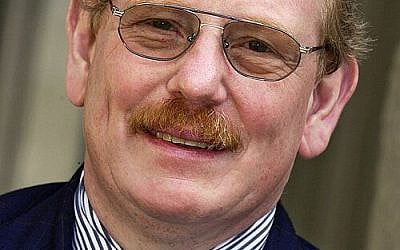
Prof. Reinhard Genzel recently visited the Physics Faculty of my university, Technion. Genzel won the Nobel Prize in Physics for his discovery of a super-massive black hole near the center of our galaxy, the Milky Way (along with Andrea Ghez and Roger Penrose). He is an emeritus professor from the University of California, Berkeley, and now heads the Max Plank Institute for Extraterrestrial Physics, in the outskirts of Munich.
Here is what experts say is the importance of this discovery:
“Reinhard Genzel’s discovery of a supermassive black hole at the center of the Milky Way, known as Sagittarius A* (\(SgrA^{*}\)), was crucial because it provided the first direct, compelling evidence that black holes are real, physical objects and not just theoretical curiosities. His work over 30 years, alongside Andrea Ghez, definitively proved that an immense amount of mass is packed into a tiny, dark, and invisible space at the heart of our galaxy, which directly confirms Einstein’s General Theory of Relativity”.
Einstein’s General Theory of Relativity (1915) explains how massive objects like stars and planets (and black holes!) warp space and time, causing objects e.g. light, to follow curved paths.
Genzel doggedly, persistently, gathered and analyzed data from infrared telescopes, showing how light from Milky Way stars was being bent by a truly supermassive entity close to the center of the galaxy. It took some 30 years, and dogged persistence — against, as always, naysayers.
Well done!
Related Topics
Related Posts