
Senior Research Fellow, S. Neaman Institute Technion
From Lab to Life: Learning from Orcas
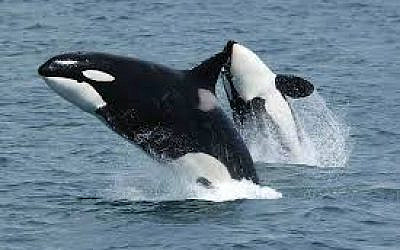
The American Psychological Association’s publication Monitor tracks the top 10 psychology-based academic articles in 2025, based on downloads. The #1 article is surprising:
- Towers, J. R., Visser, I. N., & Prigollini, V. (2025). Testing the waters: Attempts by wild killer whales (Orcinus orca) to provision people (Homo sapiens). Journal of Comparative Psychology.
Towers and colleagues “examined 34 cases of killer whales offering prey to humans on boats, in the water and, more rarely, on shore”. The behavior was recorded in four oceans and involved both males and females of varied ages. The items offered were fish, mammals, birds, reptiles, invertebrates and seaweed. “The researchers believe that this interspecies altruistic behavior may indicate that killer whales are practicing learned cultural behavior, exploring, or playing while also learning about human behavior and possibly developing relationships with humans. …sharing may be a common behavior among certain killer whale populations…”
Economist Gary Becker won a Nobel Prize, in part for his ‘rotten kid theorem’, showing that selfish kids still share with family members, ‘altruistically’, because they (like the orcas) are developing relationships that provide some return eventually. This is driven by the free-market ideology that it is self-interest solely that drives the world… even when it looks like altruism. Economists worship self-interest.
Humans long ago turned off evolution; happily, we no longer kill or allow to die those who are disabled or evolutionally ‘damaged’. But for whales, evolution is alive and well. The fact that they practice charity and giving to others suggests that altruistic behavior has evolutionary benefits.
Is there a message here for us humans? Helping others, without any return, is vital for humanity’s survival? How about “MTHWCA” (pronounced mith-waca) Make the World Care Again?, to replace MAGA?
Related Topics
Related Posts