Senior Research Fellow, S. Neaman Institute Technion
From Lab to Life: New Breakthrough vs. an Old Foe — Cancer
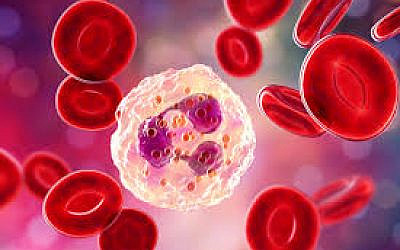
It took him 50 years – but cancer researcher Dr. Rakesh K. Jain, Harvard University, finally is getting oncologists to think differently about treating cancer.
A tired joke speaks of an economist who dropped a ten-dollar bill in a dark alley – and ran out to the streetlight to look for it. Why? Because – that is where the light is.
Dr. Jain knew researchers studied cancer tumors themselves. But what about, he said, the ‘soil’ or context in which they grow? That may hold the key. That IS where the light is, he claimed.
“Cancer cells cannot grow without nutriments,” he told Flora Lichtman, on the latest wonderful Science Friday podcast. “Oxygen and nutrients, and blood vessels. …What I discovered is, most cancer drugs bypass the tumor like the beltway around the city. Blood vessels [feeding the tumor] …impair the effectiveness of the drugs, when the blood vessels are bad.” Treatments that impair the blood vessels feeding the tumor may also prevent drugs from reaching the tumor, because the drugs get there via the blood and blood vessels.
Jain developed a microscope ‘window’ to observe and visualize the blood flow to tumors. In some parts of the tumor, he found, ‘the blood is not flowing at all.’ So how can the drug get there to the tumor???
In other words, in some parts of the tumor, the blood flow is quite brisk; in other parts, there is no blood flow. We need to figure out what’s stopping the blood flow and how to improve it.
Dr. Jain’s research went from heresy to canon. Working with mice, Jain figured out how to develop a drug that improved the blood flow to the tumor, rather than curtail or stop it! His research has led to major breakthroughs in treating cancers of the liver, etc. The basic idea When administering chemotherapy, anti-cancer drugs, use a drug in concert with it that improves blood flow to the tumors. Jain’s protocol for cancer treatments is now widely used.
Potentially, Jain says, it will help about half a billion people worldwide with many diseases.
Imagine – doing research, rejected at first (his first six grant proposals were rejected, ‘what is he smoking?’ asked the experts), now saving millions of lives. Well done, Dr. Jain!
Related Posts