
Senior Research Fellow, S. Neaman Institute Technion
From Lab to Life: Routine Helps Us Age Well
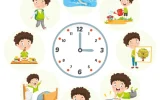
While I teach my students to practice openness to change, as a doorway to being more creative, I myself am a creature of routine.
I eat oatmeal for breakfast, rise at 5 a.m. to walk our dogs, and am asleep by 10 p.m. I do my writing in the morning, and find that my brain shuts down by early evening. Routine. Old humdrum routine. Sometimes – my loving family is a bit mocking about my daily routine.
This is why I loved this new piece in Science Daily, July 30: “Scientists find a simple routine linked to less pain and depression. A predictable daily routine may be a surprisingly simple way to reduce pain, improve mood, and support healthier aging.”
Hey! Tell me more!
“A consistent daily routine may offer meaningful benefits for both physical and mental health, according to new research from the University of Missouri. The study found that older adults who followed regular daily schedules reported less physical pain and fewer symptoms of depression, including those who experienced insomnia. The findings suggest that everyday patterns, such as waking, eating, working, socializing, and going to bed at similar times, may support better overall well-being.” **
** Eunjin Lee Tracy, Christine J. So, Brian Chin, Yuxi Xie, H. Matthew Lehrer, Jill A. Kanaley, Brant P. Hasler, Daniel J. Buysse. Behavioral-social rhythms and insomnia symptoms: associations with pain, body mass index, and depressive symptoms among older adults. Journal of Behavioral Medicine, 2026; 49 (3): 551 DOI: 10.1007/s10865-026-00646-6
“Keeping a regular daily schedule may help reduce pain and depression, especially among older adults with insomnia. Researchers found that consistent times for waking, eating, socializing, and sleeping were linked to better well-being regardless of sleep quality. These routines may strengthen the body’s internal clock and limit the disruptive effects of social jet lag.”
I think the ‘sound sleep’ benefits of routine are especially important. “About half of adults age 60 and older experience symptoms of insomnia, according to the National Council on Aging. To examine how sleep difficulties relate to health and quality of life, Eunjin Tracy, an assistant professor in the College of Education and Human Development, U. of Missouri, studied survey responses from 67 older adults. Of those participants, 37 had insomnia.” That is, more than half!
You can practice both-and: BOTH preserve daily routine – AND change the things you do, eat, listen to, enjoy, or experience, WITHIN that framework of routine. Think of routine as a scaffold. Hang on it new experiences…but keep the scaffold.
Related Topics