
From Moab to Moab
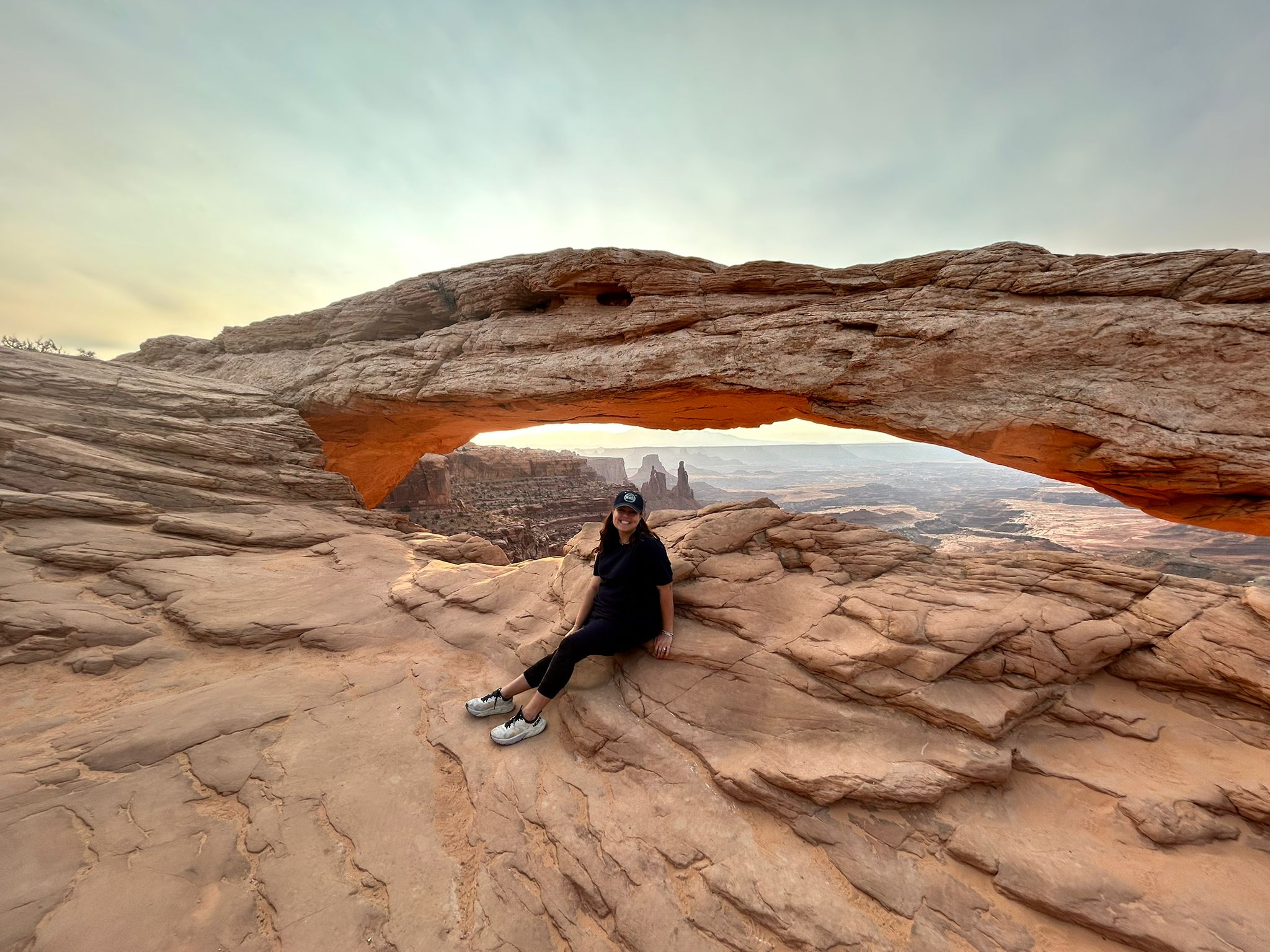
We stood at the edge of the Mesa Arch in Utah an hour after sunrise. The crowds had moved on to other hikes. It was silent, except for the wind moving through the stone, carved by the elements centuries earlier. Peering through the arch to the canyon thousands of feet below, God felt close — and I felt small.
Two nights earlier, driving through Arches National Park, we had looked for the park’s famous rock formations: the Lovers. Park Avenue. Balanced Rock. But it wasn’t until I washed the red dust off my sandals at our hotel later that evening that I realized how ludicrous all it was that these mountains and landscapes crafted by God’s hands would be named, curated, and photographed by people. As if, maybe, somehow, it might give us some semblance of control over these forces.
***
Parashat Balak is a story of failure.
The people of Moab see the Israelites gaining strength and conquering land and they try to convince other tribal leaders to ally with them, afraid the Israelites “will lick clean all that is about us as an ox licks up the grass of the field.” The Moabites are filled with dread; they look for a rescuer. The text is pointed: that rescuer, Balak son of Zippor, was the king at that time. Ibn Ezra claims this means he was only appointed because of the Moabites’ fear.
Balak sends messages to Bilam until he agrees to curse Israel; the sorcerer sets off on his donkey, who swerves off the road. Infuriated, Bilam beats her until the poor animal lies down on the road and talks to him.
Bilam seeks to control nature: If I beat this animal hard enough, she will walk where I want her to. But in a shocking display of how little power he really has, his animal chastises him: “What have I done to you that you have beaten me these three times?”
Their failures continue. Bilam tries to curse Israel, but his words are transformed into blessings. He tries to curse them in different locations; he tries cursing different sections of the Israelite camp. Each attempt fails. King Balak is irate: “What have you done to me? Here I brought you to damn my enemies, and instead you have blessed them!”
In the end, Bilam acknowledges his inability to curse Israel. “He stopped trying to divine the precise hour when a curse could stick to the Israelites,” explains Sforno. “There was no hope that any curse could be effective.” Bilam looks toward the desert wilderness and admits the truth: he is powerless. He blesses Israel again, and the sorcerer and king go their separate ways.
The story of Balak and Bilam is a strange one. Nothing really changes. Scared people try to control forces greater than they are. They fail. They walk away.
If there’s a lesson here, it’s well hidden.
***
Residents of the arid mountain region in Utah named it Moab in 1880. One explanation for it is that it’s a remote area, just like the Moab of the Bible. A decade after it was named, citizens rallied to get Moab renamed something less “immoral,” citing the ancient Moabites’ idol worship and sexual practices. They failed, and Moab kept its name.
Moab is a beautiful place, wild in a way that few places are today. And yet everywhere I look, there are human efforts to conquer, control, and mark it. This morning, I sat at that arch and watched as the sun moved higher and hotter in the sky. I took photos knowing they would never compare to the real view. These efforts may be futile, but they aren’t pointless. In the end, maybe it’s about the moment when we back away from the larger-than-life rocks, when we look out at the wilderness, when we remember how small we really are.
Maybe it’s not about what we walk away with, but what we walk away without.