From New Jersey to Northern Israel
Ping, I look down at my phone and see yet another notification from the official Kiryat Shmona update WhatsApp group. “In the coming hours the IDF is expected to carry out a wave of strikes… routine continues, and there are no special instructions for the public at this time”. This is the second message this week and it’s only Tuesday.
I spent this past year living and doing Sherut Leumi in Kiryat Shmona, and while I am no longer there, I am still on the WhatsApp chat. Now, after a few months of quiet, unfortunately the chat is once again full of updates. With every text, I feel a mix of sadness, exhaustion, and longing for the north.
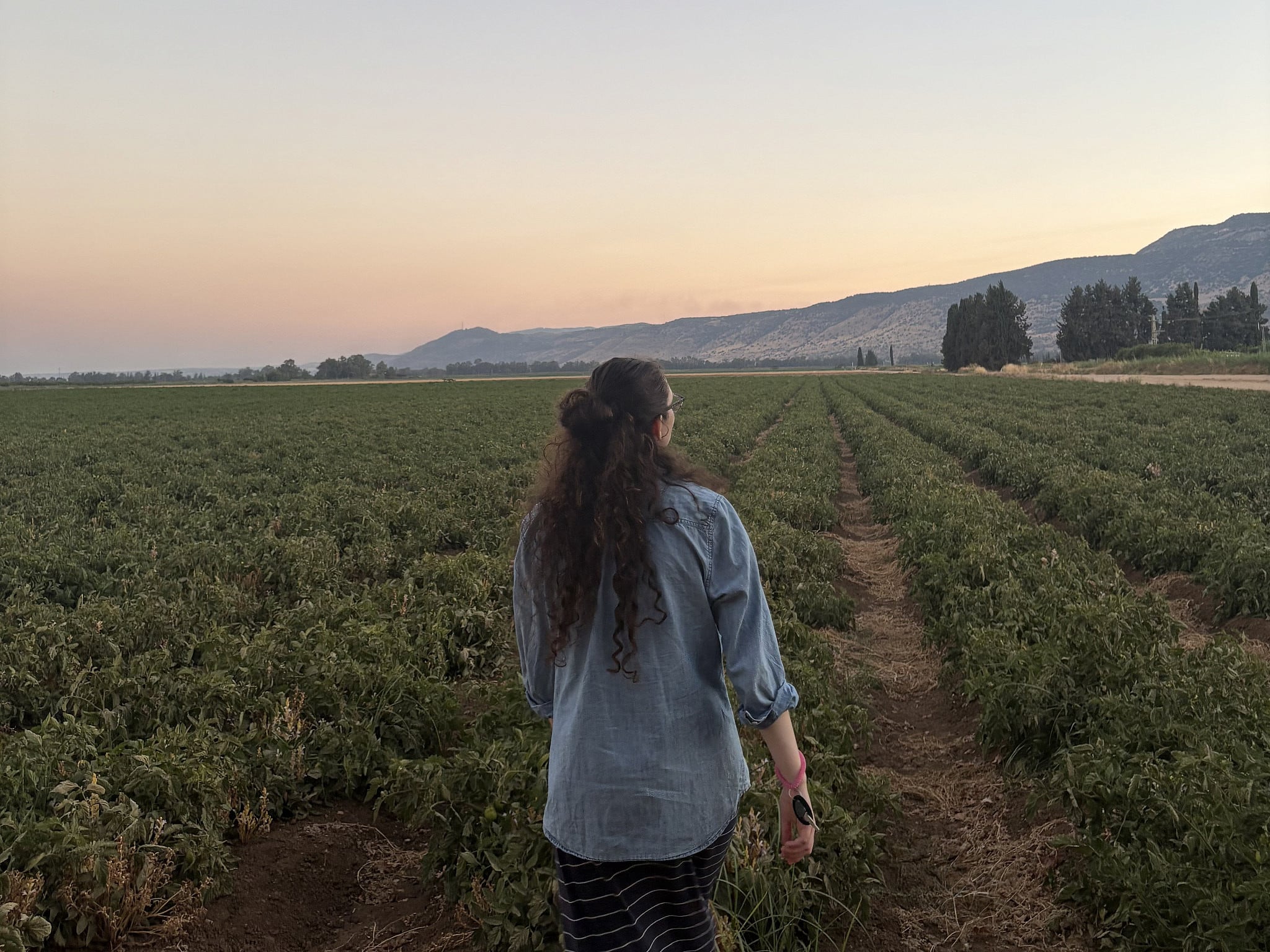
For some context, I was born and raised in New Jersey. After high school, I came to Israel for the year and decided that instead of going back and starting college, I wanted to stay. I made Aliyah and started Sherut Leumi at Shaare Tzedek hospital in Jerusalem. One of the other bnot sherut in my department was from a small moshav in northern Israel, a community that had been evacuated because of Hezbollah rocket fire. Once they were cleared to return, she hosted me for a Shabbat, and I quickly fell in love with the north. The landscapes are beautiful, but it was the warmth and character of the people that really won my heart.
So as my year in the hospital ended, I decided to do a second year of Sherut Leumi in northern Israel. I was the only American in the garin(cohort) in Kiryat Shmona, and one of the few Anglos in the entire city, so I was initially a little worried. Right away, I was greeted by a caring community and my fears were put to rest. Although they had only recently returned after a year-and-a-half as evacuees, people were constantly opening their homes to me.
After a few months in Kiryat Shmona, it was already starting to feel like my home. Then came Shabbat Zachor, only a few days before Purim, and all the bnot sherut were in Kiryat Shmona for Shabbat. Along with the rest of the country, our Purim plans were put on pause when war started with Iran. Shockingly, even though Kiryat Shmona is only a few minutes’ drive from the border and residents need to seek shelter almost immediately when sirens go off, a large portion of the homes, including our sherut apartment, have no mamad(safe room). So after spending Saturday night decorating some of the city’s public shelters, the majority of the bnot sherut went back home to their families until our coordinators decided how we could safely continue contributing to the community.
Even if I had wanted to, going home was not an option for me. Not only does my family live a twelve-hour flight away but the airlines were not flying. At that point, because Hezbollah had not yet joined the fighting, the north was still relatively quiet, but schools across the country, including the special needs preschool where I worked, were closed due to Iranian missile attacks. Since I hate being bored (and also wanted to help where I could), I went to Jerusalem to volunteer at Shaare Tzedek, rejoining my unit from the previous year.
After a week or so of volunteering in the hospital, or more accurately the makeshift ward they put together in the underground parking lot to protect patients from missile attacks, and staying with a friend nearby, I was homesick. Things were settling down at the hospital, so I headed back to Kiryat Shmona. During our sherut orientation in the beginning of the year, they spoke to us about the effects the evacuation had on residents of Kiryat Shmona. I had been away for only a week and I was already eager to go back home, so I can’t imagine how difficult it must have been to live in hotels and rental houses for over a year-and-a-half. Despite the difficulties they faced, the people of Kiryat Shmona were some of the warmest people I have met. Throughout March and April when there were constant sirens, sometimes more than ten a day, families who already had so much on their plate would check in on me, invite me into their homes and make sure I was doing okay. I saw firsthand the incredible resilience and strength of the people of Kiryat Shmona, and all of Israel.
A few weeks after the ceasefire with Iran and a return to ‘normal’ in the rest of the country, a ceasefire with Hezbollah was announced. And just like that, schools started again and we were back to our regular sherut placements. However, despite the ceasefire, we still heard constant booming and for the next few weeks, we still had about a siren a week.
Eventually, there were a couple of months of relative quiet. Our soldiers were still risking their lives across the border to keep us all safe, but at least for residents the booming had become more infrequent and the sirens had stopped.
I completed Sherut Leumi in August and moved to Jerusalem where I will be studying in university for the next few years. During my last week of sherut, the booming started becoming more frequent. Now the chat is once again full of constant texts, telling the people not to worry, but the residents of the border communities have heard that line too many times before to really believe it.
Though I am not living in Kiryat Shmona this year, I won’t be leaving the chat any time soon. While, thank G-d, Jerusalem is currently relatively quiet, I want to make sure I remember that that isn’t the case up north. The community I fell in love with, and families I grew close to, are still hearing constant booms, reminders that their life can turn upside down again within moments. They can’t forget that our work there is not finished and we must not forget either.
Though I love living in Israel, sometimes it can be exhausting. There is so much craziness in this country and I understand that people don’t have the energy to pay attention to everything all the time. Yet, I implore all of us to turn our eyes to the north, think about our brothers and sisters there who often feel ignored. When everyone else celebrated their return to normalcy, the residents of the north didn’t and still haven’t, at least not fully. Despite the risks, they live there because that is what it takes to secure our borders. For that, we should be forever grateful.