
From October 7 to the UN: How Israel Became the Cornered Party
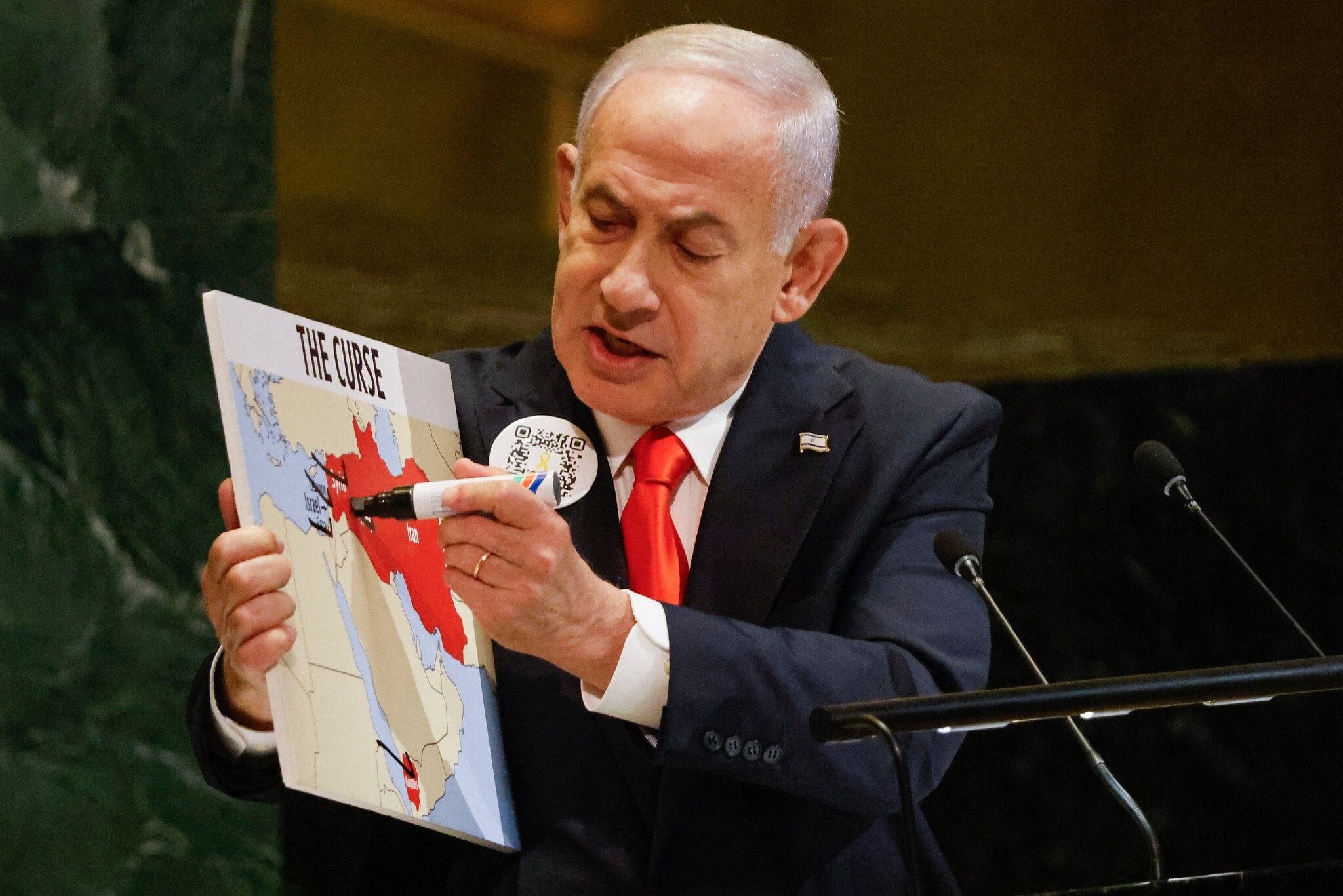
Benjamin Netanyahu came to the UN General Assembly this week speaking as if nothing had changed. He vowed to “finish the job” in Gaza, mocked the very idea of a Palestinian state, and cast international recognition of Palestine as a reward for terror. The speech was defiant, crafted for his base at home and for a coalition that thrives on confrontation.
But outside the chamber, reality closed in. As Netanyahu spoke, the United States prepared to unveil its 21-point plan to end the war. However cautious in its sequencing, the plan includes something no Israeli leader has accepted before: an explicit recognition that Palestinian statehood is the legitimate aspiration of the Palestinian people. Israel would be asked to sign off.
Yes, the plan makes statehood conditional — hinging on Palestinian Authority reforms and the reconstruction of Gaza. But the taboo is broken. For the first time, an American-led framework sets Palestinian sovereignty as the horizon. That is the opposite of Netanyahu’s public defiance.
Israel’s history shows a pattern: it dictates terms when it wins outright, and concedes when victory is elusive.
In 1967, Israel crushed its neighbors in six days and seized Sinai, Gaza, the West Bank, and the Golan. The Arab League’s Khartoum summit responded with the “Three No’s” — no peace, no recognition, no negotiation. Intended to isolate Israel, the stance backfired. With no talks to constrain it, Israel entrenched its hold, built settlements, and treated captured land as bargaining chips.
By 1973, the picture had changed. Despite surrounding Egypt’s Third Army, Israel had paid a steep price and faced a costly stalemate. This time, U.S. pressure drove diplomacy forward. Through disengagement deals and, eventually, the Camp David accords, Israel returned Sinai — no longer simply holding it on its own terms, but trading it for the prize of peace with Egypt.
In Lebanon in 1982, Israel tried to impose terms on Beirut after expelling the PLO, but the May 17 Agreement collapsed under Syrian pressure. By 2000, Israel withdrew unilaterally, without gains, to end a war of attrition with Hezbollah. In 2006, after another inconclusive fight with Hezbollah, Israel accepted a UN-mandated ceasefire, international troops, and a pullback. No one mistook it for victory.
Gaza wars since 2009 have followed the same pattern: heavy blows dealt to Hamas, but wars ending in Egyptian-mediated ceasefires, minor concessions, and “quiet for quiet.” When Israel cannot crush its foe or extract a decisive win, it absorbs frameworks imposed by outside actors.
The lesson is clear: when Israel emerges battered, international mediators shape the outcome.
His coalition partners demand annexation as retaliation for Europe’s recognition of Palestine. But Trump closed that door in the Oval Office: “I will not allow Israel to annex the West Bank. It’s not going to happen.” The one lever Netanyahu had is gone.
The reality is stark. Hamas survives. Hostages remain in captivity. Saudi Arabia has tied normalization to statehood. Washington is pressing Israel to accept in writing what its prime minister denies at the podium. That is not how victors settle wars. It is how constrained actors sign off when the fight ends without a win.
And the human cost is undeniable. Gaza lies in ruins, tens of thousands are dead, and Israeli hostages still wait in the dark. Talk of triumph rings hollow against those facts.
Israel entered this war with unmatched credit: global sympathy after October 7, full American backing, and even Arab states edging toward normalization. No Israeli war in recent memory began with such legitimacy. Yet nearly two years later, that credit is gone. Instead of dictating terms like the Allies after 1947, Israel risks ending this war more like Germany at Versailles — pressured by external powers, forced to accept constraints, and stripped of the narrative of victory it once claimed.