From Setback to AI Glory at Weizmann
From missile damage to medical revolution, the Rehovot institute’s “digital twin” project is turning resilience and renewal into life-saving innovation
A few weeks ago, I wrote here about the Weizmann Institute’s determination to rise again after the damage it suffered in the Iranian missile strikes – and I meant every word. In that blog, I said the spirit of Weizmann was unbreakable. Well, here is my proof. The spirit has risen again, not in rhetoric but in results.
This time, the headlines are not about reconstruction crews and temporary laboratories, but about cutting-edge research that could change the way we think about our health, and our future. The Weizmann Institute has announced a breakthrough in artificial intelligence that can predict a person’s future health, giving them the power to take preventive action before disease strikes.
And because life in Israeli science is never without a friendly rivalry, Weizmann’s announcement came just after the Hebrew University of Jerusalem revealed its own leap forward – an exceptionally accurate AI tool for predicting chronological age from DNA. Two great institutions, two bold advances, each pushing the boundaries of what is possible when you combine scientific excellence with Israeli ingenuity.
At the heart of the Weizmann breakthrough is a deceptively simple question: what if we could spot health problems before they even start? Not guess, not react after symptoms appear, but know, with precision, where the risks lie and how to avoid them.
Using the vast database of the Human Phenotype Project (HPP), one of the most ambitious biobanking initiatives in the world, researchers have built an AI-powered “digital twin” for each participant. This digital twin does not just mirror your current health; it simulates your possible futures. It can predict whether you are at risk of developing certain diseases, test how different treatments might affect you, and help chart a course towards prevention rather than cure.
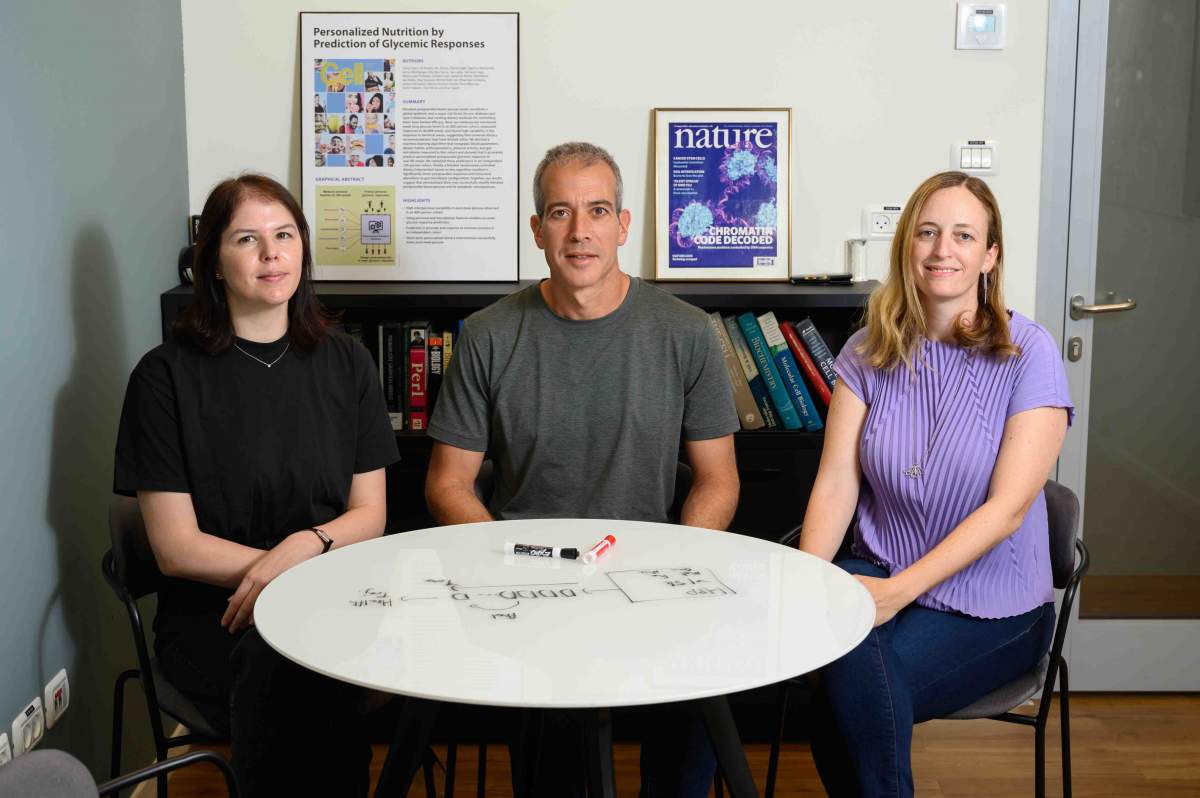
The project is the brainchild of a team led by Assistant Prof. Smadar Shilo, a senior pediatrician and pediatric endocrinologist at Schneider Children’s Medical Center, working in collaboration with Prof. Eran Segal’s lab in Weizmann’s Department of Computer Science and Applied Mathematics. And here is where resilience takes center stage: Segal’s lab was partially destroyed by an Iranian missile. The team was forced into temporary quarters, but they did not lose samples – and they certainly did not lose momentum.
Part of what makes this project so powerful is its uniquely Israeli foundation. The country’s population is a tapestry of countless ethnic groups, compressed into a small geographic space. That genetic diversity, combined with Israel’s culture of volunteerism and medical cooperation, makes it a perfect hub for a project of this scale.
When the Human Phenotype Project launched in 2018, the target was 10,000 participants. Today, more than 30,000 have joined, and the aim is now 100,000. The project has already expanded to Japan and is about to open a branch in the United Arab Emirates, a quiet reminder that science can build bridges where politics cannot.
Participants undergo a battery of medical assessments every two years for a quarter of a century, covering 17 different body systems and everything from microbiome samples to bone density scans. The resulting database is a goldmine: the most detailed, in-depth collection of human health data anywhere in the world.
The AI model developed from this data does not just record information; it learns from it. It can detect subtle deviations in the way each body system is aging, compare them to expected values, and calculate a “biological age” that may be very different from the number on your birthday cake. That knowledge is powerful. If the system sees a pattern linked to higher risk of diabetes, for example, it can recommend lifestyle changes or treatments before the disease even begins.
One early success was using glucose data to predict which pre-diabetic individuals were most likely to develop full-blown diabetes within two years. That is not just interesting; it is life-changing for the people who can now act early to avoid it.
The symbolism here is hard to miss. A lab damaged by enemy fire, researchers forced to relocate, yet still producing a global medical breakthrough. It is resilience in its purest form, not just surviving, but thriving. And it is renewal, too: a vision of medicine that moves from reactive to proactive, from generalized averages to personalized precision.
Weizmann’s achievement is also a quiet example of innovating the future of Israel. It is one thing to talk about the Start-Up Nation in terms of apps and fintech. It is another to see that same pioneering spirit applied to something as intimate and universal as health.
The Hebrew University of Jerusalem’s team, for its part, developed MAgeNet, an AI tool that can predict a person’s chronological age from a tiny sample of DNA with astonishing accuracy. This might sound like a forensic novelty, but it has profound implications for medicine, aging research, and even understanding how our cells record the passage of time.
Both breakthroughs tackle the same broad challenge, predicting the future from the smallest clues, but from different angles. One focuses on biological systems in motion, the other on the molecular clock inside our DNA. Together, they show that Israeli science is not just keeping pace with the world’s best; it is often setting the pace.
The Weizmann Institute has always been a place where science meets imagination, and imagination meets determination. From mapping the human genome to advancing cancer research, its scientists have consistently pushed the boundaries of what we know and what we can do.
This new AI model is no exception. By sharing its database with research groups worldwide, while safeguarding participant privacy, Weizmann is turning a national resource into a global catalyst for discovery. The benefits will ripple far beyond Israel’s borders.
I have no doubt that in the years ahead, we will look back on this as one of those pivotal moments when medicine changed direction. Instead of treating illness as a series of emergencies, we will increasingly view health as a dynamic, ongoing process – one we can monitor, predict, and shape.
For me, the real story here is not just about algorithms and datasets. It is about people, the volunteers who give their time and data, the researchers who keep working under impossible circumstances, and the patients who will one day live longer, healthier lives because of what began in a lab in Rehovot.
So yes, this is another feather in Weizmann’s cap. But it is also a feather in Israel’s, a sign that even when tested by fire, Israeli institutions can produce work that changes the world.
And in that, I see the best of Israel: resilience in the face of setbacks, renewal in the pursuit of progress, and a commitment to innovation that never stands still.