Weizmann Will Rise Again
Why one of Israel’s greatest treasures deserves our support – now more than ever
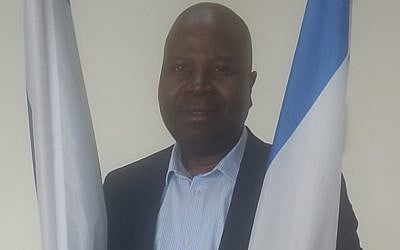
I remember the last time I visited Rehovot. The sun was kind that day, the walkways at the Weizmann Institute gently buzzing with students, laughter, and lab coats. I had stepped into a nearby biotech startup for what was meant to be a quick meeting, but the electric spirit of the place held me longer than expected. I found myself swept up in the moment – wrapped in Israel’s flag, heart full, capturing photos with pride and a sense of belonging I had not anticipated. There is something almost sacred about the Weizmann Institute. It is not just a campus. It is a heartbeat of discovery.
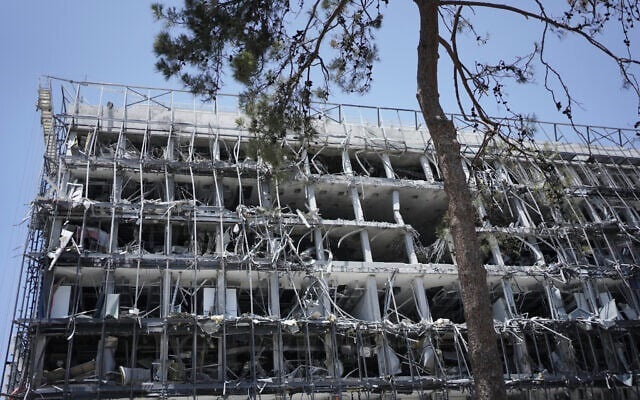
So when I saw the aftermath of the Iranian missile strike – twisted beams, labs turned to ash, years of research erased – it felt like a punch to the gut. Not just because of the damage, but because I know what Weizmann represents. It is the soul of scientific Israel. And today, it needs all of us.
President Professor Alon Chen estimates a staggering $450–600 million in total damage. Insurance and property compensation will cover, at best, half. That leaves Weizmann with a $300 million hole. But this isn’t just about rebuilding buildings or replacing microscopes. It is about preserving a national treasure that embodies resilience and renewal, and ensures Israel keeps innovating its own future.
Because Weizmann is more than a research institute. It is a global symbol of excellence. The place where breakthroughs are born, from cancer treatments to quantum science. Where students pay no tuition and researchers work without borders. Its model is rare. Its impact is vast. And today, its survival depends on people like us.
When two Iranian missiles struck, 112 buildings were damaged, 65 of them research facilities. One collapsed completely. Fifty-two labs were taken offline. A wave of foreign researchers, approximately 60%, were forced to evacuate. It was a direct hit to one of the most respected research institutions in the world.
And yet.
What the missiles could not destroy is what matters most: the spirit.
Professor Eldad Tzahor, who lost over two decades of heart research in seconds, climbed through the rubble with his son-in-law to retrieve what little he could. That is not just science. That is devotion.
Dr. Tslil Ast, a promising young researcher, voiced what so many felt: “Our basic sense of safety was affected.” But she did not leave. She stayed. And that, too, is courage.
It is the same spirit I saw in the aftermath of October 7. The same instinct to rebuild, to restore, to resist despair with dignity. Israel does not wait for permission to recover. Israel just does. Because resilience is its national power, and Weizmann is one of its brightest symbols.
What makes this moment more painful is also what makes it more urgent: Weizmann’s funding model is rooted in philanthropy and global support. They do not receive tuition. Their government backing covers only a quarter of their operating budget. And now, their entire research infrastructure is under threat.
So I ask: Can you help?
Can you tell a friend? Write a cheque? Share this blog? Help Weizmann fill the $300 million gap? Because make no mistake, what happens at Weizmann does not stay in Rehovot. It affects the world. Your world.
This is where the foundations of future medicine are being laid. Where cutting-edge climate research, neuroscience, and molecular biology all converge. Where hope is not a metaphor but a measurable output.
And the most beautiful part? People are already stepping up. Colleagues from around the world are offering spare lab space, replacement samples, new equipment. Israeli researchers are meeting on Zoom, not to mourn, but to regroup. To rebuild. To reimagine.
That’s what innovating the future of Israel looks like, not just code or drones or defense systems. But people choosing to rebuild knowledge, even when it feels like the sky has fallen.
It is tempting, in moments like this, to look away. To say, “Surely someone else will donate.” But Weizmann does not operate on someone else. It operates on all of us.
So let me say this clearly: if you have ever cheered an Israeli innovation, ever felt inspired by its startup spirit, ever marveled at a medical breakthrough, this is your moment to give back. Not as charity. As solidarity.
Because the Weizmann Institute is not a victim of war. It is a victor of hope. A place where science lives and breathes through the courage of its people. And that courage deserves our loudest applause, and our practical support.
Let us help them rebuild the labs. Let us restore the hallways. Let us return the lights to those quiet corners of genius that fuel everything from cancer cures to cosmic exploration.
This is not just about walls. It is about what those walls contain: dreams, data, future Nobel prizes, and young minds who still dare to ask the biggest questions.
The Weizmann Institute will rise again. Because Israel always does. But let us not wait. Let us help make it happen together.
To the donors, the dreamers, and the doers: now is the time. For Weizmann. For Israel. For the future.