
CEO of Time to Stand Up for Israel
From Silence to Slander: Dutch War on Israel
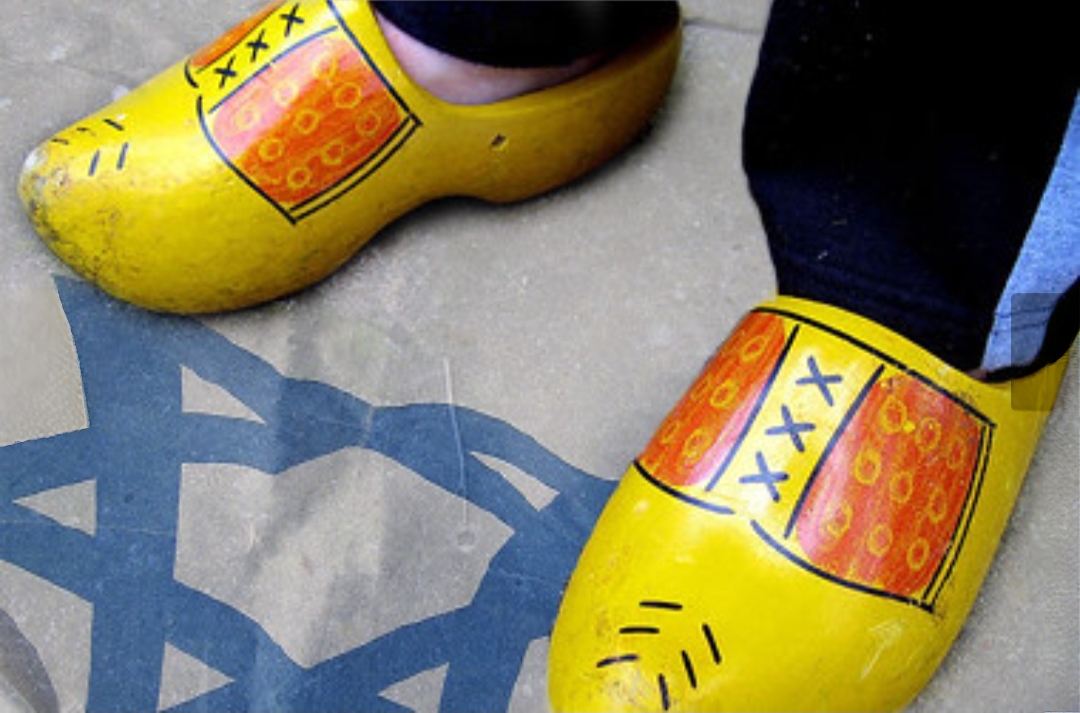
Photo Credits: https://www.flickr.com
Creative Commons license
The Dutch Blind Spot: Twisted Narratives, Forgotten Histories, and Israel’s Struggle for Truth
There is a painful hypocrisy that runs deep in the way the Dutch government and much of Dutch society approach Israel. It’s not new. For years before the atrocities of October 7th, the Netherlands had already positioned itself with passive hostility towards the Jewish state often under the guise of humanitarianism, neutrality, or “fair criticism.” But when you examine it more closely, a disturbing pattern of double standards, historical amnesia, and a failure to recognize real threats emerges.
Let’s begin with a fact: the Netherlands was among the first European countries to promote the labeling of products from Judea and Samaria (what they often call the “West Bank”). This action aligned with the BDS (Boycott, Divestment, Sanctions) movement, which is an aggressive, discriminatory campaign against Israel that masquerades as human rights activism. The consequence? Israeli companies like SodaStream, which provided employment to hundreds of Arab / “Palestinian” workers, were pressured to shut down operations in these territories. Those same workers lost their jobs, their income, and a chance at peaceful coexistence. How is that progress?
We had Sigrid Kaag, a high-ranking Dutch minister, whose husband once served as a diplomat for Fatah, the faction led for decades by Egyptian-born terrorist Yasser Arafat. Her close connections with figures deeply entrenched in decades of violence against Israel did not seem to concern anyone in the Dutch political elite. Under her watch, six million euros were donated to so-called “humanitarian” NGOs, which were later directly linked to Hamas. All of this, without the proper consent of the Dutch Parliament. And where was the outrage? Where were the headlines?
Then, when October 7th happened, when Hamas terrorists invaded Israel, raped, tortured, kidnapped, and burned civilians alive, what did our Dutch national broadcaster (NOS) do? They refused to watch the raw footage. They turned away. They silenced the images, and thus the truth. But the moment Israel responds either in self-defense or merely in words, NOS and other outlets are the first to publish unfounded claims, magnifying every accusation while questioning or ignoring every Israeli loss.
Let us not pretend this is new behavior. During the Holocaust, the Netherlands had one of the highest Jewish death tolls in Western Europe. While there were indeed Dutch heroes, like the brave members of the resistance and those who hid Jews, let us not ignore the dark side. A significant number of Dutch citizens betrayed their Jewish neighbors, handing them over to the Nazis for a reward of just 2.50 guilders per person. And again, the majority remained silent. Cowardice, complicity, and convenience ruled over justice.
History repeats itself. Once again, the Dutch are silent or worse, actively complicit, while Jews are being targeted, maligned, and denied the right to defend themselves.
And yet, sometimes, in the most unexpected places, a different story emerges, one that shines a light on another injustice, equally buried, equally denied.
Just yesterday, I spoke with a neighbor, an Indonesian Muslim woman, heavily veiled, soft-spoken, and kind. We’ve always exchanged pleasantries, but this time she told me something that left me speechless. She had just returned from a “vacation” to Suriname. When I remarked how lovely that must’ve been, she gently corrected me: it was not a vacation, but a family visit. Her great-grandmother had been kidnapped from Indonesia, taken straight from a local market in broad daylight, shipped off to Suriname, never to see her mother or brother again.
I was stunned. I knew Dutch colonial history was brutal, but this story was one I had never heard. So I looked into it.
The Forgotten History: Slavery and Forced Labor Under Dutch Colonialism
Abolition of Slavery in the Dutch East Indies (Indonesia):
Formally ended in 1860, yet many forms of forced labor continued well into the 20th century. Domestic slavery, agricultural exploitation, and sexual abuse were rampant. Debt bondage and coercive labor systems replaced official slavery with more “acceptable” terms, words that masked the same cruelty.
Abolition in Suriname:
Slavery officially ended in 1863 in Suriname, but with emancipation came a labor crisis. So the Dutch began importing indentured laborers, a sanitized term for what was often coerced, misleadingly contracted servitude.
Javanese Migration to Suriname (1890–1939):
Roughly 32,956 Indonesians, mostly Javanese, were transported to Suriname. Promised land and money, they were instead subjected to plantation labor under strict control, racism, and poor conditions. Very few were able to return to Java. Most remained, building a community but never forgetting the trauma.
And yet, today, the Dutch government apologizes for their slavery past with neatly worded statements, while completely ignoring this chapter; the abduction and exploitation of Indonesians. Why is this history not in our textbooks? Why is the story of my neighbor’s great-grandmother not being told in every school across the Netherlands?
The parallels are chilling. Just like their silence over the Jews in the 1940s, and just like their complicity in smearing Israel today, the Dutch establishment selectively filters history choosing what is comfortable to admit and what must be buried.
Just like they bury the stories of Israeli victims today.
They don’t speak of the trauma of Jewish children who witnessed their parents murdered by Hamas. They don’t highlight the families still waiting for the return of their kidnapped loved ones. They don’t acknowledge Israel’s struggle for survival in a region where genocidal threats are not metaphors, they are daily reality.
Instead, they invite antisemitic speakers, support biased UN institutions like UNRWA, and push narratives that dehumanize Israelis while elevating terrorist-sympathetic groups as “freedom fighters.
A Personal Plea: Never Be Silent
My neighbor’s story reminded me again why we must never be silent. Why we must always speak up and not just for Israel, but for truth. The “Palestinian” narrative has mastered the art of victimhood, often backed by money, media, and manipulated emotions. But emotion without truth is dangerous.
Do not let them twist history. Do not let them turn reality on its head. Do not let them erase the suffering of Israelis or the blood of Jewish victims, past or present.
History has taught us that silence is never neutral. Silence always serves the oppressor.
So to my fellow Dutch citizens: look in the mirror. Look at your past. And then ask yourself, with sincerity and courage: Which side of history do I want to be on?
Am Yisrael Chai.
The People of Israel live, despite it all.
Related Topics
Related Posts