From the Diaspora: Our Role Is Different
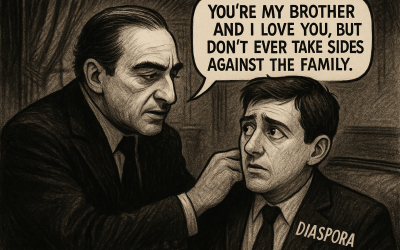 Anyone who has ever stepped foot in Israel or watched the news from Israel knows it is one of the most vibrant, passionate, and argumentative democracies on the planet. The protests that fill the streets of Tel Aviv, the fiery debates in the Knesset, the conversations in cafés — these are not signs of collapse. They are signs of life. Israelis care so deeply about their future that they are willing to raise their voices, demand better, and hold their leaders accountable.
And they should. Israelis live with the consequences of every decision. They pay the taxes, they send their children to the IDF, and they live under the shadow of rockets, tunnels, and hostile neighbors. When Israelis protest their government, they are not abandoning their nation — they are investing in it. Their dissent is born of sacrifice. They are, in a real sense, the shareholders of the Jewish state.
For us in the Diaspora, the situation is different. We are blessed with safety. We are insulated from the risks Israelis face each day. And this difference matters.
A protest in Tel Aviv is like a family argument at the dinner table. A critical op-ed from a Diaspora Jewish leader is more like broadcasting that family argument over a loudspeaker to the entire neighborhood — including those who want to burn the house down.
The enemies of Israel do not distinguish between internal critique and external condemnation. To them, it is all the same: evidence of weakness.
Every time a prominent voice from the diaspora publicly breaks ranks with Israel on matters of security, it becomes a weapon used against us. It is quoted by anti-Israel activists on college campuses and in the halls of government as “proof” that the “Zionist entity” has lost the support of its own people. It is amplified by our enemies, telling groups like Hamas and the Houthis that if they just apply a little more pressure, the Jewish world’s resolve will crumble. It encourages our enemies to dig their heels in, to hold onto hostages longer, and to reject negotiations, because they believe that internal Jewish and international pressure will eventually grant them a victory.
This pressure doesn’t bring peace closer. The irony is that by pressing Israel to hold back, international leaders unintentionally strengthen Hamas, leaving Gazan civilians exposed to even greater violence.
This is not to say we must remain silent. Far from it. The Talmud teaches: Kol Yisrael arevim zeh bazeh — all Israel is responsible for one another. But responsibility does not mean identical roles. Israelis carry the responsibility of direct engagement with their government. We in the Diaspora carry another: to protect Israel’s legitimacy, to strengthen Jewish unity, and to deny our enemies the satisfaction of division.
In other words, our role is to be the Iron Dome of public opinion. Just as Israel’s defense system intercepts rockets before they strike, we must intercept the lies, distortions, and double standards launched at Israel every day.
This sacred responsibility rests on four pillars:
To Support. Our commitment begins with solidarity. Support is not passive agreement; it is active connection. We show it by visiting Israel, buying Israeli products, investing in its technology, celebrating its culture, and reminding the world — and ourselves — that Israel is a living, thriving nation, not just a conflict zone on a map.
To Advocate. Support must become action. That means speaking up in our own countries, ensuring our elected officials, interfaith partners, and civic leaders hear a proud, informed voice for Israel. Advocacy means insisting that Israel is not a partisan issue, but a moral and strategic imperative.
To Explain. The world sees Israel in 10-second news clips, stripped of history or context. We must be the storytellers: explaining our 3,000-year-old bond to the land, Israel’s geographic vulnerability, and the trauma and security concerns that shape its decisions. Without explanation, falsehoods fill the vacuum.
To Defend. When lies are launched — on social media, in news articles, or in casual conversation — our job is to intercept them with truth. That may mean writing a letter to the editor, posting a correction, or speaking up respectfully but firmly when we hear an antisemitic trope disguised as political commentary. Every time we dismantle a falsehood, we strengthen the whole Jewish people.
This is what it means to be the Diaspora partner in the covenant of Israel. Israelis will argue at the dinner table. They have earned that right. Our job is to guard the front door, to be the firewall of support that allows Israel to wrestle with itself without giving victory to those who wish it harm.
Let Israelis dissent as citizens. Let us, in the Diaspora, defend as family.