From the Field to Abraham’s Table
Why women-led civic relationships must help shape the next chapter of Middle East diplomacy
Six years after the signing of the Abraham Accords, the foundations for the next peace agreement may already be under construction.
Peace agreements are dramatic. Peacebuilding rarely is.
We remember the handshakes, speeches and signatures. We do not always see the years of quieter work that made them possible: the first business meeting, professional exchange, shared project or courageous conversation between people who were never expected to speak.
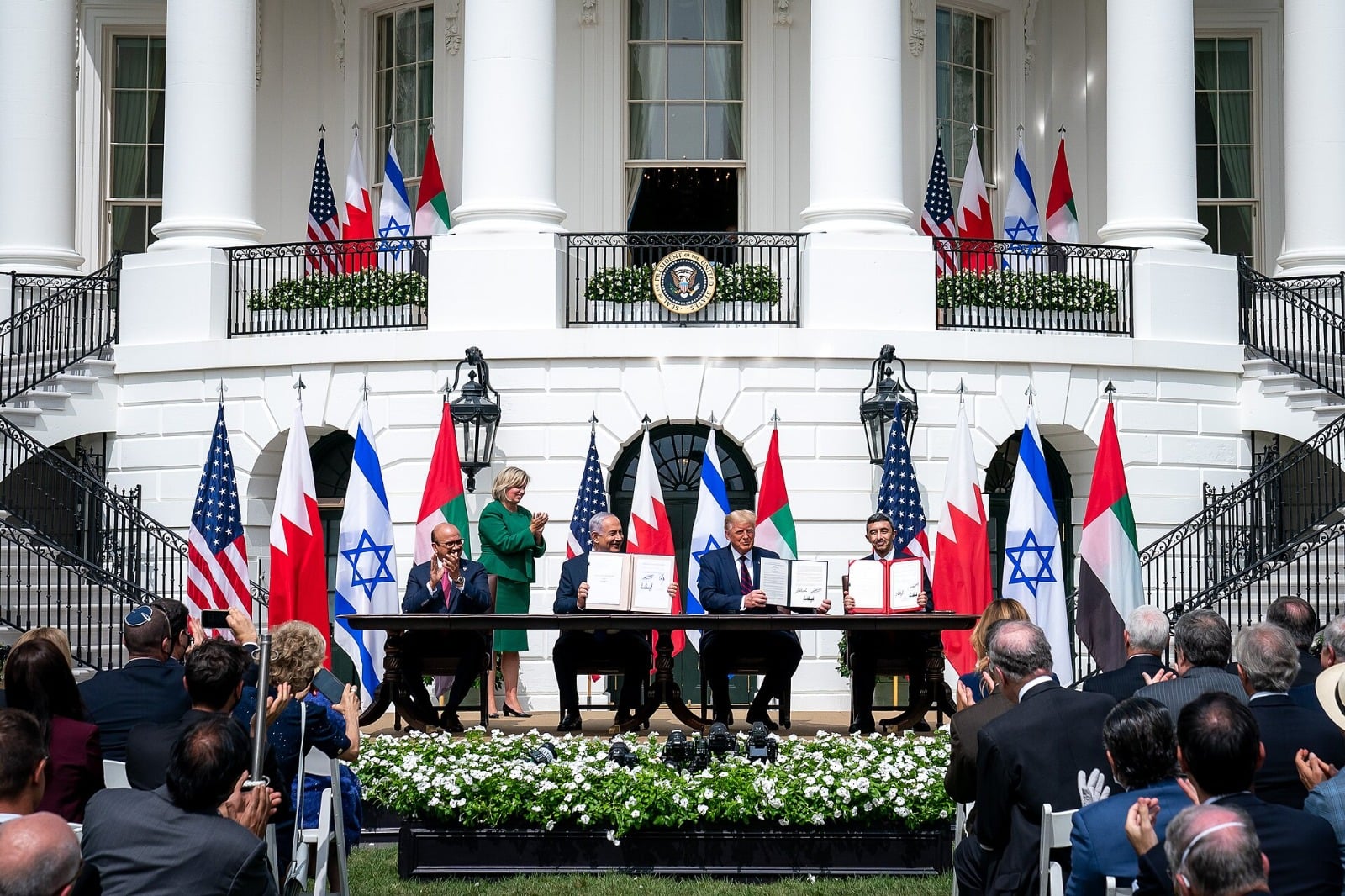
September 15 marks six years since Israel, the United Arab Emirates and Bahrain signed the Abraham Accords. The photographs captured a historic moment—but not the relationships and trust built before the cameras arrived.
A government can cut the ribbon. First, someone has to build what stands behind it.
Before the handshake
The relationship between Israel and the UAE did not suddenly appear in 2020. For years, Israelis and Emiratis had quietly developed connections through business, technology, security and diplomacy.
When the political opportunity arrived, there was already something meaningful to bring to the table. Because people had learned how to work together, the agreement could quickly become more than a ceremony. Businesses could grow, ideas could travel and communities could experience the benefits.
This is the human infrastructure of peace: trust, professional and personal connections, and practical cooperation established before governments are ready to act.
Women building from the field
This belief is why Women Champions for Change (WCC) was founded.
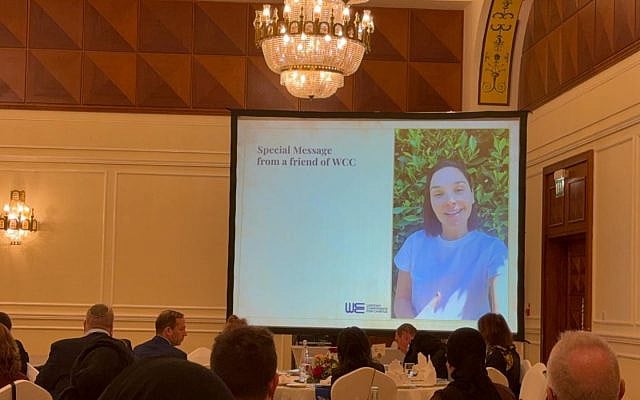
Gal Gadot addresses WCC women from Lebanon, Iran, Israel, the UAE and Bahrain in Abu Dhabi
WCC brings together women from Israel, Lebanon, Iran, Syria, Egypt, Bahrain, the UAE and beyond. They represent different religions, professions and political realities. They do not need to agree on everything. They begin by recognizing one another as people and identifying a common purpose around which they can collaborate.
Trust is not created by one conference, photograph or declaration. It develops when people cooperate repeatedly, share responsibility and discover that working together is practical, respectful and worthwhile.
Women are especially powerful builders of these connections because they carry relationships back into their workplaces, families and communities.
When women collaborate across borders, they exchange knowledge, develop initiatives, build businesses and create opportunities.
Prosperity matters. Where unemployment contributes to frustration and hopelessness, economic opportunity offers dignity, purpose and a stake in a more stable future.
The absence of diplomatic relations should not mean the absence of human relationships.
Lebanon: beginning a conversation
At a moment when Lebanon and the wider region urgently need new paths forward, women with this breadth of experience should not remain at the margins of conflict resolution. Their participation can help move negotiations beyond managing today’s crisis toward creating a safer and more hopeful future for the next generation.
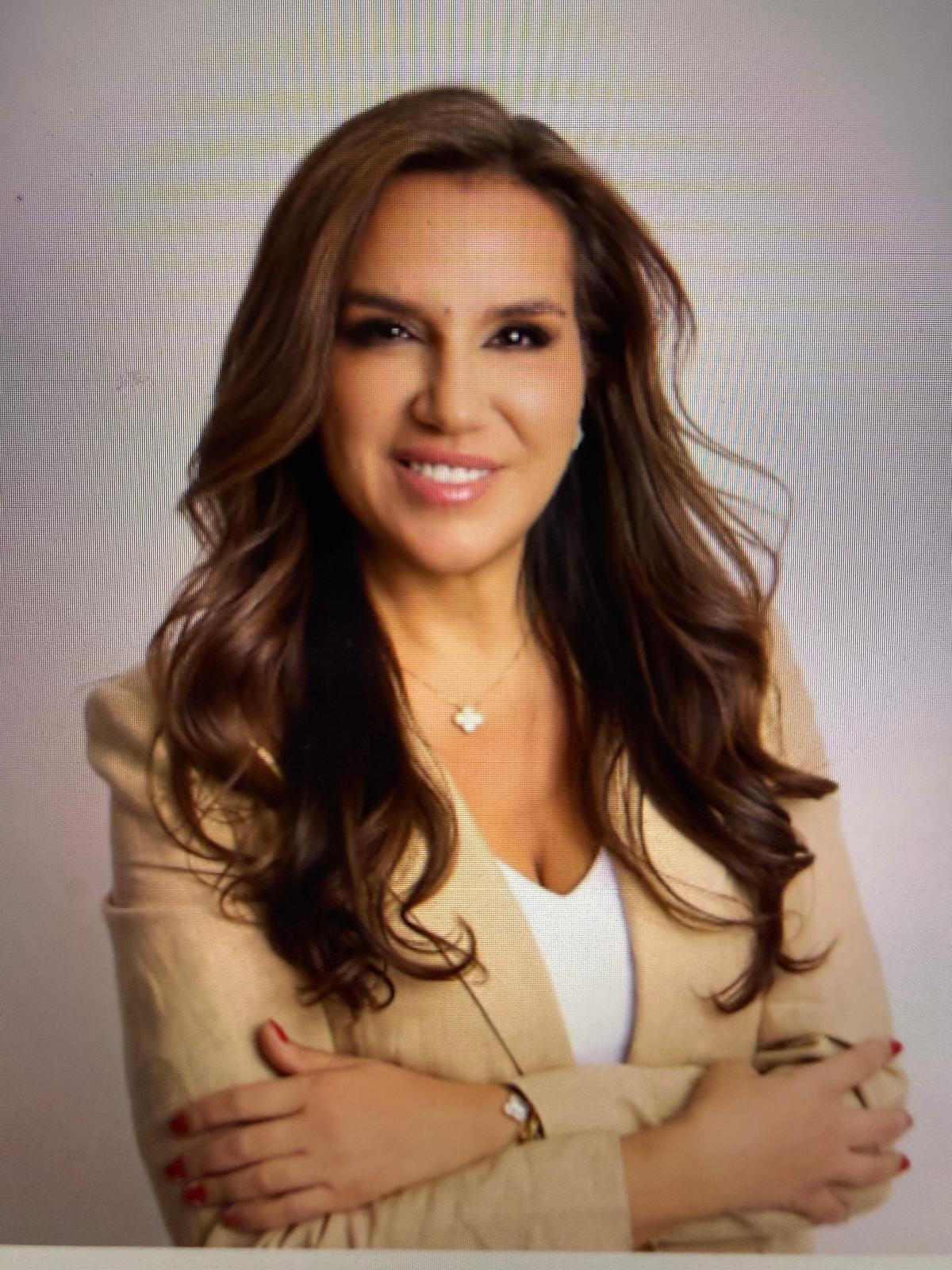
Lebanon’s ambassador to the United States, Her Excellency Nada Hamadeh Moawad, offers a powerful example of what women can bring to conflict management. An economist and development specialist, she came to diplomacy after extensive work with the World Bank, the United Nations and initiatives supporting Lebanon’s economic recovery and humanitarian development. Her experience reflects a form of leadership that connects diplomacy with the realities affecting people’s lives: security, livelihoods, healthcare, dignity and opportunity. With her husband Dr Gerald Moawad, she is involved in the René Moawad Foundation (RMF) whose mission is to promote peace, stability and prosperity in Lebanon through sustainable human development activities.
On September 15—exactly six years after the Abraham Accords were signed—WCC will hold its first “Lebinar”: Women of the Middle East Briefing: Lebanon Today.
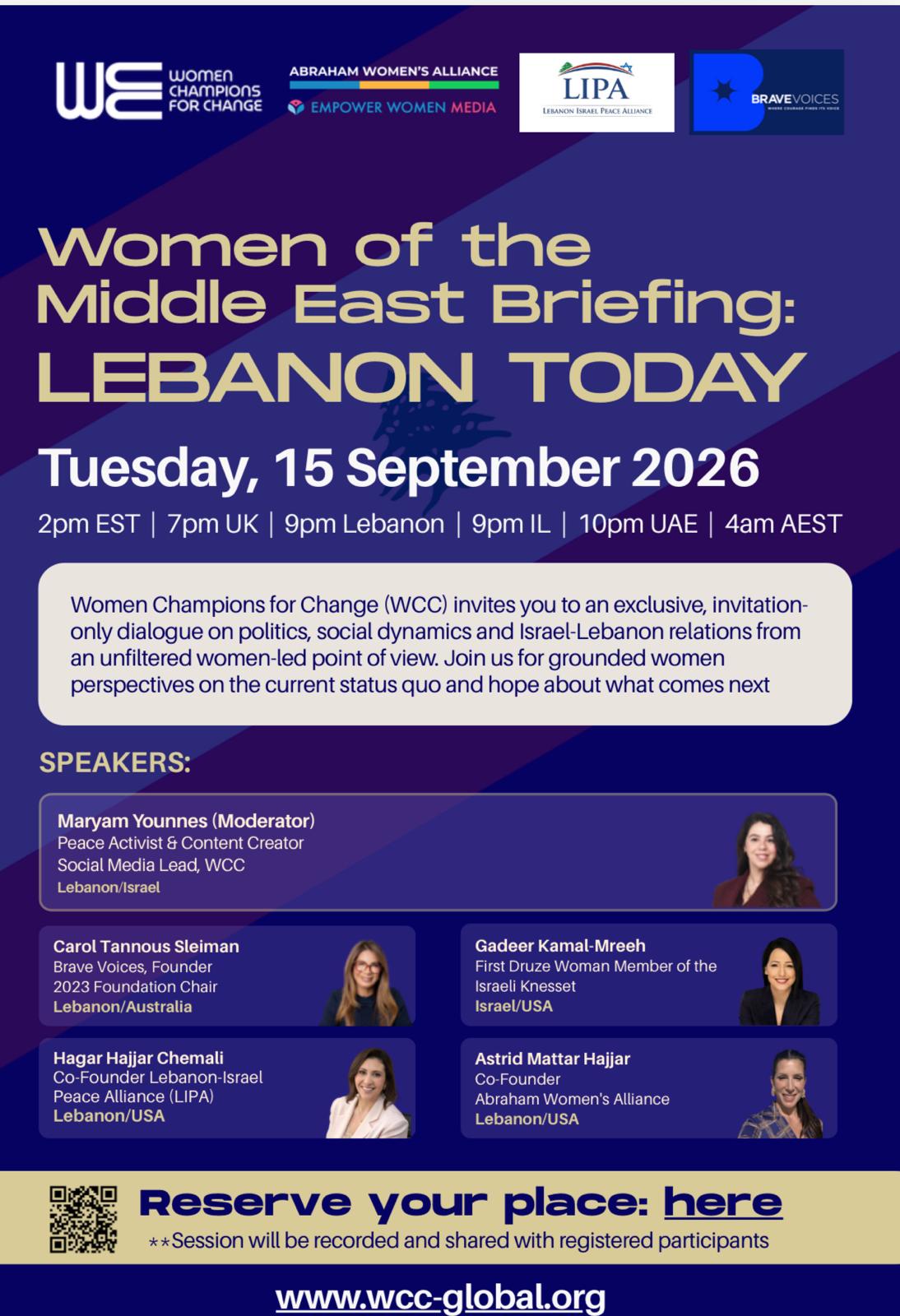 Women with deep personal and professional connections to Lebanon will discuss the country’s politics and social dynamics, Israel–Lebanon relations and their hopes for what might come next.
The webinar is not the destination. It will not produce a peace agreement or replace diplomacy. But it can challenge assumptions, create connections and begin building trust.
Our hope is that one conversation leads to another, dialogue develops into shared projects, and those projects grow into lasting platforms capable of carrying women’s knowledge and experience from the field to the negotiating table.
This work is not easy. Women may be criticized simply for speaking or listening to one another. Legal barriers, painful histories and political differences cannot be erased by a webinar. Some relationships must begin quietly.
But if constructive people leave this space empty, those invested in conflict will gladly fill it.
Saudi Arabia: preparing for a future opening
Saudi Arabia may become the greatest test of this approach.
Formal relations between Israel and Saudi Arabia do not exist, and the political obstacles remain considerable. But people need not wait for governments to resolve every disagreement before beginning to build professional connections.
Saudi Arabia’s Vision 2030 is creating opportunities in innovation, entrepreneurship, technology and women’s economic participation. These are areas in which women across the region have experience and interests to share.
Women in Tech Global exemplifies this potential. Through education, entrepreneurship, digital inclusion and advocacy, its activities in Israel, Saudi Arabia, the UAE, Bahrain and Morocco connect women across national and cultural boundaries through shared professional purpose.
Such connections do not deny political differences or substitute for diplomacy. They create a human and professional foundation that may be ready when a political opening arrives. Shared work can transform the woman across the border from a stranger into a colleague, business partner and, sometimes, a friend.
Building the next agreement
Peace cannot live only on paper. It must live between people.
Six years after the Abraham Accords, we should not ask only when governments will sign the next agreement. We should also ask whether the relationships needed to support it are already being built.
We can connect women across borders now. We can support shared projects in technology, health, sport, education and entrepreneurship. We can introduce one courageous person to another, fund the first initiative and create spaces in which trust can grow.
The UAE demonstrated that quiet cooperation can prepare the way for public diplomacy. Saudi Arabia challenges us to build connections even while the political door remains closed. Our Lebanon webinar is one small but meaningful step along the same path.
Do not wait for peace to begin building relationships. Let us build the relationships that make peace possible—from the field to Abraham’s table.