
From War to Governance: The Board of Peace and Gaza’s Path to Stability
The Trump administration’s plan to establish a “Board of Peace” for Gaza signals a meaningful change from the makeshift and reactive tactics that have long defined post-conflict strategies in the area. By securing early commitments from nations like Egypt, Qatar, the United Arab Emirates, the United Kingdom, Italy, and Germany, Washington is sending a vital message: Gaza’s future after conflict can’t be left to chance, nor can it be forced upon the people. Instead, what’s needed is ongoing international oversight, regional legitimacy, and a shared responsibility framework rather than control concentrated in one single power.
At a time when the ceasefire is still uncertain and deep-seated distrust exists on all sides, the formation of such a broad coalition is significant in itself. The proposed Board of Peace is envisioned not merely as a symbolic entity but as a coordinating authority tasked with governance, reconstruction, and security in a postwar Gaza. Beyond its formal duties, its true importance lies in what it represents—a collective acknowledgment that Gaza’s recovery must rely on multilateral cooperation, not unilateral decisions.
However, those participating in the talks have been careful to manage expectations. Just agreeing to be part of this board doesn’t automatically mean there will be solid commitments of troops, funding, or political support. This cautious approach, while reasonable, also underscores the main challenge facing the initiative—transforming diplomatic presence into real, impactful action.
Washington’s drive to expand the board to include Saudi Arabia and Turkey highlights just how crucial regional influence and legitimacy will be for any postwar agreement. Saudi Arabia’s reluctance reflects the harsh realities on the ground: ongoing violence, lingering questions about Hamas’s arsenal, and uncertainty about the future of the ceasefire.
Riyadh’s stance indicates that key regional players are open to participating, but only if the process offers a credible route toward de-escalation and effective governance instead of prolonged chaos. Turkey’s potential involvement is even more contentious. Israel remains highly wary of any Turkish role in managing Gaza’s postwar situation, especially within the proposed International Stabilization Force (ISF). The United States seems ready to advocate for a compromise, possibly by distinguishing political involvement from direct military action. Whether this delicate balance can be struck without alienating essential partners is still up in the air.
The discussions around the ISF really highlight the toughest part of the whole plan. Even though there’s been outreach to over 70 countries and interest from quite a few, we’re still not seeing any solid commitments. The ongoing uncertainty about the force’s mandate, command structure, funding, and especially its role in disarming Hamas is making it hard for anyone to jump in decisively. While the U.S. is leaning towards a slow and careful approach to demilitarization, which might seem sensible, it doesn’t do much to ease the concerns of governments hesitant to send their personnel into such a tense and politically charged situation.
Pakistan’s current engagements add a crucial layer to the ongoing dialogue, as the only Muslim-majority nation with nuclear capabilities and a wealth of peacekeeping experience, Pakistan holds both symbolic weight and practical credibility. Recent reports of high-level talks between Islamabad and Washington, along with Pakistan’s involvement in recent planning sessions, indicate that it might be seen as a key player moving forward.
However, Pakistan’s cautious approach—particularly its hesitance to take on the responsibility of disarming Hamas—reflects broader worries in the Muslim world about getting caught up in a conflict with significant political and domestic fallout. Pakistan’s current activities are crucial to the ongoing discussions, especially with news reports that Field Marshal Asim Munir is expected to travel to Washington in the coming weeks to meet with President Donald Trump.
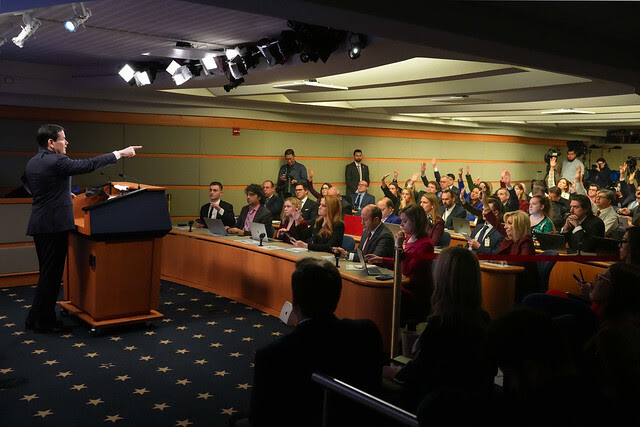
When asked if Washington had received Pakistan’s approval to send troops for peacebuilding in Gaza, U.S. Secretary of State Marco Rubio expressed gratitude for Pakistan’s willingness to consider participation, noting that more clarity is needed before any nation can be formally asked to commit. Comments from U.S. Secretary of State show a cautious optimism.
U.S. Secretary of State Marco Rubio says the U.S. is thankful to #Pakistan for their offer to consider being part of the Gaza peacebuilding mission, adding that more answers are needed before any firm commitment. While several nations are ready to support stabilization, Pakistan… pic.twitter.com/TOBs5qRrbd
— Pakistan TV (@PakTVGlobal) December 19, 2025
While he appreciates Pakistan’s readiness to engage, Rubio has stressed that talks are still in the exploratory phase and hinge on clearer definitions of the ISF’s role and the overall governance framework. His careful wording highlights a straightforward truth: no country is ready to make solid commitments until the political endgame is more clearly defined.
.@SecRubio on the urgency of implementing President Trump’s Peace Plan in Gaza: pic.twitter.com/39AhWUyao4
— Department of State (@StateDept) December 19, 2025
These hesitations are most evident in the challenges faced in assembling the International Stabilization Force. While the United States has outlined various avenues for participation—ranging from troop deployments to training, logistics, and funding—many governments remain uneasy. Gaza is still widely regarded as an active conflict zone, not a settled postwar environment. The unresolved issue of Hamas’s future, in particular, continues to cast a long shadow over any discussions of foreign deployments.
Recent efforts by US Central Command to clarify the force’s mandate and structure have certainly helped tackle some technical issues, but they haven’t quite nailed down the deeper political questions. Until those fundamental questions are sorted out, international involvement is likely to stay cautious and conditional.
However, despite these hurdles, the fact that there’s a serious multilateral conversation happening is a significant change. For the first time in years, there’s a recognition that Gaza’s future needs ongoing international leadership rather than just sporadic interventions. The proposed Board of Peace offers a narrow but genuine opportunity for diplomacy, coordination, and shared responsibility to help steer Gaza away from its ongoing crises.
Whether this opportunity leads to lasting peace will hinge on the readiness of global and regional leaders to go beyond mere symbolism and tackle the toughest issues head-on. If they’re willing to do that, international leadership could pave the way for a future in Gaza that’s not marked by constant conflict, but rather by stability, rebuilding, and a gradual return of hope.