
Writer covering Israel–Africa, Jewish affairs, and Israel worldwide
From Yom Kippur to Gaza: How Wars Shape Israel–Africa Relations
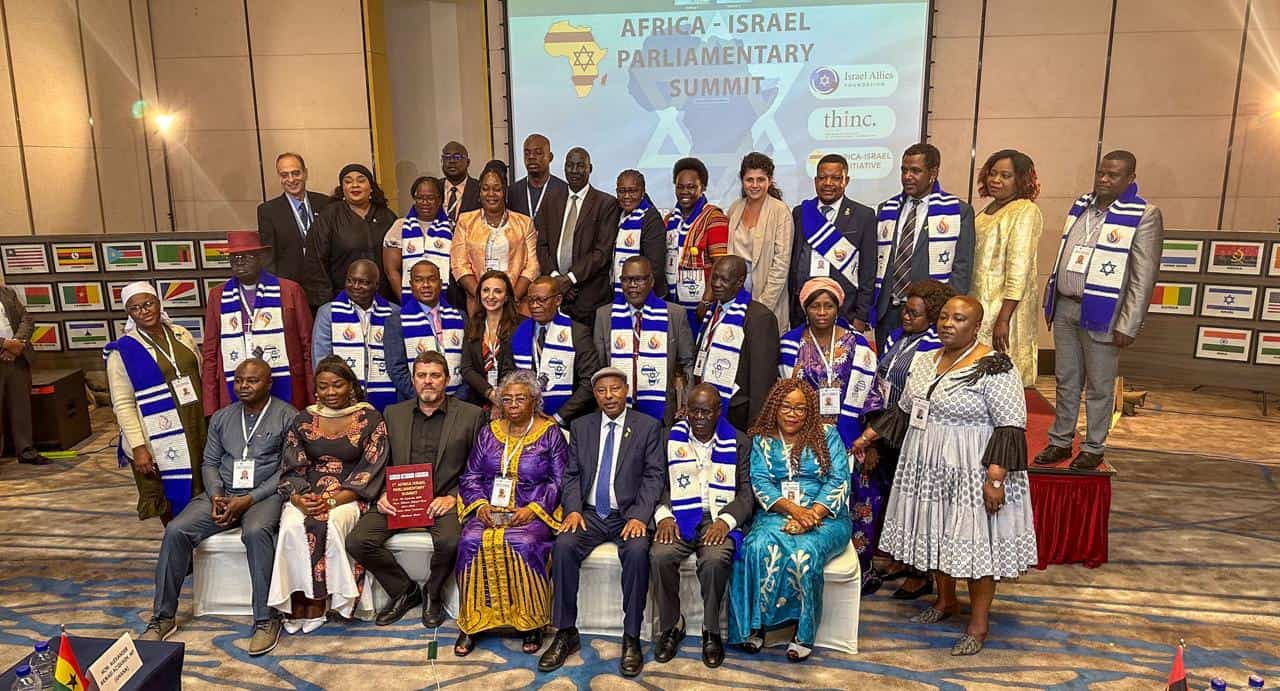
African parliamentarians at the Africa–Israel Parliamentary Summit, raising flags and affirming solidarity with Israel
Wars in the Middle East rarely stay confined to the region. For Africa, every major Israeli conflict has rippled far beyond the battlefield, stirring diplomatic realignments, fueling debates in parliaments, and influencing foreign policy. From the rupture of ties after the 1973 Yom Kippur War to the warming relations of the Oslo and Abraham Accords era, Africa’s position has always been deeply tied to Israel’s military and political fortunes.
Today, the war in Gaza once again places African governments at a crossroads. On the one hand, there is longstanding solidarity with the Palestinian cause, rooted in shared post-colonial narratives and pressure from allies in the Arab world. On the other, there is the undeniable reality of Israel’s presence in Africa: technology, trade, humanitarian partnerships, and security cooperation. The current conflict highlights an old paradox — how wars involving Israel both distance and draw Africa closer.
The Yom Kippur War and Africa’s Break
The Yom Kippur War of 1973 was a watershed moment. Under intense pressure from the Arab League, the Non-Aligned Movement, and in the context of an oil embargo that threatened fragile African economies, over two dozen African nations severed diplomatic relations with Israel.
For many governments, this rupture was less about hostility toward Israel itself and more about survival. Post-colonial Africa was heavily dependent on Arab oil and aid, and many leaders saw aligning with the Arab world as both pragmatic and ideologically consistent with their anti-imperialist stance.
The break was devastating for Israel. Within a few weeks, decades of painstakingly built relationships vanished. It took more than two decades for Israel to rebuild those bridges, and the lesson was seared into its diplomatic memory: African support was deeply vulnerable to Middle Eastern wars.
Lebanon, Intifadas, and a Slow Rapprochement
The 1982 Lebanon War and the First Intifada reinforced Africa’s caution. Governments hesitated to openly embrace Israel, worried about alienating Arab allies or their own domestic constituencies sympathetic to the Palestinian cause.
Yet behind the scenes, something else was happening. Israel never entirely disappeared from Africa. Agricultural experts, medical teams, and security advisors continued to work discreetly in various states. Kenya, Ethiopia, and Zaire (now the DRC) quietly maintained forms of cooperation even during the official freeze.
By the 1990s, the optimism of the Oslo Accords and the new wave of globalization opened doors for Israel to return. One by one, countries restored ties. Ghana, Nigeria, Ethiopia, and Kenya normalized relations, often citing the practical benefits of Israeli know-how in farming, water management, and healthcare. While wars still dictated the pace, they no longer resulted in wholesale ruptures.
Gaza Wars and Africa’s Diplomatic Balancing
The wars in Gaza — from 2008 to 2014 and now the current conflict — have produced a different pattern. Instead of breaking ties, African states have responded with rhetoric at the United Nations.
South Africa has been the loudest voice, often invoking apartheid parallels and calling for international sanctions. Senegal, Namibia, and Algeria have similarly leaned strongly pro-Palestinian. Others, such as Kenya, Rwanda, and Ghana, have taken more cautious paths — abstaining from certain resolutions, issuing carefully worded statements, or focusing on calls for peace rather than direct condemnation.
The key here is balance. African governments understand the domestic importance of solidarity with Palestinians, but they are also aware of how much their economies and development agendas benefit from Israeli partnerships. Unlike 1973, wars no longer break the relationship; they create a dual discourse — public criticism abroad, quiet cooperation at home.
The Current War: What’s Different?
What makes the current Gaza war unique is the power of media and public opinion. African audiences are now more exposed to conflict imagery than ever before. Television stations replay harrowing scenes, while social media platforms spread hashtags and viral campaigns.
This visibility has emboldened governments to take louder stances. South Africa has filed cases at the International Court of Justice. Namibia and Senegal have spoken in strong pro-Palestinian terms. Yet the paradox remains: while the rhetoric grows sharper, no major rupture in relations has occurred. Instead, Israel’s presence on the ground — in farms, hospitals, and innovation labs — continues uninterrupted.
Epilogue – History Repeating with a Twist
History shows that wars involving Israel have always reshaped its African relations. The Yom Kippur War brought a dramatic rupture. Later conflicts slowed progress but did not erase cooperation. Today, Gaza has reignited the old tensions, but African states have evolved: they are more pragmatic, more independent, and less willing to sacrifice practical national interests for symbolic gestures.
Related Topics