Gabor Maté and the Loss of Agency

How trauma-based psychology reshapes Jewish ideas of choice, responsibility, and power
Trauma has become one of the dominant moral languages of our time. We use it to explain anger, addiction, violence, and even political conflict. This shift has helped many people feel understood. It has softened harsh judgments and made room for compassion. But it has also changed something deeper: how we think about responsibility.
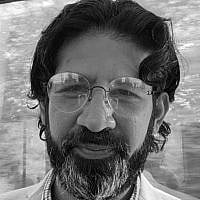
No one has done more to popularize trauma-based thinking than Gabor Maté. Thoughtful and sincere, Maté has become the most trusted public voice of a psychology that explains behavior largely through early injury and nervous-system conditioning. His work has helped countless people make sense of their pain. He has also become one of the most prominent Jewish critics of Israel, often invoking his own Holocaust history as part of his moral narrative.
My concern is not with his intentions, which are plainly humane, but with what his framework leaves out. When trauma becomes the final explanation for human behavior, agency quietly shrinks. Choice becomes conditional. Responsibility feels premature.
This matters, because Judaism begins from a very different place.
For much of the twentieth century, psychology borrowed its assumptions from an older scientific worldview. Reality was seen as mechanical. Cause led to effect. If you could trace the past clearly enough, the present would make sense. Freud’s theories fit neatly into this picture and naturally grew out of that way of thinking, as did many of the schools that followed him.
But science itself moved on. Physics began to describe reality not as a machine, but as a process. Uncertainty replaced certainty. Systems replaced parts. The world no longer looked fully predictable.
Psychology, for the most part, did not keep up. Instead, it remained focused on explanation. The past continued to dominate the present. Words, memories, and narratives became the basic building blocks of the mind. Therapy became a way of understanding what caused suffering, rather than a way of opening something new.
It was precisely this lag that some psychologists and psychiatrists tried to address.
I encountered this alternative path through my own training. From 2004 through 2017, I studied with psychiatrist Gerald Epstein, MD, the editor of Studies in Non-Deterministic Psychology, both for personal development and to expand the therapeutic approaches I use in my medical practice. That book, along with Dr. Epstein’s broader body of work, identified a clear problem and offered a clear alternative: psychology had become trapped in linear, causal thinking—and there was another way.
Epstein’s work did not deny suffering. It denied that suffering must be destiny.
A central feature of his approach was the use of imagination through mental imagery. This was not positive thinking or distraction. It did not deny causality; it denied causality’s final authority. It was not about rewriting the past, but about helping patients experience themselves as active in the present and change how they relate to what has already happened.
In practice, this meant something simple but powerful. A patient was no longer only explaining their pain. They were participating in change. Through imagery, they could feel themselves choosing, responding, and shaping experience in real time.
I have used this approach in my own clinical work for years. Again and again, I’ve seen how imagination can open a space where something genuinely new becomes possible. The past does not disappear, but it no longer owns the present moment.
This is what a non-deterministic psychology looks like in practice. It assumes agency even in the presence of trauma. It treats explanations as useful, but not final. That assumption makes all the difference.
Seen in this light, Gabor Maté’s influence takes on a different shape.
Maté’s psychology is compassionate, but it is also deeply causal. Behavior flows from early injury. Emotional reactions are traced back to childhood. The nervous system becomes the main actor. Insight replaces choice. Healing and causal understanding are treated as prerequisites for responsibility.
This is not a radical break from older psychology. It is a softened return to it.
What makes this return appealing is its moral tone. Judgment feels harsh; understanding feels kind. Strong emotion is treated as a sign of deep truth. Power is viewed with suspicion. Boundaries appear defensive. Responsibility often sounds like blame.
None of this requires bad faith. It follows naturally from the framework. But it also means that trauma becomes the last word. Agency is postponed. The present is reduced to the past.
In its contemporary form, trauma-informed moral reasoning often treats historical explanation and compassion not as starting points for judgment, but as its terminus—producing conclusions that feel humane, self-evident, and therefore beyond dispute.
This is exactly the retreat that my teacher of blessed memory, Dr. Epstein, warned against.
Judaism does not deny trauma. Jewish history is saturated with it. Slavery, exile, persecution, and loss are not marginal stories. They are central. But Judaism makes a radical claim: suffering does not erase responsibility.
The Torah’s defining moment is not only the Exodus, but what comes after it. A people emerging from generations of oppression are not first told to rest and heal. They are commanded. Sinai comes after Egypt.
This is not cruelty. It is moral dignity.
To command someone is to say: you are capable of responding. You are more than the sum of what was done to you. Teshuvah only makes sense if real choice exists. Anger may be understood, but it is still judged. Compassion is required, but it does not cancel obligation.
Judaism insists that trauma matters, but it is not destiny. Any psychology that cannot hold that truth will struggle to speak for Judaism.
From within Maté’s framework, his views on Israel are not surprising. They are almost inevitable.
In trauma-based thinking, suffering reduces responsibility while power increases guilt. When a wounded people gain strength, that strength is easily read as moral failure rather than moral adulthood. Boundaries look like defenses. Force looks like reenactment. Sovereignty feels suspect.
Jewish history becomes background rather than claim. Zionism is interpreted psychologically rather than covenantally, as an expression of fear and injury rather than responsibility and return.
Maté has spoken emotionally about visiting the West Bank and crying for days afterward. His tears are sincere. But within his framework, emotional intensity functions as moral confirmation. Feeling replaces weighing. Compassion overwhelms judgment.
Judaism does not reject tears; the Talmud teaches that the gates of tears are never closed. But it does not allow tears to decide everything.
The Torah commands care for the vulnerable and responsibility for one’s own survival. It holds both truths at once. Any framework that cannot do this will struggle to understand Jewish sovereignty as a form of moral responsibility rather than moral failure.
None of this is to deny that Israel faces serious moral challenges, or that it sometimes fails to live up to the responsibilities that sovereignty demands. To say that Israel is a moral agent is not to say that it is morally flawless. Judaism has never imagined responsibility as automatic righteousness. On the contrary, to be responsible is precisely to be subject to judgment, including self-judgment.
The problem with trauma-based frameworks is not that they criticize Israel, but that they do so by dissolving agency rather than holding it accountable. A state treated as a patient can be pitied (“it is wounded”) or condemned (“it hasn’t healed”), but it cannot be morally engaged.
By framing Israeli actions primarily through the lens of Holocaust memory, trauma, and fear, Maté’s approach shifts attention away from deliberation and obligation, making it harder to see Israel as a moral agent capable of choosing—and sometimes failing—under responsibility. Moral adulthood includes the possibility of failure, and of being judged for it, without having one’s agency explained away.
None of this dismisses Maté’s humanity or the value of his work. His compassion is real, and his concern for suffering is genuine. Trauma-informed care has helped many people.
But compassion alone cannot carry a moral tradition.
Judaism asks something harder of people. It asks us to act even when acting is painful. It asks us to choose even when our past weighs heavily. It asks us to accept responsibility not because we are uninjured, but because we are human.
Non-deterministic psychology tries to preserve that truth in clinical form. The tragedy is that our culture embraced the comfort of explanation instead.
In summary, Gabor Maté has become the most influential public voice of a psychology that sees human behavior as deeply shaped by trauma. That psychology explains much, and it has brought real relief to many people.
But Judaism, and Jews connected to their living tradition, rest on a different understanding of the human being—one that refuses to surrender agency, even in the face of suffering. Trauma is real. Compassion is necessary. But responsibility remains.
Any framework that turns injury into destiny will struggle to understand Judaism. And when it tries to explain Jewish history and Jewish power, it will inevitably distort them.
That distortion tells us less about the person espousing those beliefs than about the limits of the framework itself.