
Writing on Jewish life, relationships, trauma, and resilience
Gadi Eisenkot and the Politics of Consequence
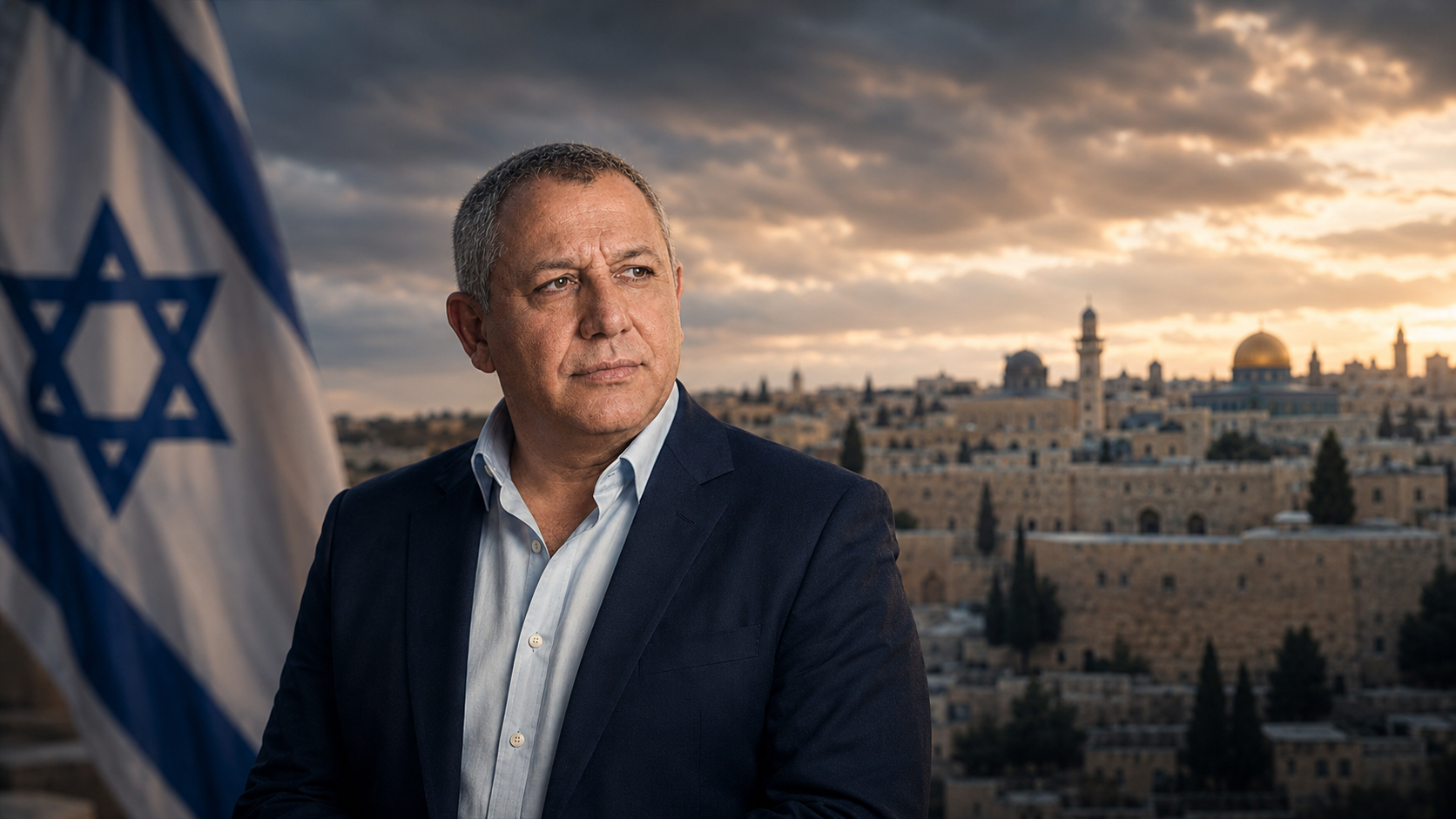
Illustrative: Gadi Eisenkot, the quiet contender. AI image created by the author.
I was at a wedding in Israel several months ago, sitting beside someone who has served the country for decades. Between the music, the blessings, the dancing, and the small miracle of a wedding meal arriving while still warm, our conversation turned to Israel’s future.
He spoke with unusual passion about one man: Gadi Eisenkot.
Not as a slogan. Not as the latest political fashion. Not with the weary shrug Israelis often reserve for politicians. He spoke about Eisenkot with something rarer these days: hope. He believed Eisenkot could become Israel’s next prime minister.
At the time, I knew the broad outline: former IDF chief of staff, member of the war cabinet, bereaved father, serious man. But the conversation stayed with me. Few people outside Israel’s political and security circles know much about Eisenkot. That may soon change.
A Different Kind of Political Figure
Gadi Eisenkot is not a theatrical politician. He does not seem built for soundbites, stagecraft, or the daily circus of Israeli politics — a circus that, like most circuses, occasionally forgets there are real people under the tent.
That may be his weakness. It may also be his strength.
Born in Tiberias in 1960 and raised in Eilat, Eisenkot is of Moroccan descent. He did not come from Israel’s old elite. He rose through the Golani Brigade and eventually became the IDF’s 21st chief of staff, serving from 2015 to 2019. If elected, he would reportedly become Israel’s first Mizrahi prime minister.
His story is, in many ways, an Israeli story: immigrant family, periphery, military service, discipline, sacrifice, and responsibility.
Grief, Service, and Responsibility
After October 7, Eisenkot joined the emergency government and served in the war cabinet framework. Then came the unbearable personal blow: his son, Master Sgt. Gal Meir Eisenkot, was killed in Gaza. Two nephews were also killed during the Israel-Hamas War.
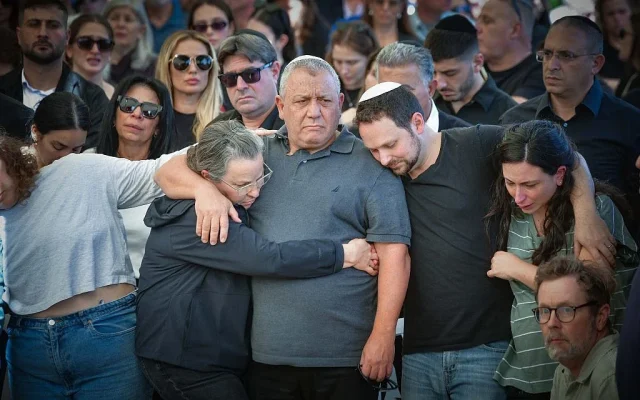
It is difficult to imagine carrying that grief while helping make decisions of war and state. And yet grief did not send him away from public life. It seems to have pulled him deeper into it.
Speaking about the loss of his son and nephews, Eisenkot said, “You need to gather strength, to look for good reasons to continue living a normal life. I understand that you cannot turn the clock back.”
That sentence is not a campaign slogan. It is the language of a father who knows there are no shortcuts through grief, only responsibilities that remain after the unimaginable happens.
The Meaning of “Yashar”
In September 2025, Eisenkot launched Yashar, a party whose name suggests straightness, honesty, and moral clarity. The Jerusalem Post recently described him as a “quiet contender” whose support has been rising in polls, potentially positioning him as a leading challenger to Prime Minister Benjamin Netanyahu.
That phrase — quiet contender — may be the best description of him.
Eisenkot does not offer the messianic certainty of Israel’s hard right or the nostalgic slogans of older peace-camp politics. He is a security hawk, but not reckless. He has argued for strength, deterrence, and responsibility while warning against strategic mistakes. Early in the war, he opposed a preemptive strike on Hezbollah, reportedly believing it could drag Israel into a wider and potentially disastrous regional war.
That is not softness. It is sobriety.
Telling the Truth About War
On the Gaza war, Eisenkot has been one of the clearest voices warning against fantasy. When Netanyahu spoke of “absolute victory” over Hamas, Eisenkot reportedly responded bluntly: “We should not tell tall tales.” Asked whether Israel’s leadership was telling the public the truth, he answered simply: “No.”
There is discipline in that kind of brevity: no ornament, no evasion, just a field report.
On the hostages, Eisenkot argued that returning them must be a central national priority. His position was rooted not only in strategy, but in covenant: a state that sends its people into danger has a duty to bring them home when it can.
Accountability Is Not Revenge
On Netanyahu, Eisenkot has become increasingly direct. He has said Netanyahu “carries sharp and clear responsibility” for the failures surrounding October 7. He has also argued that leadership requires “the ability to tell the truth to people.”
He has vowed to establish a state commission of inquiry to investigate the government failures that led to October 7.
That matters. Not because accountability will undo the catastrophe. It will not. But a country that refuses to examine its failures becomes condemned to repeat them, usually with more confidence and fewer excuses.
Accountability is not revenge. It is national hygiene. Israel, after October 7, needs more than victory speeches. It needs the courage to look in the mirror without turning off the lights.
From Soldier to Statesman
Israel has a long tradition of military leaders seeking political leadership. Yitzhak Rabin, Ariel Sharon, Ehud Barak, Moshe Dayan, Yigal Allon, Ezer Weizman, Shaul Mofaz, Moshe Ya’alon, and Benny Gantz all carried military stature into public life in different ways.
The pattern is understandable. In Israel, security is not just a policy category; it is a daily condition. Israelis often look to commanders because they want leaders who understand consequence, not just ideology.
But military leadership does not automatically translate into political wisdom. A general can command a division and still struggle to build a coalition. The battlefield rewards clarity; politics often rewards ambiguity, patience, compromise, and the ability to sit for three hours with people who agree on nothing except the need for coffee.
That is the test now before Eisenkot: can he move from disciplined command to democratic persuasion without losing the steadiness that makes him appealing? Can a man known for stoic authority adapt to the brutal theater of modern electoral politics without being consumed by it?
Service Rather Than Spectacle
Israel’s present moment may call for someone shaped by service rather than spectacle: someone who understands war but is not intoxicated by it; someone who knows the cost of decisions not as an abstraction, but as a father; someone who can speak to soldiers, bereaved families, centrists, disillusioned right-wing voters, Mizrahi Israelis from the periphery, and citizens desperate for a government that feels less like a battlefield and more like a state.
Eisenkot himself seems to understand that he is no longer merely being asked to support someone else’s political project. He reportedly rejected offers to serve as second-in-command and said in a March Channel 12 interview: “I believe in myself, I know the kind of leadership I bring, and I see myself as a very strong candidate.”
That is not necessarily arrogance. Sometimes it is simply a person recognizing that history has placed a burden on him, and that refusing to carry it would also be a choice.
What Eisenkot appears to stand for, beyond character, is a kind of hardheaded national repair: a Jewish and democratic Israel anchored in the Declaration of Independence; a military strong enough to deter enemies without being dragged into strategic fantasies; a government willing to always bring hostages home, investigate its own failures, and restore public trust; a shared service ethic that asks responsibility from every sector of society — military, civil, or national; and a state that invests again in public education, the periphery, and the civic glue that holds a fractured country together.
That is not the politics of surrender, and it is not the politics of rage. It is the politics of consequence.
The Coalition Question
None of this means Eisenkot will become prime minister. Israeli politics is not a straight road; it is more like a traffic circle designed by someone having an argument with himself.
Alliances shift. Polls rise and fall. Parties merge, split, rebrand, and occasionally remember their original purpose.
Naftali Bennett and Yair Lapid have pressed Eisenkot to join their Together Party, arguing that unity is the path to defeating Netanyahu. Lapid even appealed to him directly: “Gadi, come. You are a man of values, a man who loves this country.”
But Eisenkot appears to be asking a different question: not merely which alliance looks strongest today, but which configuration can bring the most voters into a governing alternative tomorrow.
That distinction matters. Politics is not only about joining forces. It is about knowing which forces can actually govern together after the cheering stops.
Why He Is Worth Knowing
What makes Eisenkot different is not only his résumé, although the résumé is formidable. It is the particular combination of biography and moment: a Mizrahi son of the periphery, a former chief of staff, a bereaved father, a critic of Netanyahu from the security center rather than the ideological fringe, and a politician whose most compelling trait may be that he does not sound much like a politician.
At that wedding in Israel, my dinner companion saw in Gadi Eisenkot a possible prime minister.
I left the conversation thinking something simpler, but perhaps just as important: here is a man Israelis — and those of us who care deeply about Israel — should take the time to know.
Because leadership is not only about who shouts the loudest. Sometimes it is about who has carried heavy burdens and still chooses responsibility.
Sometimes strength wrapped in humility is not a style. It is a form of seriousness. And these days, seriousness may be exactly what Israel needs.
Israel has had many leaders who promised to save it. Eisenkot’s appeal is different: he may be one of the few prepared to help it tell itself the truth.
Related Topics