
Gaza 2035
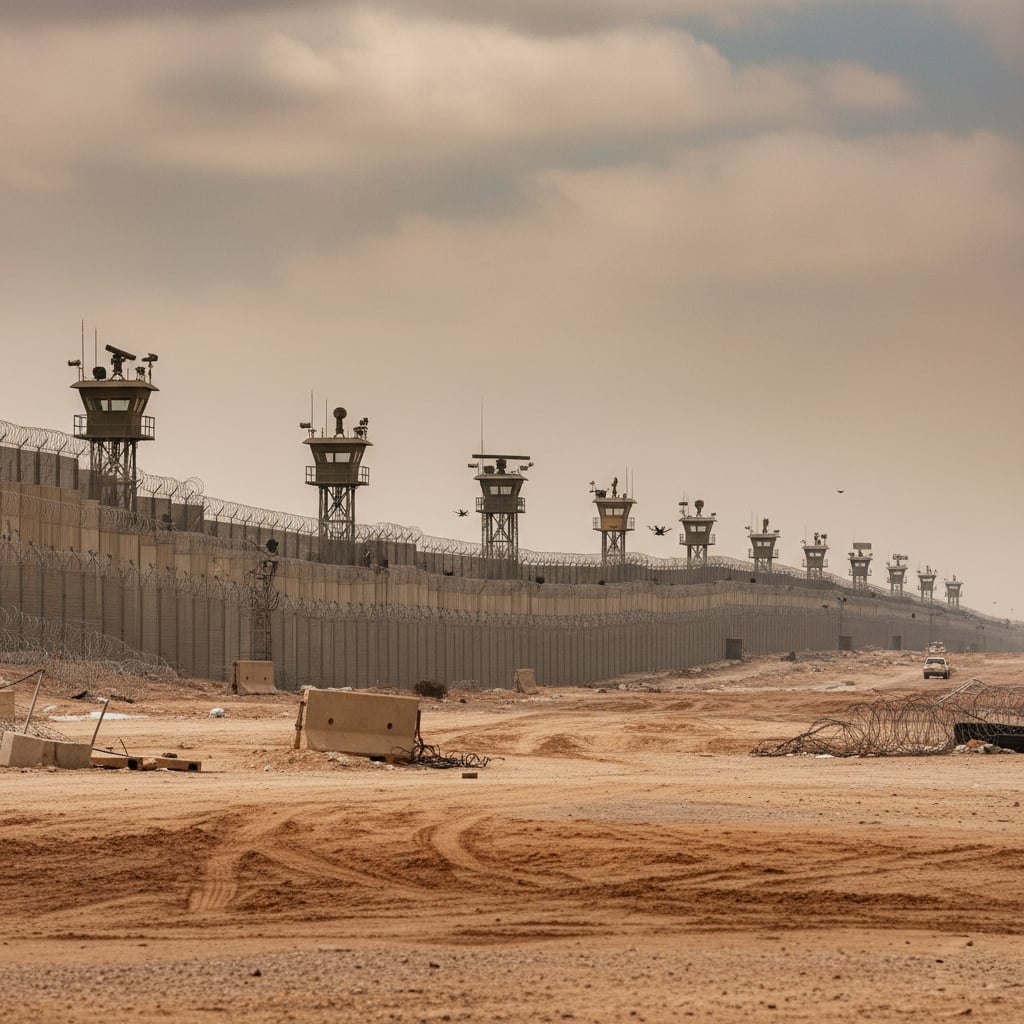
Sometime in the next decade, when the current war has quieted and the immediate urgency has receded, the Gaza Strip will still be there — broken, crowded, angry, and no closer to a resolution than it was twenty years earlier. The headlines will have moved on. The conferences and pledges and working groups will have come and gone. And Israel will continue to face the consequences of a conflict it neither started nor fully controls but cannot entirely walk away from either.
The Gaza of 2035 will likely not be at war, but neither will it be at peace. It will be suspended in a kind of permanent paralysis. Not quite a battlefield, not quite a functioning society, but something in between. Three million people will live there, two-thirds of them under the age of thirty, most of them unemployed, many of them raised entirely under Hamas rule or whatever comes next if that rule collapses. A generation growing up in confinement, without real governance, without freedom, and without a future.
And Israel will still be watching it closely, managing it remotely, fearing its rockets, dreading its tunnels, absorbing its grief and its rage in a cycle that has become all too familiar. We will continue to develop our technologies, sharpen our deterrence, refine our strategies for the next flare-up and then the one after that. But for all our strength and ingenuity, we will still be positioned next to a place that refuses to collapse and refuses to recover, and we will have to ask ourselves whether containing Gaza has become a strategy in itself, or merely the absence of one.
It is understandable that no one wants to inherit responsibility for Gaza. Egypt has made its stance clear and is likely to reinforce it in the years to come. The Palestinian Authority has neither the capacity nor the legitimacy to govern it. The international community is fatigued. The donor conferences tend to produce more paper than policy. Even the loudest voices abroad, quick to denounce Israel at every turn, seem to lose interest when the subject turns from criticism to solutions.
But the fact that no one else wants the problem does not mean it disappears. It stays, festers, and evolves. And while Israel has no obligation to fix what others have broken, or to absorb responsibility for a society that has repeatedly rejected coexistence, we do have an obligation to be honest with ourselves about where this trajectory leads. Not just morally, but strategically.
A Gaza that is simply left to decay is not a neutral outcome. It is not a stable or static reality. It is a breeding ground for resentment, extremism, and violence that does not stay behind the fence. Every few years, that reality erupts into a war, and every time it does, the political, diplomatic, and human costs are heavier. Israel may win militarily, but there are forms of stagnation that are indistinguishable from slow defeat.
By 2035, if nothing meaningful changes, Gaza will likely resemble what it does today — only more so. The infrastructure will be weaker. The population will be larger. The outside world will be more indifferent. And the young men who fight us will be those who were children during this war, raised in the ruins of broken promises and militant propaganda. We have seen this pattern before. In Jenin. In Lebanon. In the second intifada. We know how it goes when time and bitterness do the recruiting.
I’m not arguing for idealism. There is no easy answer. There may be no good answer. But even an imperfect plan is better than the illusion that doing nothing will somehow hold. At a minimum, Israel needs to ask itself what kind of Gaza it is prepared to live beside, not just in the next six months, but in the next two decades. If full control is neither desirable nor possible, and full detachment has already proven to be an illusion, then what remains is the difficult middle. It’s an uncomfortable space where we must begin shaping conditions for something that can at least be managed with stability and minimal violence.
That might mean supporting the emergence of non-Hamas local leadership. It might mean clearer coordination with regional partners, even if quietly. It might mean rethinking how we invest in intelligence, infrastructure, and civil society, not for Gaza’s sake alone, but for ours. Because ultimately, the question is not whether Gaza deserves peace. It is whether Israel deserves a future that is not permanently defined by its neighbor’s dysfunction.
If we do nothing but wait for the next round, the next war will come, and after that, another. What we will be left with is a permanent crisis that can no longer shock us, only exhaust us. The longer we delay confronting this reality, the narrower the options become. And if we do not begin to think beyond the battlefield, we may win every tactical engagement but lose the strategic arc entirely.
By 2035, Gaza will reflect what we chose to imagine, or refused to imagine, in 2025.
And that choice is still ours.