
Gaza: Bodies on the altar of ideology
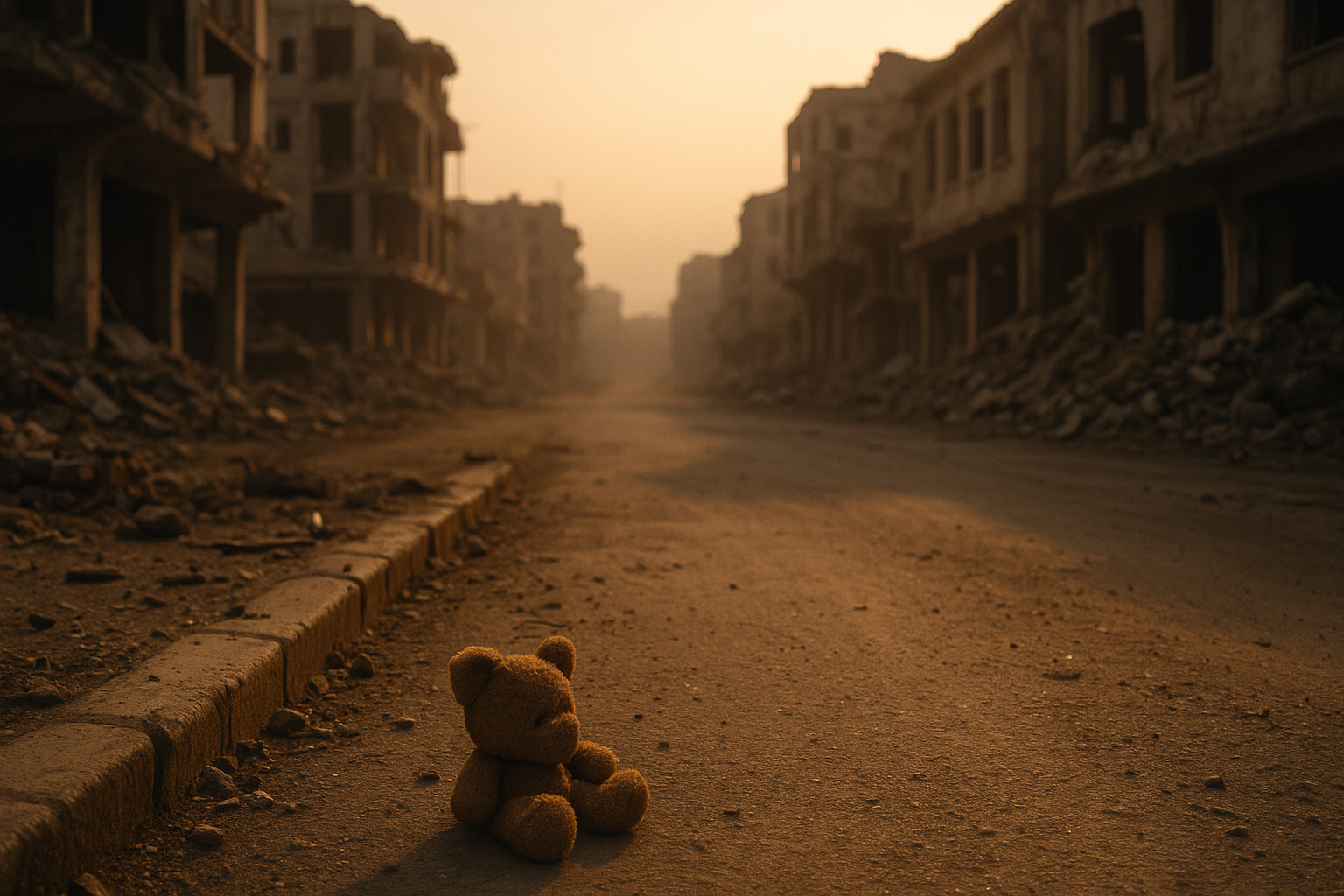
When we look closely at what we have called the Middle East cause, we find a truth that has been hidden from everyone. The Palestinian crisis was never a problem of lacking political opportunities so much as it was a crisis of miscalculation and the absence of a single, courageous, historic decision.
Decades went by where it was possible to establish an independent Palestinian state living side by side with Israel. They could have forged a prosperous economic reality together, rebuilding people and land instead of squandering blood and dreams.
But an ideological and political subservience to regional powers meddled with the cause and the fate of the people. It caused the Palestinian national project to erode until it devolved into a state of intellectual and political disarray. Now, Palestinians simply do not know where to stand, who represents their future, or where they can turn for support.
What makes the irony even more glaring is that Palestinians themselves, far from the clamor of political rallying cries, have become a fundamental part of the Israeli economy. Every day, tens of thousands of Palestinians enter Israel to work in construction, infrastructure, road building, agriculture, light industries, hospitals, and logistics.
These people are not working out of a sense of defeat or compromise, but because of a starkly clear economic reality and their own self-interest. Working for Israelis offers them higher wages, advanced healthcare, and a stable livelihood for more than half a million of their family members.
In my view, this is not a betrayal. It is a silent acknowledgment that economics has outpaced politics; that daily life and personal interests have overtaken revolutionary posturing. Revolutionary rhetoric that cannot feed a child, heal the sick, or provide a roof has become less valuable than a meal that ensures dignity.
And here is the paradox: while some Palestinian leaders call on the masses to resist until death, thousands of their fellow Palestinians are out there building housing units inside the very state of Israel they are told they must seek to destroy, working in its factories, on its farms, and within its service networks.
In contrast to this reality, the traditional Palestinian discourse remains fossilized, repeating the same exhausted refrains. It holds the Arab world, and the Gulf in particular, responsible for providing endless funding without any review or thought of offering a political or economic return that might open a window of hope.
But why is it always the Gulf that is asked to pay? Why is it assumed that oil wealth should flow without question or accountability? And all of this for what? For ideological banners we have been compelled to believe in and fund to this day.
On the other hand, why do we not see this same insistence when it comes to the prosperous Palestinian communities in Europe and America? Why do some of those who live comfortably in the West contribute nothing more than loud voices online, offering only incitement and insults against Arabs and the very nations that have historically supported them?
The bitter truth is that some Palestinian elites in the diaspora have contented themselves with the role of the moral critic from a safe distance. All the while, their own people inside Palestine live a complex reality, caught between economic need and political suffocation. They are trapped between leaderships beholden to one regional axis or another, and armed factions that serve only foreign interests. It would have been far better for these elites to build strong Palestinian institutions, rather than leaving their people caught between a rock and a hard place.
Then came the tragic spectacle of Gaza, an event founded on a pernicious myth and an unforgivable sin. Moral and political chaos manifested in its ugliest form, ignited by a criminal act against Israeli civilians, a bloody massacre.
Without a doubt, the devastation that befell Gaza was not the result of a free and conscious decision that valued the lives of its people. It was the result of a reckless gamble led by a disturbed, criminal mentality that set fire to a land of more than two million people. It then hid behind mobilizing religious rhetoric and promises of absolute liberation, before leaving the innocent amidst the rubble of their homes, the bodies of their children, and a lost future.
Gaza was burned to give life to hollow battle cries, and its people became fuel for regional conflicts. Palestinians paid with their blood and souls for the sake of trivial figures who sold them out for next to nothing, throwing them into a political inferno that brought only death to the ruined streets of Gaza. Sometimes it is in the name of resistance, other times in the name of treason. In either case, the killer raises the banner while the victim is the ordinary person in the streets of Gaza and the West Bank.
Was the fate of the Palestinian people always to be tied to the likes of the madman and criminal Yahya Sinwar and his ilk? Was this nation destined to be led like a lost flock by those who seek to immortalize their role in history, even if it is over the bodies of the innocent?
Their agenda has destroyed any remaining chances for diplomacy and peace. It has created a new reality of humanitarian and political collapse, leaving Palestinians with no choice but to ask themselves: Who is liberating whom? And how can a land be liberated if its people are not liberated first?
This region could have been the largest space of economic integration in the Middle East today. It could have brought Palestinians and Israelis together in joint projects and built a future based on prosperity instead of ruin. Jerusalem could have been a gateway to peace, not a constant symbol of blood. Palestinians could have been living with dignity in their own state, visiting their Israeli neighbors, trading with them, and developing their society, instead of moving between the rhetoric of martyrdom one day and the search for a work permit the next.
It is not too late. But the path forward cannot be the same.
If Palestinians want a future, the approach must begin by freeing their decision-making from the grip of those who trade in blood, who are slaves to dictates from regional powers. They need an approach that restores respect for reason, for the wellbeing of the Palestinian individual, and for the national interest.
There is no meaning in antiquated maxims that end up burying human beings. There is no sense in a fire that consumes its own children while sparing the merchants of war.
The real battle is not with the state of Israel. It is with an internal culture that glorifies death and despises life, with a subservience to regional regimes, and with Palestinian leaders who chose to be tools, not pioneers.
This is where true liberation begins: by liberating the human being first, so they become capable of building a nation, not just burying their dreams.