
One of the People
Gaza Is Part of the Land of Israel
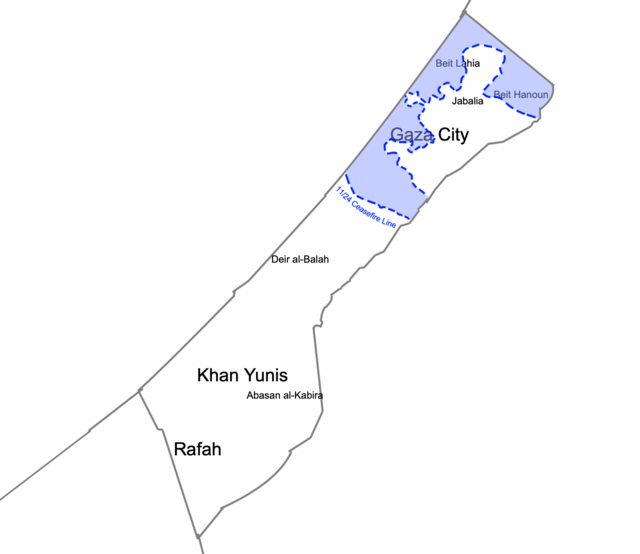
What is known today as the Gaza Strip in the southern Coastal Plain constitutes part of the tribal territory of Judah and of the Land of Israel. Wikimedia Commons.
A recent polemic in the Jewish media (The insane nostalgia for occupying Gaza – JNS.org) employed as a basis for its argument against Israel reclaiming Gaza that the latter locus isn’t included within the boundaries of the Land of Israel.
The article repeatedly makes this claim: “Gaza was not part of the biblical Land of Israel”; “it was not part of the Land of Israel”.
Pace the article’s author, this belief may suit those whose political ideology would have it so, but there’s a glaring problem: Gaza is indeed part of the Land of Israel—as the Tanakh (Hebrew Bible) repeatedly makes clear.
In delineating the boundaries of Canaan, which thereafter is assigned to the Hebrews and becomes the Land of Israel, scripture offers the following demarcation:
Genesis 10:19: “And the border of the Canaanites was from Sidon as you come to Gerar, until Gaza, as you come to Sodom and Gomorrah, and Admah and Tzvoyim, until Lasha.”
Moreover, the allocated tribal territory of Judah specifically includes:
Joshua 15:47: “Ashdod with her towns and her villages, Gaza with her towns and her villages, to the river of Egypt, and the Great Sea, and its border.”
Although Joshua (c. 1355–1245 BCE) himself was unable to conquer Gaza during his lifetime, the Judahites succeeded in doing just that:
Judges 1:18: “And Judah captured Gaza with its territory, and Ashkelon with its territory, and Ekron with its territory.”
King David (r. 1010–970 BCE) of the United Monarchy of Israel repeatedly defeated and subdued the warlike Philistines. His son, King Solomon (r. 970–931 BCE), was thus able to rule an expansive, irenic realm:
1 Kings 5:4: “For he had dominion over all (the inhabitants) on this side of the river, from Tiphsah even to Gaza, over all the kings on this side of the river, and he had peace on all sides around.”
King Hezekiah (Hizkiyahu) of Judah (r. 729–687 BCE) further subdued the Philistines during his reign, as part of his rebellion against the Assyrian Empire:
2 Kings 18:8: “He slew the Philistines up to Gaza and its boundaries, from watchtower to fortified city.”
Typically, there are two main arguments adduced by those who disagree that Gaza was part of the Land of Israel and prefer to downplay Jewish roots in the area, namely:
- Judahites, or other Israelites, never had a significant presence in Gaza;
- Jews are permitted to consume produce grown in Gaza during the sabbatical year (shmitah).
Admittedly, it remains unclear—from both the biblical and the historical records—how much of a presence the Judahites actually had in Gaza during the biblical era. Even though the Philistines remained the primary occupants of Gaza for several centuries in spite of losing sovereignty over their pentapolis in the days of King David, it is probable that there would have been at least some Judahites, perhaps a small number of merchants and diplomats, residing in Philistia, including Gaza (the patriarchs Abraham and Isaac, and the future King David, themselves sojourned in Philistia). The Philistines appear to have lingered as the majority in Gaza until early in the Second Temple era (516 BCE–70 CE) despite being repeatedly conquered, but this is beside the point: the question is whether Gaza was designated part of the Land of Israel, not whether Israelites ever constituted a majority of the city’s inhabitants.
Regarding the halakhically permissible consumption of produce argument, this legislative amendment (takkanah) was made because Gaza wasn’t settled by Jews during the Second Temple period after the Jews’ repatriation from the Babylonian Captivity (605–538 BCE)—not because Gaza wasn’t deemed part of the Land of Israel.
According to the Encyclopedia Judaica and one of the online hosts of its content—Jewish Virtual Library (created and directed by none other than the polemic’s author)—Gaza is “on the southern coastal plain of Erez Israel” and that, “from the outset, Gaza was geographically considered part of the Holy Land.”
Right on both counts.
Mistaking opinion for fact contributes unwittingly to misinformation. The wisdom or unwisdom of conquering amid the current conflict the city of Gaza, with the understanding that its hundreds of thousands of Palestinian Arab occupants would remain there after the fact, is indeed debatable and controversial, but a basis for making one’s determination should not be an ideologically clouded or colored misapprehension of the biblical and historical records that would erroneously exclude Gaza (or Philistia) from the Land of Israel.
Related Topics
Related Posts