
Middle East Analyst
Gaza Phase II – The Grammar of Trust: Honor and Legitimacy
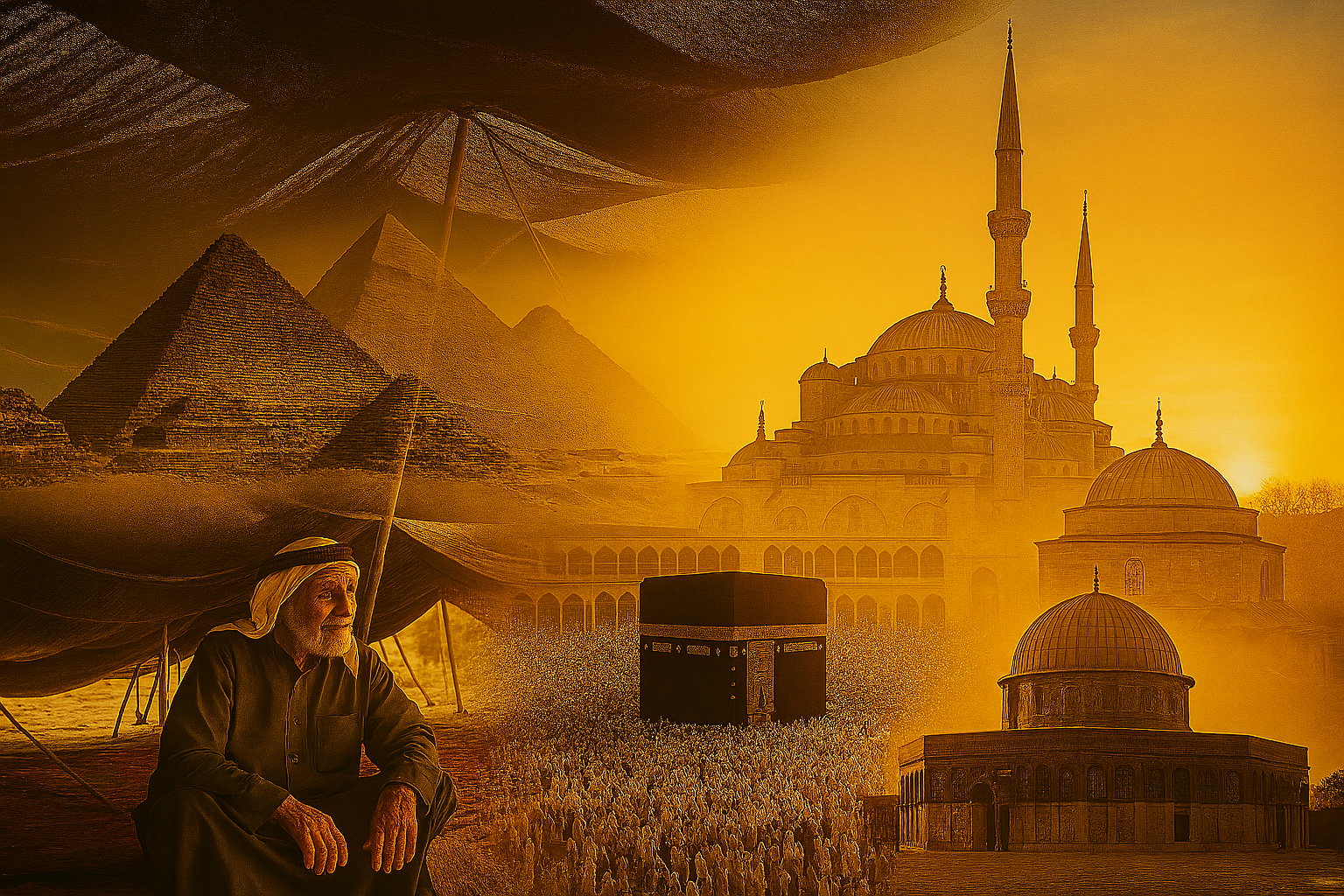
graphic by author/Copilot
The Grammar of Trust: Honor, Legitimacy, and the Social Foundations of Gaza Phase II
Western debates about Gaza Phase II tend to orbit around demilitarization plans, reconstruction schemes, and the architecture of a hundred‑billion‑dollar development package. These are necessary components of any post‑conflict strategy, but they are not the forces that will determine whether Gaza stabilizes or collapses. The actors who will shape Gaza’s future do not operate primarily inside technocratic frameworks. Their instincts are rooted in honor‑based social registers, Islamic symbolic geography, imperial memory, and state traditions that long predate modern borders. These older grammars of trust and legitimacy are more durable than ideology and more decisive than institutional design. Any Phase II plan that ignores them will fail, no matter how well funded or technically sound.
To understand Gaza’s political reality, one must begin with the concept of “Bedouin” as it is used in Arab political life. In the region, badū is not an ethnic category but a moral and behavioral register — a way of thinking about obligation, dignity, and authority. The classical contrast is not between Bedouin and Arab, but between badū and ḥaḍar: autonomous life versus settled life, personal authority versus institutional authority. This distinction is fluid and situational. Urban elites invoke Bedouin norms when legitimacy is at stake. Gulf rulers maintain tents not as nostalgia but as political language — a space where hospitality, equality before the host, and personal protection are enacted. No one fully exits this register; they move along it depending on context.
Palestinians are not Bedouin in a sociological sense, but Palestinian society operates within the same honor‑based, segmentary moral universe. Urbanization and education have layered over this logic, not erased it. Gaza’s population, overwhelmingly descended from refugees displaced in 1948, represents an extreme case of social compression: landless, encircled, and structurally “without.” Under such conditions, societies revert to the deepest trust grammar available. In Gaza, that grammar is relational, personal, and honor‑based. This does not make Gaza “Bedouin,” but it does mean Gaza operates heavily in the Bedouin register, especially in matters of security, dignity, and survival.
This register shapes the behavior of Gaza’s fighters, who respond not to distant authorities or abstract frameworks but to the rule of reputation. A contract is a piece of paper; a guarantee is a person whose name, family, and standing are on the line. Fighters require credible personal assurances, protection for their families, and face‑saving exits that preserve dignity. They negotiate as armed social actors embedded in kinship and factional networks, not as institutional agents. Financial inducements alone do not work unless embedded in honor‑preserving arrangements backed by credible enforcement. This is not ideology. It is survival logic.
Hamas itself is not a monolith but a constellation of constituencies operating in different registers. The political and financial leadership in Doha and Istanbul is mobile, insulated, and strategic, thinking in terms of leverage and legitimacy. They are susceptible to ideological and diplomatic pressure from Turkey and Qatar. The tunnel commanders in Gaza are locally rooted and deeply distrustful, requiring guarantees that speak to honor and protection rather than transactional bargains. A smaller group of ideological maximalists remains resistant to compromise and must be managed through isolation rather than persuasion. Any Phase II strategy must engage each constituency in the register it actually inhabits.
Regional actors also operate in distinct registers, and no single state possesses all the forms of authority required to shape Gaza’s future. Turkey’s political culture is centralized, bureaucratic, and ideological — the legacy of an imperial state rather than a tribal one. Ottoman rule in Arab lands is remembered with ambivalence: Muslim and orderly, but extractive and distant. Modern Turkey leverages this memory to position itself as a protector of Sunni causes and an ideological home for the Muslim Brotherhood. It can arbitrate political disputes and influence Hamas’ external leadership, but its authority does not resonate with Gaza’s armed social networks. Turkey can negotiate politics; it cannot arbitrate security.
Egypt, by contrast, is the region’s archetypal centralized state, shaped by a deep security culture and a long civilizational memory. Cairo distrusts Hamas because Hamas is Muslim Brotherhood, and it distrusts Turkey and Qatar for the same reason. Egypt can enforce borders, contain threats, and police the “above‑ground,” but it cannot confer internal legitimacy within Gaza’s social fabric. Enforcement without legitimacy is necessary but insufficient.
Saudi Arabia occupies a unique position because of its fluency across registers. Its political culture retains deep familiarity with honor‑based mediation while also commanding modern institutions and religious symbolism. This fluency is amplified — and constrained — by its custodianship of Mecca and Medina. Mecca is not a political capital, but it is the moral center of Islam, and custodianship confers a form of symbolic seniority that no other state can replicate. This shapes how rivals challenge Saudi legitimacy, how Islamist movements frame worthiness, and how fighters interpret Saudi involvement. Saudi influence is most effective when exercised through individuals who genuinely inhabit the honor register rather than merely performing it. Regional actors know the difference instantly.
The strategic implications for Western policymakers are clear. Gaza Phase II will not be stabilized by institutions alone. It will require the right individuals, operating in the right registers, backed by the right forms of authority. Egypt can enforce; Saudi Arabia can partially legitimize; Turkey can negotiate; Qatar can facilitate; the Palestinian Authority can administer only if others supply the moral and security backing it lacks; and Israel can deter but cannot confer internal Palestinian legitimacy. Any plan that relies on only one of these pillars will collapse.
Gaza Phase II will ultimately be shaped by honor‑based political registers, Islamic symbolic geography, imperial memory, statist enforcement traditions, and the shared West Bank–Gaza social substrate. Modern diplomacy must operate atop these foundations, not in denial of them. The actors who understand the grammar of trust — and the limits of their own legitimacy — will determine whether Gaza’s next phase stabilizes, fragments, or collapses before it begins.
Related Topics
Related Posts