Checks from Lisbon to Gaza
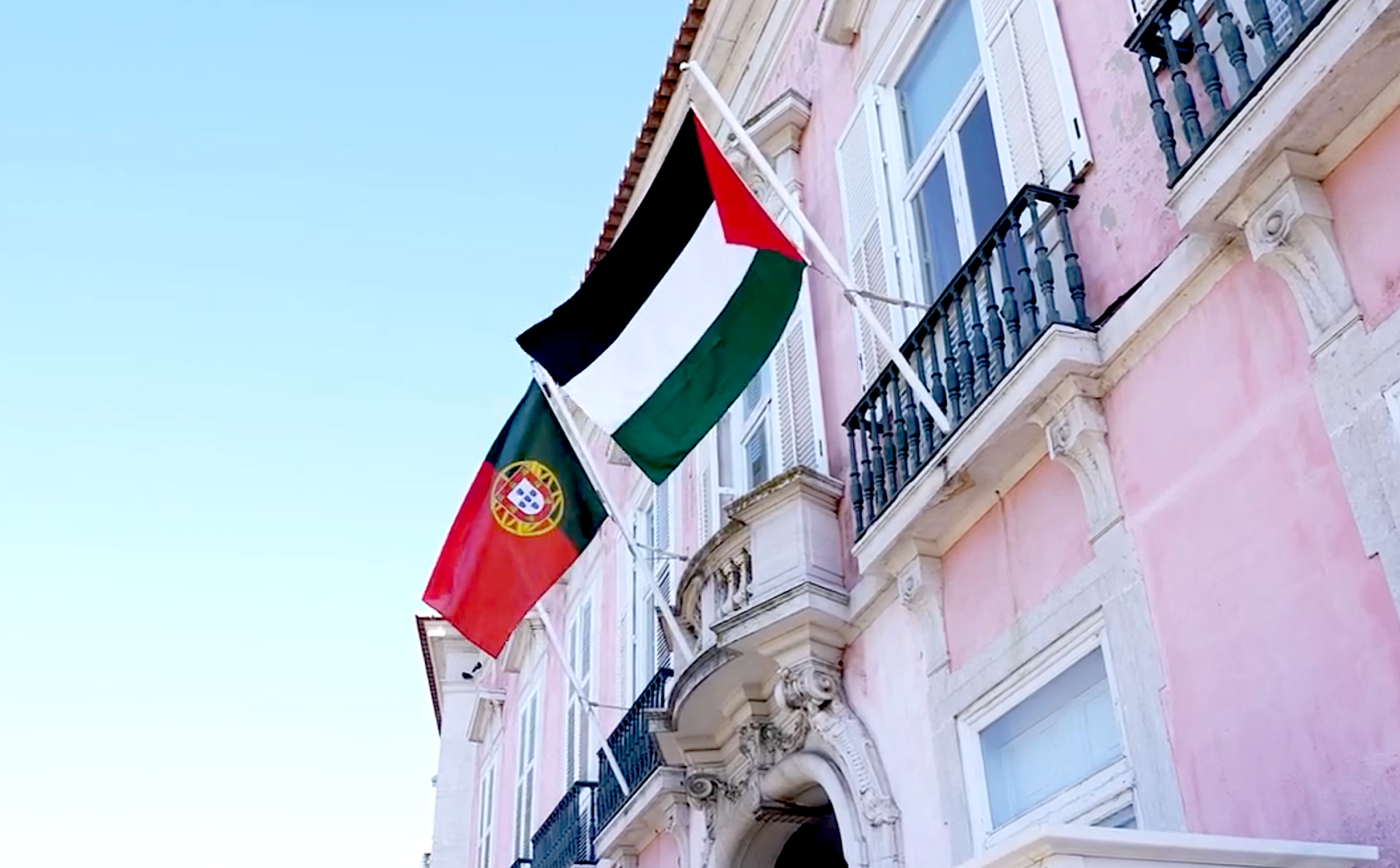
The high point of the visit was the meeting with the Portuguese Minister of Foreign Affairs, Paulo Rangel. In the meeting, described by Rangel as a “historic moment,” two memoranda of understanding were signed: one for regular political consultations between the two states and another for training and information exchange between diplomats. The ministers also agreed to create a joint commission to deepen cooperation in education, health, agriculture and tourism.
At the same event, Portugal announced a further €250,000 for the Horizon Fund, a UN and Palestinian Authority platform for the reconstruction of the occupied territories, with priority for Gaza after the October 2025 ceasefire. Another check. Another line in the communiqué. Less public information explaining the final destination.
Since the Hamas attack of 7 October 2023, the Portuguese government has announced a series of reinforcements. In November 2023, the Council of Ministers authorised €10 million — €5 million for OCHA, €4 million for UNRWA and €1 million for the International Committee of the Red Cross. In February 2024 it added €1 million to UNRWA; in March of the same year, another €10 million to the same agency. Official sources, repeated by Rangel this week, now speak of around €24 million for the humanitarian response in Gaza and the West Bank and €17 million destined for UNRWA over the last three years, plus the €250,000 now pledged.
But when one tries to follow the money trail, the problem begins. Camões, I.P., the institute that centralises and reports Official Development Assistance, unlike what happens with other geographies, does not present on its public interface a clear map, year by year and channel by channel, of these emergency packages. The aggregated statistics highlight the PALOP countries and Timor-Leste; the multilateral share reached 82 per cent in 2024, but Palestine, Gaza and UNRWA do not appear as prominent destinations in the geographic summaries.
The data sent to the OECD Development Assistance Committee and the lines of the UN Financial Tracking Service confirm significant inflows to UNRWA in 2024, without closing the account announced in Lisbon or showing the final destination on the ground.
From the institute in Lisbon to the transfer to United Nations agencies, the trail dissolves into pledges, exchange rates, multi-year budget lines and pooled funds. There is no single public, updated and reconcilable document that would allow a citizen to verify where each euro was actually applied in Gaza or the West Bank — if it arrived intact at all.
In diplomacy this is called multilateralism. In public accounting it is called opacity. And that is where oversight fails completely. Once the money enters UN agencies, the Portuguese taxpayer no longer has an auditable trail of distribution in Gaza: who received it, in which sector, on which date and with what result. There are communiqués, there are appeals, there are totals in dollars. What is missing is the essential — public, disaggregated and verifiable data on application on the ground. Without that, Lisbon can continue signing memoranda and sending checks. What it cannot do is guarantee that the roughly €40 million arrived where the official discourse promises.