
Middle East Analyst
Gaza: The Forgotten Middle East Strategic Center of Gravity
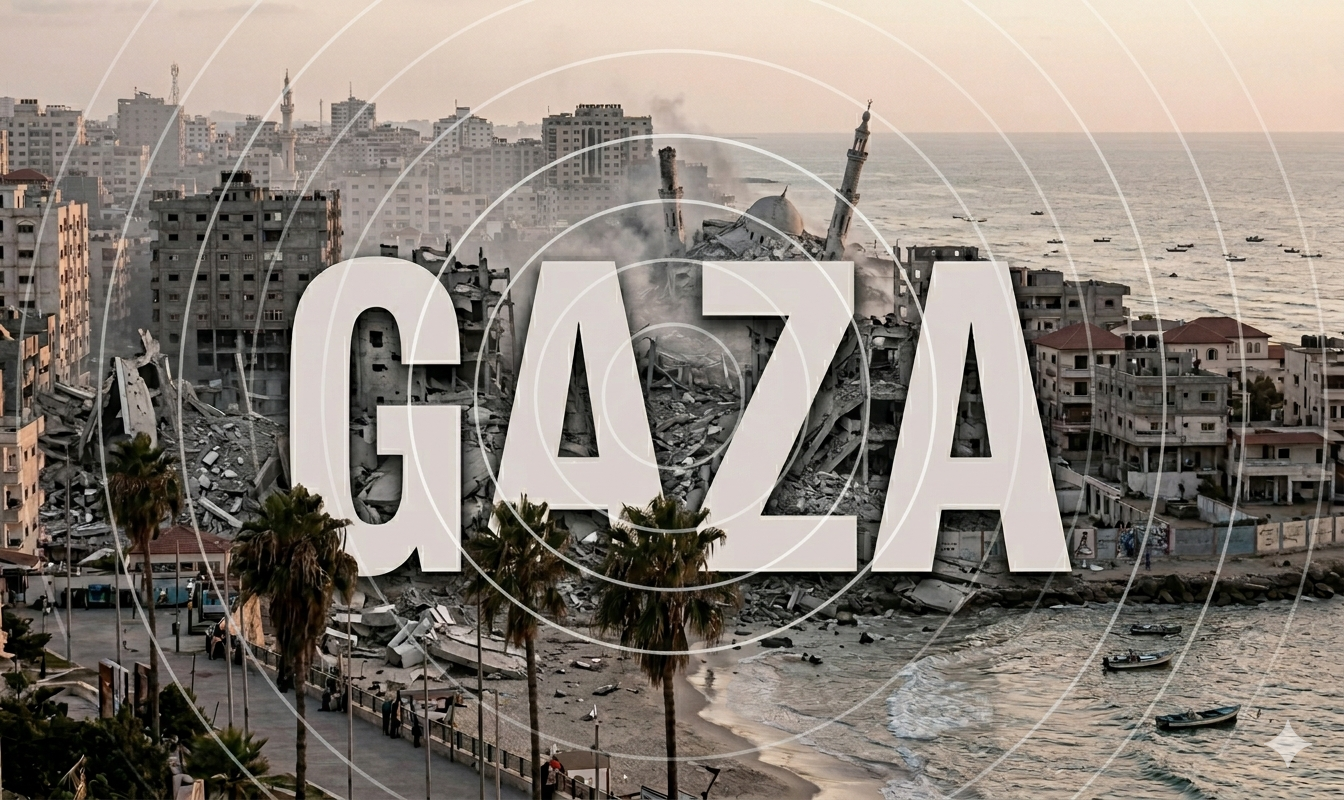
by author (AI)
For all the attention now fixed on Iran, Lebanon, and the widening arc of regional instability, the strategic center of gravity in the Middle East remains exactly where it has been since October 2023: Gaza. It is the one arena that neither policymakers nor publics want to look at directly, yet it is the arena that will likely determine whether any diplomatic, political, or security architecture in the region can be stabilized. Gaza is the strategic center of gravity precisely because it is the psychological one. Its power to paralyze diplomacy, drain legitimacy, and fuel regional instability flows directly from what it represents in the minds of publics and leaders across the Muslim world and increasingly in the West. The uncomfortable truth is that nothing meaningful is likely to move on the peace front — whether between Israel, the US and Iran, or between Israel and the Arab world — until Gaza is addressed not as an afterthought, but as the foundation of regional peace.
Today, that foundation is shattered. Gaza is still rubble. Hamas remains armed and entrenched. The Board of Peace — the very mechanism designed to manage reconstruction and governance — is not only essentially unfunded, it has been effectively paralyzed by the Iran war it was supposed to outlast. And the United States, Israel’s partner, is politically and strategically distracted by a conflict that fewer than one in four Americans believes was worth fighting. The result is a region drifting toward escalation while the one place that could anchor a sustainable future remains neglected.
A War That Reordered Priorities
While Israelis see the Iran war as a shared existential fight, Americans increasingly view it as an unnecessary conflict that is going badly and costing the country dearly. An Ipsos/Reuters survey released April 14, 2026 — conducted after the ceasefire and after President Trump threatened that “a whole civilization will die tonight” — found that only 24 percent of Americans believe the war has been worth its costs and benefits. Just 35 percent approved of the military strikes at all, a number that has remained essentially flat across a full month of polling. That the United States has committed tens of billions of dollars and significant military assets to a conflict that fewer than one in four Americans believes was worthwhile is itself a measure of how thoroughly the Iran war has distorted American strategic priorities — and how little bandwidth remains for Gaza.
This is not a marginal political problem. It is a structural one. The United States cannot sustain major overseas operations without public support, and the American public has signaled clearly that it has no appetite for another long Middle East conflict. The Iraq experience — marked by corruption, waste, and the absence of a coherent counterinsurgency doctrine — created a generational ceiling on US tolerance for large deployments. Gaza reinforced that ceiling. Iran understands this strategic vulnerability. The American public overwhelmingly perceives the Middle East primarily through the lens of Gaza. Israelis are still operating under the misconception that they can simply move forward while Gaza remains the region’s fractured faultline.
The financial cost of that miscalculation is now quantifiable — and the contrast with Gaza is stark. Pentagon figures place direct US military costs at over $16 billion in the first two weeks of the Iran war alone. CSIS senior adviser Mark Cancian has estimated total Pentagon budget costs at approximately $28 billion when including forces, munitions, and losses to bases and aircraft. Harvard Kennedy School professor Linda Bilmes has projected the full fiscal burden — including munitions replenishment, long-term military commitments, veterans costs, and regional economic damage — could ultimately reach into the hundreds of billions.
Against that expenditure, consider what has actually been delivered to Gaza. At the inaugural Board of Peace meeting in February 2026, seventeen billion dollars in reconstruction pledges were announced with considerable fanfare. As of April 10, 2026, Reuters reported that the Board of Peace had received less than one billion dollars of those pledges — with only three of ten pledging countries having contributed anything at all. Board envoy Nickolay Mladenov informed Palestinian groups directly that no money is currently available. The World Bank estimates reconstruction will ultimately cost between $53 and $70 billion. The Board of Peace currently holds less than one billion dollars in its accounts.
The arithmetic is unambiguous: in its first two weeks, the United States spent more than sixteen times the total amount currently available for Gaza reconstruction on a war that fewer than one in four Americans believes was worth the cost. That is not a foreign policy trade-off. It is a strategic failure of the first order.
The Missing Foundation: Trust and Credibility
Diplomacy cannot advance without trust. Trust cannot be built without credibility. And credibility cannot be restored while Gaza remains in ruins.
The Board of Peace was conceived as the mechanism to coordinate reconstruction, governance, and security reform in Gaza. Yet it remains largely unfunded and operationally paralyzed. Without resources, it cannot govern. Without governance, Gaza cannot stabilize. Without stability, no Palestinian leadership — whether technocratic, national, or regional — can credibly negotiate anything resembling a political horizon.
Israel’s stated objective of a “post-Hamas Gaza” is unattainable under current conditions. Hamas remains armed, embedded, and politically resilient. The absence of reconstruction has created a vacuum in which Hamas can continue to claim relevance. The absence of a legitimate governing authority ensures that no alternative can emerge. The absence of a funded and internationally legitimate Board of Peace ensures that even well-intentioned actors lack the tools to change the trajectory.
This is not a question of ideology. It is a question of sequencing. Reconstruction precedes governance. Governance precedes disarmament. Disarmament precedes diplomacy. Gaza is the first step in the chain, not the last. Critics will argue that reconstruction cannot precede security — that you cannot rebuild what remains contested. That is precisely the point. The absence of a funded governance structure ensures the security conditions for reconstruction never materialize. The sequence is not idealistic; it is the only practical path out of the current stalemate.
The US–Israel Disconnect
There is a growing and now well-documented perception in the United States that Israel drove Washington into the Iran war. Reporting by New York Times correspondents Maggie Haberman and Jonathan Swan, describes Netanyahu delivering a hard sell to Trump and senior advisers in the White House Situation Room on February 11 — a presentation whose central premises Trump’s own intelligence chiefs assessed as deeply flawed. The reporting has not been formally contested by the White House. Whether one accepts every detail of that account or not, the political damage is real and measurable in the data cited above.
Netanyahu’s increasing reliance on President Trump’s personal goodwill is a compounding strategic vulnerability. Trump remains deeply unpopular with large segments of the American public, and his support is famously volatile. Younger Americans across the political spectrum are increasingly skeptical of the war and of the alliance that produced it. Leading Democratic contenders are openly distancing themselves from traditional pro-Israel positions. The political coalition that sustained the US–Israel partnership for decades is eroding on both sides of the aisle. The polling data makes this not a prediction but a documented reality.
The Netanyahu Paradox and the Gaza Diversion Hypothesis
Netanyahu’s opposition to Palestinian statehood is a matter of unambiguous public record. The day before the UNSC 2803 vote in November 2025 — a resolution establishing a conditional, benchmark-based pathway toward Palestinian self-determination — he told his cabinet that his opposition to a Palestinian state “has not changed one bit.” His government made a last-minute diplomatic push to strip even the resolution’s aspirational statehood language before the vote passed 13-2.
What has received far less analytical attention is a hypothesis that, while unproven, is plausible given Netanyahu’s known objectives and political incentives: that the Iran war served a secondary strategic purpose of disrupting momentum behind UNSC 2803 and the conditional pathway to Palestinian statehood it established. This is not an assertion of deliberate design, and it should not be read as one. Netanyahu and Trump both hold legitimate concerns about Iranian regional ambitions and its nuclear program. But both also claimed after the June 2025 twelve-day war that Iran’s nuclear capabilities had been effectively destroyed — a claim widely viewed as overstated — which raises reasonable questions about the urgency framing behind the February 2026 escalation. The optics of the timing, if not the intent, are difficult to dismiss: the Iran war began just ten weeks after UNSC 2803 established the first internationally sanctioned pathway to Palestinian statehood in years.
The hypothesis that the Iran war may also have functioned as a diversion from Gaza Phase II and the implementation of UNSC 2803 deserves serious analytical consideration. Whether by design or by consequence, the war has frozen the diplomatic horizon that the resolution sought to open. No American administration can credibly advance the Board of Peace while prosecuting a wider regional war. Saudi Arabia cannot normalize relations with Israel while Gaza remains in ruins with no political horizon in sight. No Palestinian leadership can negotiate while Gaza remains a symbol of abandonment. The conditions that make diplomacy necessary are precisely the conditions that now make diplomacy impossible.
Lebanon and Iran: Secondary Fronts, Not Primary Ones
Lebanon is a critical theater, but it is not the center of gravity. Hezbollah’s strength, Iran’s regional posture, and the risk of escalation all matter deeply. But none of these fronts can be stabilized without addressing the underlying political and humanitarian crisis in Gaza.
Iran’s strategy has always been to stretch conflicts horizontally — across Iraq, Syria, Lebanon, Yemen, and the Gulf — while avoiding decisive vertical escalation. Israel’s strategy has been to strike vertically — targeting leadership, infrastructure, and capabilities — while avoiding prolonged entanglement. Both strategies intersect in Gaza, where neither side can achieve its objectives without addressing the political vacuum.
Lebanon cannot be stabilized while Gaza remains a symbol of unresolved grievance. Iran cannot be deterred while Gaza remains a recruiting tool and its primary source of regional legitimacy. Israel cannot secure its northern border while Gaza remains a political and moral liability. The United States cannot rebuild regional credibility while Gaza remains a humanitarian catastrophe.
Conclusion: Return to the Center of Gravity
Gaza is not a side theater. It is the center of gravity — strategic and psychological simultaneously. It is the test of credibility for Israel, the United States, and the international community. It is the arena where legitimacy is won or lost. It is the foundation upon which any future political architecture must be built.
The numbers tell the story with uncomfortable clarity. The United States has spent tens of billions of dollars on a war that fewer than one in four of its own citizens believes was worthwhile, while the Board of Peace — the internationally sanctioned mechanism for stabilizing Gaza — sits with less than one billion dollars in its accounts and cannot even get its administrators into the territory. Families in Gaza are still living in tents. The National Committee for the Administration of Gaza has been told there is no money available. And the Iran war continues to consume the diplomatic bandwidth, political capital, and financial resources that reconstruction requires.
The risk of continued neglect is not abstract. A cracked foundation does not hold indefinitely. If Gaza’s governance vacuum persists, if reconstruction remains a pledge rather than a reality, and if the Board of Peace collapses under the weight of its own underfunding and structural contradictions, what fills that vacuum will not be diplomacy. It will be the next cycle of violence — larger, more regional, and more difficult to contain than the last.
Until Gaza is stabilized — physically, politically, and institutionally — nothing else in the region will hold. Not deterrence. Not diplomacy. Not normalization. Not peace.
The Middle East is littered with crises. Solving the Gaza crisis does not automatically solve the others. Each has its own dynamics. But Gaza is the one crisis that determines the trajectory of all the others. If there is to be a new Middle East, the Gaza crisis cannot remain an afterthought. It must be treated as the regional center of gravity it has become.
Related Topics
Related Posts