
Gaza’s Future Won’t Be Decided at the Podium
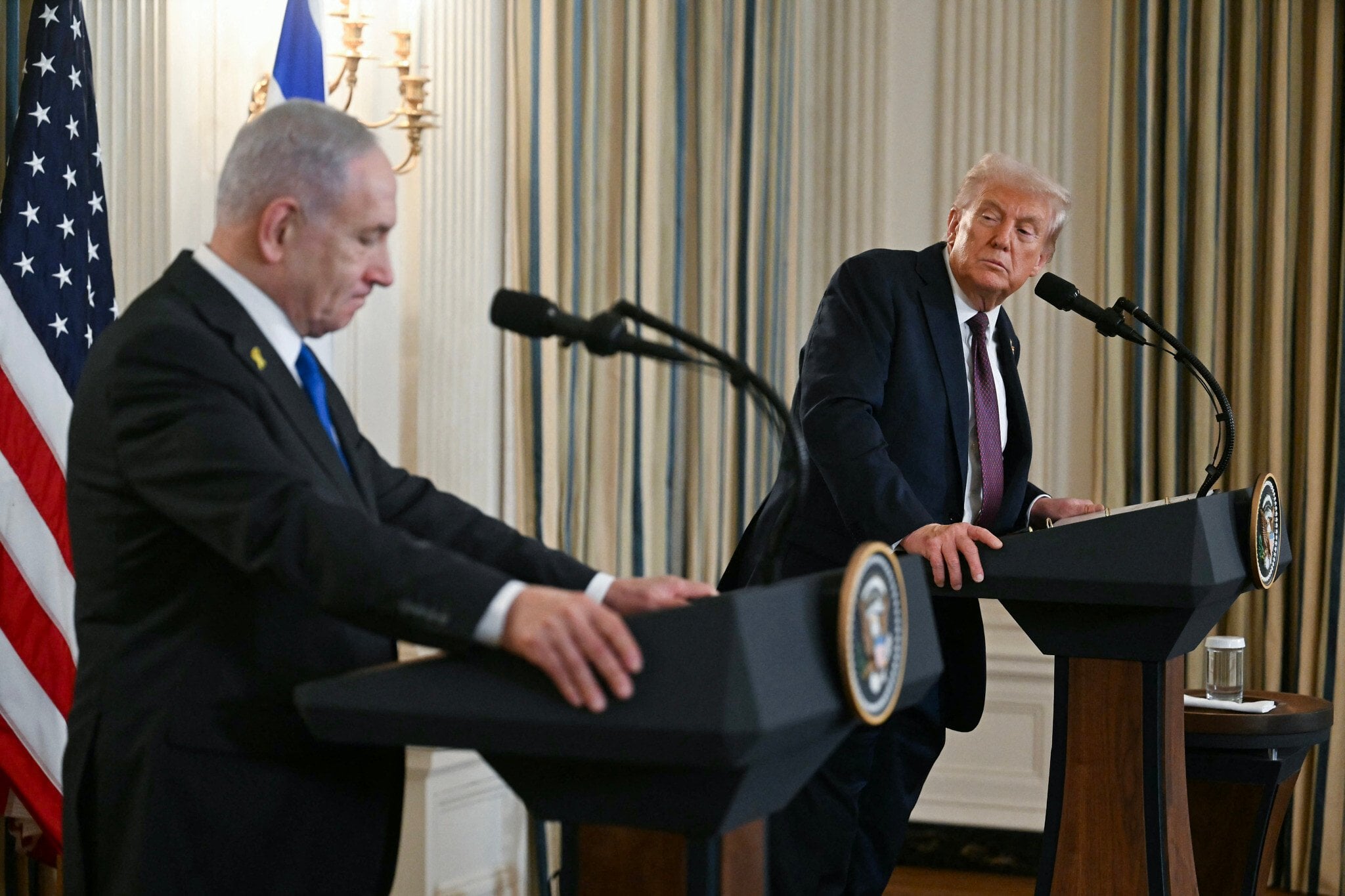
The announcement earlier this week by Donald Trump and Benjamin Netanyahu of a 20-point plan to end the Gaza war was staged as a breakthrough moment. The headlines were clear enough: hostages would be returned within 72 hours, Israel would withdraw in stages, aid would flow in, and a “New Gaza” would rise.
But scratch beneath the surface, and you see two competing interpretations. One is Israeli: the hostages come home, and afterward Israel retains freedom of action to do what it needs militarily. The other is Arab: the plan is a chance to lock Israel into a regional framework it has long rejected — Arab-managed security in Gaza, Palestinian political authority restored, and an eventual pathway toward statehood.
Which interpretation prevails will not be decided in Washington or Tel Aviv, but in the daily management of Gaza itself. And here Michel Foucault’s idea of the “microphysics of power” becomes essential.
Foucault rejected the idea that power is concentrated in one sovereign center. Instead, power is dispersed, woven into the routines of everyday life. Foucault’s point was that “power is everywhere,” as he wrote, “not because it embraces everything, but because it comes from everywhere.”
“Power must be understood,” Foucault wrote, “as the multiplicity of force relations immanent in the sphere in which they operate.” In Gaza, those force relations are not tanks and airstrikes. Power operates in checkpoints, in hospitals, in food distribution, in the way streets are patrolled. Whoever controls these levers controls reality. These “micro-powers” — seemingly small, technical levers — determine whether grand strategies succeed or fail.
Look again at the Trump plan through this lens. Gaza will be administered on an interim basis by Palestinians — either technocrats from the Palestinian Authority or former Hamas members who renounce violence and accept amnesty. Security will be handled not by Israel, but by an International Stabilization Force with heavy Arab participation. Aid will be distributed through the UN and international agencies, not by the IDF.
This means that the people who control Gaza’s daily life the day after are not Israeli generals or even foreign dignitaries, but Arab security officers, UN logisticians, and local Palestinians — some potentially drawn from the very ranks of Hamas.
That is why Hamas is so torn. As reported in Israeli and Arab media, its leaders are debating whether to reject the plan outright, to accept with amendments, or to play for time. Some fear Israel will replicate the “Lebanon model” — continuing to strike Hamas even after withdrawal. Others see in the plan a political opening. For the first time, Hamas members could re-enter civilian life not as fugitives but as administrators, mayors, or committee heads, shielded by amnesty. The military wing may dissolve, but the political brand could survive — reconstituted at the level of local power, precisely where Foucault would tell us to look.
Egypt has warned Hamas bluntly that rejection will bring disaster. The United States has set deadlines. Israel has already accepted the plan, at least on paper. The regional machinery is in motion. The open question is whether Hamas takes the deal and rebrands, or refuses and risks marginalization.
For Israel, the stakes are just as high. If daily power in Gaza really shifts to Arab states and an international force, Israel will not have “freedom to do whatever it wants” after the hostages are returned. Every strike will now mean clashing with Arab guarantors and international monitors. That would mark a profound strategic shift: from unilateral Israeli action to a multilateral Arab-managed order.
For the Palestinians, the day-to-day is equally decisive. If the PA manages to integrate into the new governance, it gains legitimacy and a foothold in Gaza. If former Hamas members take up administrative roles, the movement could metamorphose into a political actor, no longer defined solely by arms. Either way, the outcome depends not on speeches but on whether local actors control clinics, food distribution, policing, and rubble clearance.
This is why the “microphysics of power” is the real test of the Trump plan. Grand declarations and diplomatic ceremonies mean little unless they map onto the dispersed, everyday realities of power. If Arab security forces, UN agencies, and Palestinian administrators actually run Gaza’s daily machinery, then the Arab states will have succeeded in imposing their vision — the one Israel resisted for decades. If not, Israel’s interpretation will prevail, and the plan will collapse into another short-lived truce.
The headlines may focus on hostages and speeches. But the answer to whether this deal is rhetoric or reality will be found in the small levers of power: who staffs the crossings, who polices the neighborhoods, who turns the lights on at night. That is where Gaza’s day after will be decided — and where we will see whether Israel keeps its freedom of action, or whether Arab states have quietly succeeded in reshaping the region.