

Gérard Bensussan Interview | Alexandre Gilbert #287
Kaddish for François
Gone so quickly, too soon as they say, cruelly ahead of the promises of his thought, the planned, projected encounters, and the continuous, full, and familiar exchange, François Sebbah leaves us helpless before the face of guilt he had so perceptively examined—and with what subtlety—under the highest responsibility: that of Levinas’s ethics, our foundation.
François has thus deprived me of the conversation we had sustained for years—its intensity and its simplicity. From our discussions around so many shared things, even common ones—the Judeo-Maghrebian heritage, philosophèmes as biographèmes, a certain narrative writing of philosophy—of their warmth, the pleasure and the friendship of being together, he has now absented himself forever, definitively. How to survive him is now our painful question, the one he bequeaths to us, he who so deeply meditated on what survival could mean, its ethics, and who thus opens up for us—beyond himself, beyond his own death—the possibility of “quelques tentaives,” as the subtitle of one of his books puts it. So let us attempt. But how?
What ethics of the survivor does he leave us with, if ethics, as he always intuited and affirmed, in order to be truly ethical, amounts to an action without words? “One must be silent.” To what silent ethic does François now leave us?
I know one thing: in reading and rereading every line he wrote throughout his too-short life, he never failed before the “Judge of Truth,” the dayane ha-emet, whom Jewish tradition invokes at the moment of death.
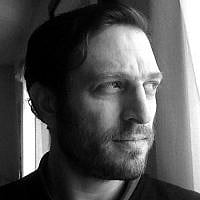
Gérard Bensussan is a french philosopher.
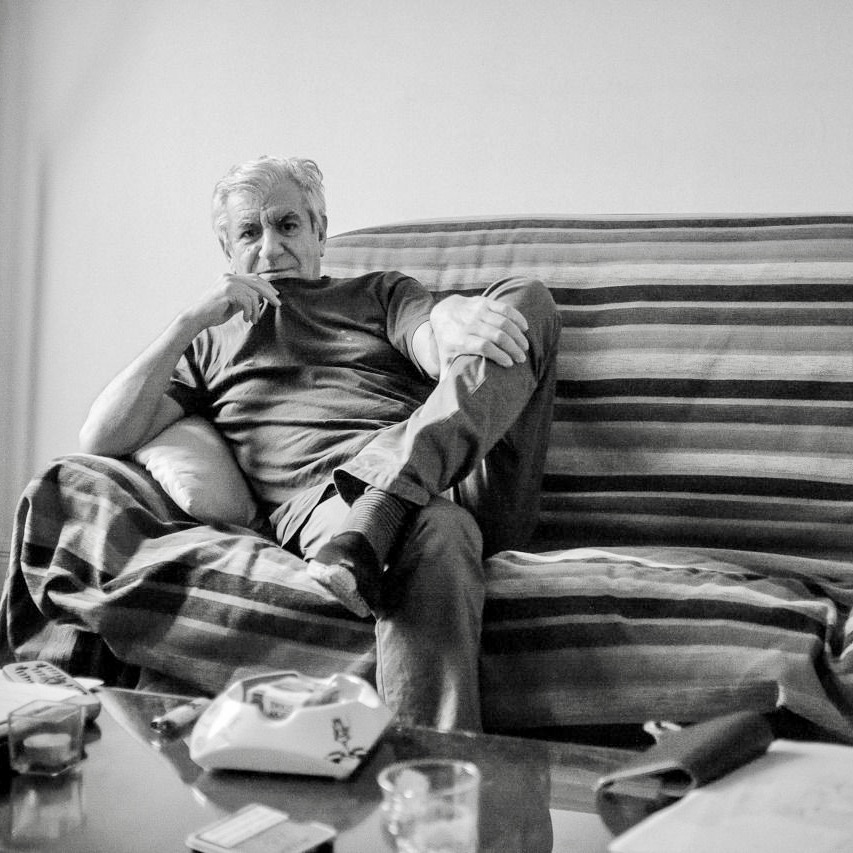
François Sebbah (1961–2024) was a french continental philosopher, specialist in phenomenology and Jewish thought, with particular focus on Levinas and Derrida. He taught at the University of Technology of Compiègne.