
Global Jew Living in Thailand
Global Brands & Navigating Antisemitism
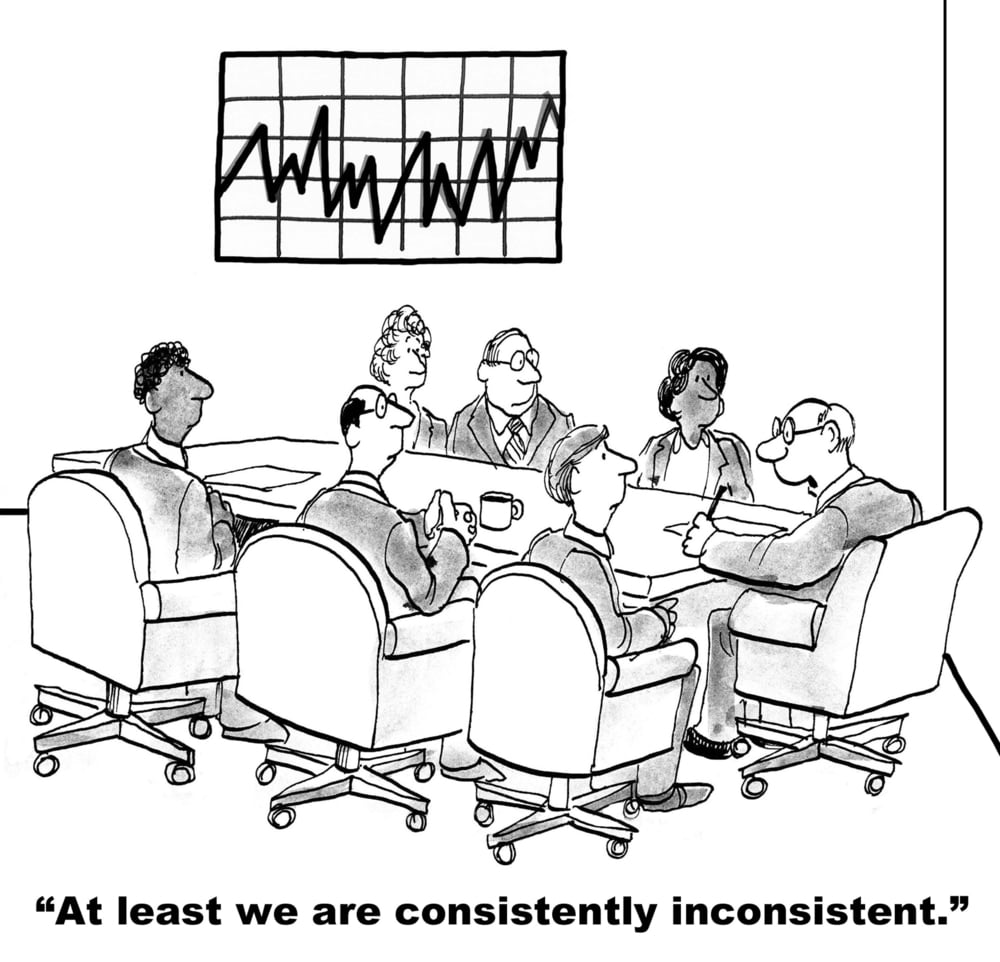
"At least we are consistently inconsistent." credit: Cartoon Resource via shutterstock.com
Today’s global brands love presenting themselves as “moral actors” not just economic powerhouses.
They do this through “Corporate Social Responsibility” (CSR) which has become – at times – a true challenge for them, especially in the post-October 7th world.
Multinational companies and brands may portray themselves as champions of universal values. But the more their actions are scrutinized, the more they face questions when their values are seen as inconsistent across different issues, different countries and different political environments.
SOME EXAMPLES TO CONSIDER
*Look at a global brand that is based in the United States and promotes religious inclusion, sponsors Holocaust remembrance activities and has zero tolerance for antisemitism. Then, in one of the regions they operate in, say the Middle East, local managers avoid assigning certain projects to Jewish employees for fear of offending antisemitic clients.
*Imagine a multinational company that – post-October 7th – issues statements of condemnation of the Hamas massacre in some countries. But the company makes the deliberate decision to NOT say anything – in other countries/regions – about the murders, rapes and terrorism that Israelis experienced that day.
*Think about a global brand that faces pressure from local business partners to NOT work with vendors that are connected to Jewish owners and/or Israelis. The brand quietly avoids these partners while simultaneously running anti-discrimination campaigns in Western markets.
The bottom line: global brands and corporations can easily promise and promote universal values while simultaneously operating inside legal and political systems that are unequal and discriminatory.
The world is a very complicated place and – especially as Jews – we must remain vigilant and call out this hypocrisy. It’s becoming way too easy for political, opinion and business leaders to blur the borders of ethical activities and hateful, discriminatory activities.
And we know, it’s too easy for anyone to spread hate against Jews, threaten and harass Jews and discriminate against Jews.
WHAT COMPANIES ARE DOING TO PARTICIPATE IN THE DISCUSSION.
At some point, companies looked to attract employees by wading deeply into the “pool” of Diversity, Equity and Inclusion. Businesses rushed into the realm of LGBTQ rights, gender equality, disability inclusion, racial equality, religious inclusion and anti-discrimination.
This was all well and good until the Trump Administration and its acolytes began offering hysterical conclusions that these efforts were – in reality – attempts to discriminate AGAINST non-diverse, white people. Some companies pushed back but many tried to “go along and get along” by de-emphasizing their efforts and not being so “loud and proud” about their values.
There also has been an uptick of companies issuing public statements after police violence, hate crimes, election controversies, terrorist attacks and even US Supreme Court decisions. Some of the topics inspiring company declarations have included Black Lives Matter, antisemitic attacks, the Ukraine-Russia war and anti-Asian violence.
The frequency of these statements appears to have slowed, as well, as the Trump Administration looks for ways to intimidate those who don’t align with their “principles.” Thus, we now have a situation where corporate silence can be interpreted as a political position, in and of itself!
ESG (environmental, social, governance) and sustainability efforts are promoted to market a company’s “moral legitimacy” together with its products and services. Efforts to call attention to and support human rights initiatives include multinationals now publishing “human rights frameworks” and “global ethics standards.” Disturbingly, one has to question, are all these ESG efforts truly what the company believes across the globe or are they just meant for specific geographic regions?
For years – starting with employee assistance programs (EAPs), companies have tried to emphasize mental health, pronoun policies, multicultural celebrations, religious accommodation, etc. This should lead to consistency among all groups including Jews, especially after October 7th. Note my using the word “should.”
Companies run the risk of undercutting all those efforts if they are not consistent, do not remain steadfast in the face of political pressure and don’t – all-of-a-sudden – sacrifice those efforts because they think it will help their bottom line. But, can we really expect such consistency and courage?
SOME QUESTIONS
*If a company’s anti-discrimination policies and actions are limited to certain geographies, is the company truly committed to anti-discrimination or are they just supportive, when it’s convenient?
*At what point can we consider a company’s compliance with local laws that discriminate against Jews not just a necessary business decision but complicity in the hate?
*Can a company claim to support religious inclusion globally while tolerating religious exclusion in specific markets?
There are many more questions but the one that resonates MOST with me:
*What responsibilities do multinational corporations and brands have when hostility toward Israel is already fueling rampant global antisemitism?
“LIGHT” AS THE ANSWER?
It’s no longer a challenge for multinational companies and global brands to operate across the world. What IS a challenge: Can they maintain a consistent and coherent moral identity that does not discriminate?
For Jews – especially post October 7 – it’s a precarious time and multinational corporations have a big role to play in making employees feel valued and safe, while the company simultaneously tends to its shareholders and the financial statements. In some cases, this is working. In other cases, it isn’t.
US Supreme Court Justice Louis D. Brandeis, famously wrote “Sunlight is said to be the best of disinfectants.”
We need more attention on the consistency of companies, what they say and what they believe in and how their actions line up with what they claim.
We need to hold companies accountable. Full stop.
As Brandeis noted, we need more sunlight.
Related Topics