Go and Learn: What the Passover Seder Has Always Known About Education
“Go and Learn”: What the Passover Seder Has Always Known About Education
Every year at my cousin’s Passover Seder, the same ritual played out. His younger brother was made to read the section of the Haggadah about the wicked son. My older cousin, naturally, claimed the wise son for himself. And I always ended up with the one who doesn’t even know how to ask a question.
We laughed. We still laugh. But somewhere between childhood and becoming an educator myself, I started to see that moment differently. Because the Haggadah doesn’t assign those roles randomly. It gives us four children, quite deliberately, because it has always understood something that modern education is still catching up to: not every child learns the same way, and a table, like a classroom, is only complete when every kind of learner has a seat at it.
Four Children. Four Learners.
Consider who those four children really are.
The chacham, the wise son, asks detailed questions and wants to know all the rules. We celebrate him. We want our children to be him. But the Talmud asks, “Who is truly wise? One who learns from every person.” The wise son risks mistaking knowledge for wisdom, information for transformation. His teacher’s job is to push him past the right answer and toward the meaningful one.
The rasha, the so-called wicked son, asks “What does this mean to you?” and removes himself from the story. Ross Greene, the child psychologist, wrote that kids do well if they can, and when they don’t, it’s because they believe they can’t. The wicked son isn’t wicked. He’s disconnected. The instinct, as a parent or teacher, is to push back. The Haggadah’s own response does exactly that, and it’s a mistake we’ve been repeating ever since. The right response is not to push him out further. It’s to find the thread that pulls him back in.
The tam, the simple son, asks only “What is this?” He is the hands-on learner, the builder, the tinkerer. Give him a Rube Goldberg machine and he’ll understand the plagues better than any lecture could teach him. His question sounds simple. His capacity for understanding, given the right conditions, is anything but.
And then there is the child who cannot yet ask. He doesn’t know what he doesn’t know. He may not have the words, or the confidence, or the framework. And yet the Haggadah devotes more space to him than to any of the others. Because the child who can’t yet form the question doesn’t need less from us. He needs more.
Four children. Four learners. One table.
The Seder Was Always a Classroom
Here is what strikes me most about the Seder as an educational model: notice where the Four Questions fall. They come at the very beginning, before the story is told, before the symbols are explained, before the meal is eaten. Wouldn’t it make more sense to ask about the Matzah when we eat the Matzah?
The answer is both practical and profound. We want the children awake. We start with questions because curiosity must come first. Wonder is the entry point. The Seder is structured the way the best classrooms are structured: begin by awakening the question, then let discovery follow.
And that discovery is framed, always, as a journey toward light. Our tradition connects light and knowledge at every turn. It is why we call someone bright. It is why we search for chametz by candlelight on the night before Passover, moving through darkness toward illumination. The Seder has fifteen steps, and Passover falls on the fifteenth of the month, when the moon is full and at its brightest. Even the number points toward the destination.
Tzei U’lmad: Go and Learn
The two most powerful words in the Haggadah are not the Four Questions. They are not Dayenu. They appear almost without fanfare, tucked into the maggid section, easy to pass over: tzei u’lmad. Go and learn.
Not sit and learn. Not wait to be taught. Go.
Jewish education has never been a passive inheritance. It is an active pursuit. The Haggadah commands us to seek out teachers, to ask questions we have never dared to ask, to build communities where learning is not a transaction but a practice. The Jewish parent who invests in their child’s Jewish education is not buying a service. They are fulfilling an ancient obligation to pursue, not merely to receive.
The Haggadah reminds us that b’chol dor vador, in every generation, we must see ourselves as though we personally came forth from Egypt. The Exodus is not history. It is present tense. And so is the obligation to educate. For three thousand years, across every exile and persecution, the Jewish people have survived not because of land or armies, but because we never stopped teaching.
This year, that history feels less abstract than usual.
As families around the world prepare their Seder tables, Jews in Israel are preparing theirs to the sound of sirens. Missiles from Iran and rockets from Hezbollah in Lebanon have made daily life, including something as simple as traveling across the country to be with family for the holiday, uncertain and at times impossible. Many who hoped to spend Pesach in Israel could not get there. Many who are there cannot easily leave. A Seder that begins with “this year we are here, next year may we be in the Land of Israel” lands differently when the Land of Israel is itself under fire.
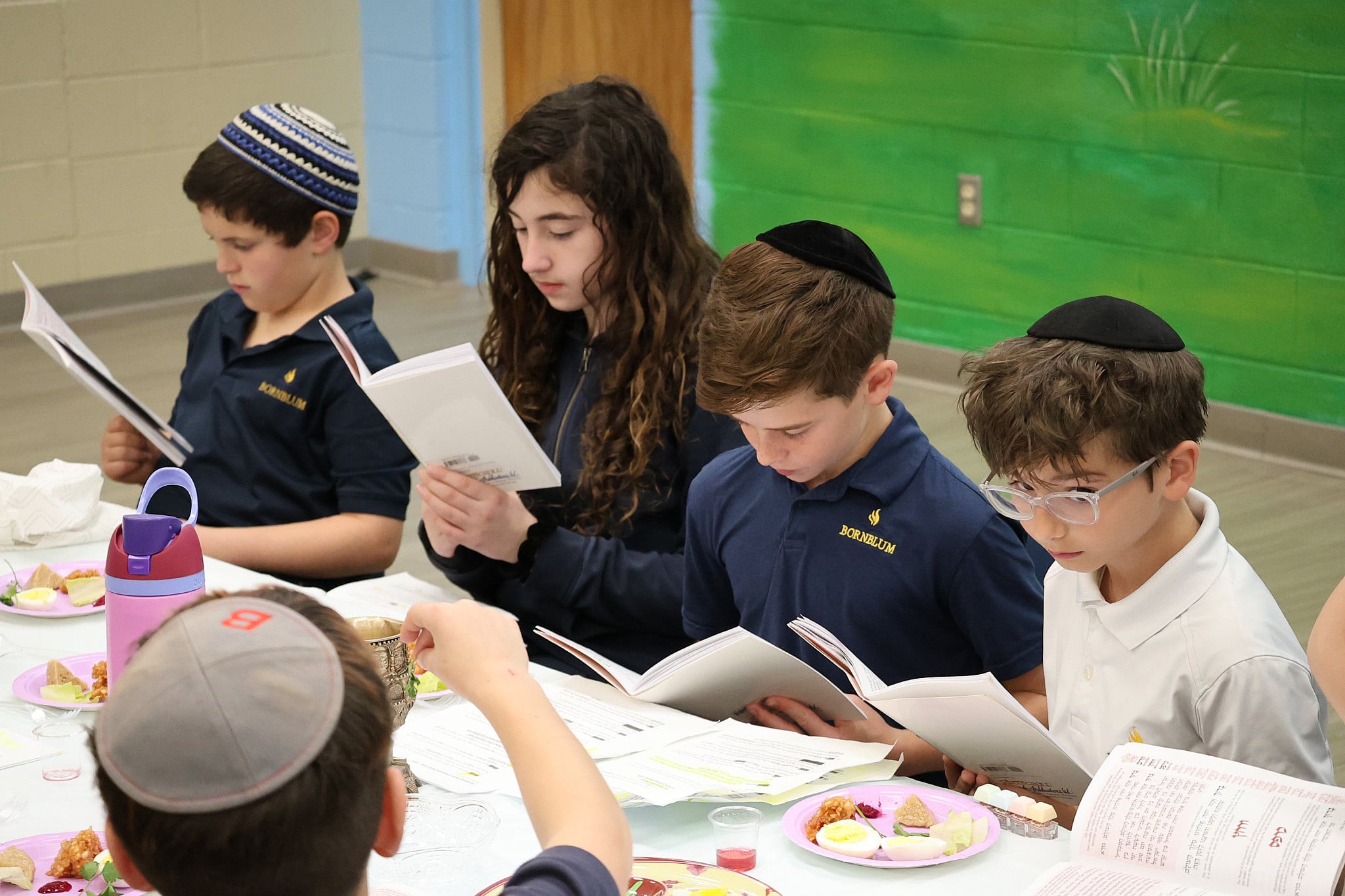
And yet, the tables will be set. The Haggadot will be opened. The youngest children will ask the Four Questions. Because that is what Jews do. That is, in fact, the whole point.
Because in every generation, parents sacrificed to give their children Jewish knowledge, and communities built the institutions that made that knowledge possible. We are here, telling this story again, because someone before us made sure we would know how.
From the Narrow Place
The Seder ends with a line from Hallel that I carry with me all year. Min ha’meitzar karati Yah. Anani b’merchaviah. From the narrow place, I called out to God. He answered me from the wide open space.
This year, that verse is not a metaphor for so many of our brothers and sisters. The narrow place is real. The sirens are real. The uncertainty of where the next rocket will fall, and whether you can make it to a shelter in time, is real. And still, they will sit down at their Seder tables and tell the story of a people who have always found their way from constriction to open space, from darkness to light, from slavery to freedom.
That wide open space is what education creates. It is the place where the child who cannot yet ask begins to find words. Where the disconnected son is brought back in. Where the simple son builds something magnificent. Where the wise son learns not just facts, but wisdom.
As you sit down at your Seder this year, look around the table. You will find all four children there, in some form or another, perhaps even in yourself. The wise questioner. The skeptic. The one who learns by doing. The one who doesn’t know where to begin.
The Haggadah has been waiting for all of them for three thousand years. It has something to say to each of them.
Tzei u’lmad. Go and learn. That is the Seder. That has always been the Seder.
Chag Sameach.