
Good Bye, Orbán*: Obituary of an Era 2010-2026
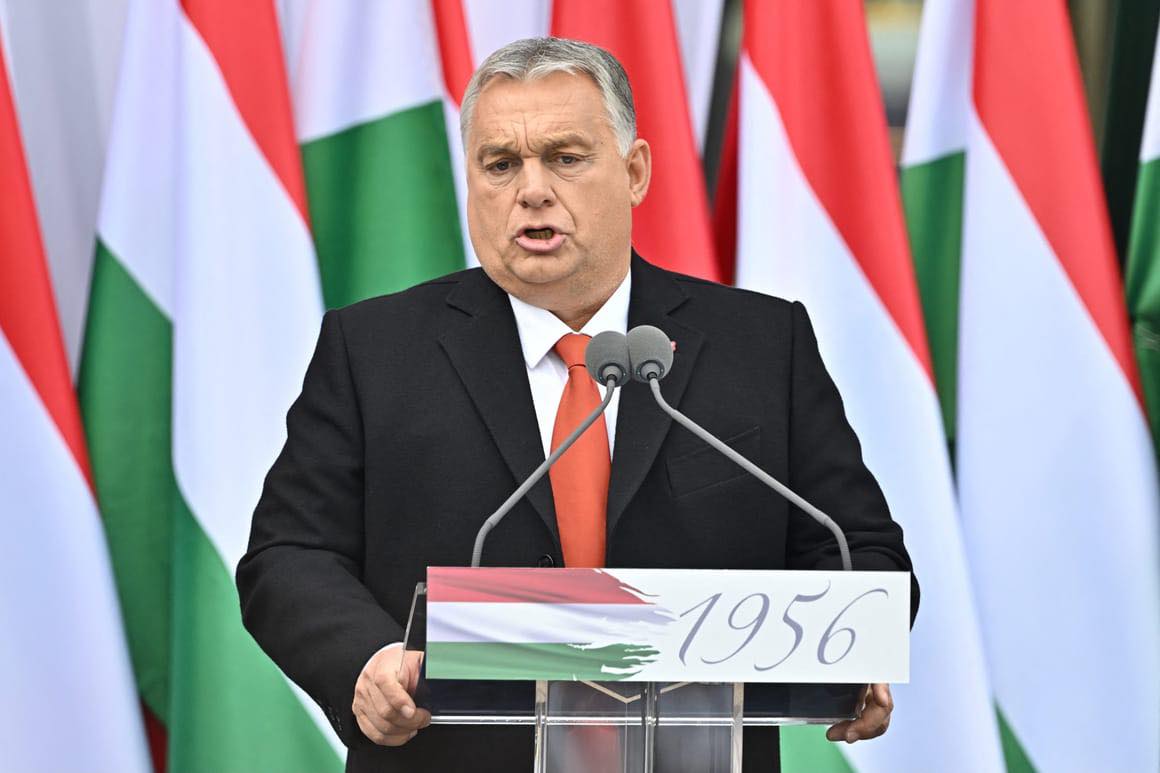
Sixteen years of uninterrupted rule (not including the first term, 1998-2002). A generation of voting-age youth has grown up knowing nothing but Fidesz. The thing about the Orbán regime was not only that it was bad. It was that it seemed invincible, unassailable, eternal. It was that it was universally beloved by presumably well-intentioned conservatives the world over, while it was immensely difficult for most who lived in it. As a well-intentioned conservative myself, who has lived in it before making aliyah almost two years ago now, I wanted to give you an account of things foreigners often miss about the Fidesz era, so you can better understand what is happening now.
Like many good stories, this one too should start in the middle, with the first crack in the regime, the crack that widened into the ravine that would swallow it whole: The Pardon Affair, in which the justice minister (a woman, Judit Varga) requested that the president (also a woman, Katalin Novák) grant clemency to a man convicted of covering up child sexual abuse at an orphanage in Bicske.
This pardon accidentally broke containment and with it, broke a system that seemed unbreakable. Both women resigned (i.e. were booted) from their positions for what Orbán publicly telegraphed as nothing but a silly, entirely self-inflicted error — shutting down any questions posed to him by saying he ‘doesn’t traffic in women’s exploits.’ (translation aims to reflect the innuendo of the original statement).
While in another country the idea that the prime minister wouldn’t know about actions taken by either a minister of justice or a president of the republic is plausible, if unlikely, Hungarians know that absolutely nothing in Hungarian politics happens without the knowledge (or express request) of one man; Viktor Orbán. This is someone who talks about the state in first person singular (‘I lowered gas prices’…‘I will protect Hungary from Brussels’) — and in a way rightly so, since the country belongs to him, if only through his cronies, and if only until today. Speaking of cronies, a quick primer, top billing only:
- Lőrinc Mészáros: richest man in Hungary and Orbán’s best friend from childhood. Mészáros was a failing gas fitter in their village until his mid-40s when, by a magical turn of fate around 2010, he became a billionaire — in dollars — through a vast series of fortuitous public contracts in construction, energy and media, and, according to him, ‘thanks to three factors: God, luck, and Viktor Orbán.’ At last count two years ago, his net worth was 1241 billion Forints.
- István Tiborcz: Orbán’s son-in-law, husband to his daughter Ráhel. He too became independently wealthy once he married into the family, initially by being awarded a cascade of EU-funded public contracts. (The EU found evidence of criminal conspiracy and demanded Hungary repay €40 million. To avoid further investigation, the Orbán government simply made Hungarian taxpayers foot the bill). Tiborcz has since branched out into construction, with edifices and hotels from Budapest to Marbella. Recently, the family announced their relocation to New York so Ráhel could attend university there. The family had previously decamped to Spain months before the 2022 election, returning once Fidesz secured victory.
- Antal Rogán: cabinet office minister and arguably the second most powerful figure in the system. He controls government communications, manages the vast propaganda apparatus of state-aligned media, and since 2022 has also overseen domestic and international intelligence services. He also invented electronic signatures, in case you did not know, and makes billions from it yearly, since the government uses only his patented software. (He of course did not invent electronic signatures, or even this particular software, but that’s a minor detail).
- János Lázár: construction and transport minister, and the regime’s most effective ground campaigner, a man with an incomparable talent for saying the quiet part out loud. Once regarded as Orbán’s heir apparent, they had a falling-out which sent him into years of political exile. Aspiring landed gentry Lázár owns massive swaths of Hungarian land, and the castles upon them. And palatial buildings in Budapest, naturally. Last month alone, 1374 state properties were transferred to Lázár’s foundation, including pastures, forests, roads, orchards, farms, and so on.
- Matolcsy and son: Matolcsy György served as president of the Hungarian National Bank from 2013 to early March 2025, over which time he spent public funds on real estate, paintings, and sculptures like there was no tomorrow, and established opaque central bank foundations to route massive funds to himself, his son, and his son’s friends — but more on that later.
Then there are the countless other hangers-on and sycophants with pockets lined from the money the EU gave to Hungary to help it catch up to the rest of the Union: tens of billions of Euros, totaling several Marshall Plans’ worth, spent by parvenues on pointless luxuries, resulting in Hungary becoming the poorest country in the European Union, the most corrupt, with the worst healthcare and education systems, lowest salaries, coupled with a prohibitive cost of living including everything from real estate to gas prices.
Was this what Fidesz ran on? Of course not. Fidesz started out as a reasonable conservative party. Well, they started out as hardliner liberals but, again, that’s the before-times, circa 1990. By 2010, Fidesz had become a conservative alternative to a fatigued and disjointed left. And Viktor Orbán, a towering figure of Hungarian politics by that time, was known to be a sharp, intelligent, and westward-looking politician. Following his lead, Hungary would close the gap, rise to the level of Austria, switch to the Euro and be happy forever.
In 2015, during the migrant crisis, is where foreign and domestic opinions start to diverge. From the outside, it looked like Orbán stood up to the disastrous (truly) decision of the EU — led by Angela Merkel — to let in absolutely anyone and everyone who wanted to come. Not Hungary! In Hungary, a fence was erected to keep everyone out. As the EU began to wilt under the sheer mass of people from war-torn, or simply dysfunctional and backward countries, brave little Hungary was standing strong. But Hungarians knew that no migrant would willingly stay in Hungary (or Poland or Slovakia for that matter) where they stood to receive no benefits or sniff the balmy air of Willkommenskultur of rich and willing welfare states like Germany, France, Belgium or the Netherlands. And the weather was worse than Italy or Spain.
But back to the Pardon case and now ex-justice minister, Judit Varga. She was once (recently) married to a man called Péter Magyar (yes, ‘Peter Hungarian’). He came out, guns blazing, with a clandestine recording of his ex-wife telling him that prosecuting authorities would routinely ‘strike’ the names of (propaganda minister) Antal Rogán and others from court papers relating to corruption scandals, and that the prosecution itself is fed up with having to do so.
The release of this recording catapulted the low-flying erstwhile Fidesz diplomat Magyar to political stardom, who took the opportunity to start a party (or rather revive an old one, Tisza, named after the second longest river in Hungary, and an acronym for Tisztelet és Szabadság, Respect and Freedom). At that point, no one thought he had a real chance at toppling that squat giant, Viktor. But the hits just kept on coming.
There was of course Fidesz co-founding minister who wrote the anti-gay parts of the constitution, József Szájer, getting caught in Brussels during covid lockdowns at a gay chemsex party (condoms disallowed!) trying to escape, backpack full of drugs in tow, down the drainpipe of the building. Alright, fine, this was way before Tisza came on the scene. But since then, we’ve had:
- The one where a state home for juvenile delinquents on Szőlő street was involved in a whirlwind scandal of sexual abuse, minor prostitution rings, and physical abuse — precipitating a number of other scandals at similar institutions, all involving cover-ups
- The one where women were told to give birth during the workweek because of the shortage of hospital staff on weekends
- The one where the government was forced to say that instead of black mold, what was seen on hospital air vents was merely ‘dust settled on grime’
- The one where we return to the Matolcsy clan to discover that somewhere between 150-650 billion Forint was ‘lost’ by the national bank, while both he and his son are now living large in Dubai. They have begun sending containers full of cars and furniture there in the past week
- The one where the Samsung battery factory in Göd was found to be leaking highly carcinogenic toxic material into air, water and land (such as toxic foam bulging out of gutters in town, where children believed it was snow and played with it)
- The one where the lack of toilet paper at hospitals (always a popular topic in Hungary) was explained by health secretary Dr. Péter Takács citing the square meters total of hospitals in Hungary — it would clearly be impossible to have toilet paper everywhere
- The one where János Lázár said at a public forum that since there were no migrants in Hungary and Hungarians don’t like to clean toilets, the ‘interior reserve’, the Roma population, would be ‘used to scrub the shit out of train toilets’. Side note: Lázár said at another forum that ‘people who have nothing are worth exactly that’
- The film The Price of a Vote (A Szavazat Ára) in which it turned out that Fidesz pays people living in abject poverty with 5000 Forints (50 NIS), firewood, or even drugs and alcohol for a vote, gets doctors to prescribe medicine only for those voting for Fidesz, or threatens to take children away from people if they vote wrong
- The Ukrainian Gold Convoy Debacle, where Hungary stopped a truck transporting cash and gold from Austria to Ukraine, detained people on board, injected one of them with an unknown substance and conditioned the release of the funds on Ukraine restarting the Friendship Pipeline. The Hungarian state was sued for terror activity as a result
- The one where Péter Szijjártó, foreign minister, routinely briefs Sergei Lavrov on the goings-on at EU meetings during coffee breaks or promises Abbas Araghchi even tighter cooperation between Hungarian and Iranian secret services regarding the pager operation
- When Szabolcs Panyi, a journalist, was accused of being an Ukrainian spy who ‘gave Szijjártó’s number’ to those tapping his phone. Panyi wrote about GRU agents arriving in Hungary before the elections, and is currently working on a book detailing the shady secret service ties between Russia and Hungary
- When press secretary Gergely Gulyás said they would consider sending Hungarian soldiers to Iran if Trump so requested and Orbán had to step in and say Gulyás was ‘talking nonsense’
- The Saga of the Serbian Backpack containing explosives found in the (relative) vicinity of a gas pipe near the Hungarian border. The incident was decried by Orbán as Ukrainian terrorism, a theory rejected wholesale by the Serbian military
- The one where detective Bence Szabó from the child-protection intelligence unit said his unit was used to frame a 19-year-old IT worker at Tisza with possession of illegal images and videos featuring children before it turned out that this was a ruse for the newly established Department for the Protection of Sovereignty to seize all IT devices related to Tisza
- The one where Captain Szilveszter Pálinkás reported that while they were on army training together, Orbán’s son Gáspár told him that God had appeared to him in the Sahel and instructed him to execute a mission to Chad to save the Christians there. It was projected that half of the 500 soldiers to be sent there would die. The mission to Chad was prepared but abandoned after word about it got out. (we knew about the incomprehensible Chad mission, not about the Orbán Jr revelation bemidbar)
And so, the campaign kept slowly slipping from their fingers. But the Fidesz yacht class grew accustomed to ruling, and kept holidaying in luxury, frolicking at resorts, building their vast castle grounds on ever larger swaths of taken land, shopping at Chanel, Dior and Cartier, buying hotels, and taking government planes to soccer games. Only by the very end could massive withdrawals of cash from companies and quiet exits from the country be observed. The sinking of the ship was noticed by the New Hungarian Elite only once the murky water hit their ankles.
This Sunday, Hungarians headed to the polls and chose. Important context: they did not choose a leftist or even liberal option, unlike the mis/dis/uninformed online discourse would have you believe. The Tisza promise is essentially a Fidesz lite but without all the stealing. But most arguably didn’t even choose Tisza: they chose not Fidesz.
The time of a regime that did little for its nation besides robbing it blind has come to an end — but the revelations are just about to begin, and hopefully, people who sympathized with the conservative messaging of Fidesz will learn about the real face of this government, which was just Ceauşescu redux dressed in the garb of conservative utopia. Sorry, Tucker.
Is this the beginning of the end for all so-called or actual right wing or populist regimes and parties, as varied as the German AfD, Modi’s BJP, Putin’s Russia or MAGA Republicans? Hardly. But it is the
end of something many thought would last forever, and the future is uncharted territory. Of fond memories there will only remain the time Orbán explained in his thick accent to a besotted Chuck Norris that he is ‘a street fighter, basically.’
–
*the title of this post is a reference to the German film Good Bye, Lenin (2003) watch it if you haven’t seen it.