Groovy– Part II
When I sat shiva for my parents, I learned that an exhausting and in some ways very difficult week can also be an enlightening one; that you learn a great deal about the person for whom you’re sitting shiva, even though it’s someone you’ve known very well over a long time. And one of the ways this knowledge is transmitted is through the stories, often with similar themes, that visitors tell about their relationship to the deceased.
I learned yet another lesson when my wife was sitting shiva for her father. Or, rather, I was taught this lesson by our dear friend and teacher, Rabbi Saul Berman, who made it a point to speak to the children-in-law and grandchildren in the shiva house and explain to them, with his ever-present kindness, that although they are not aveilim (mourners) according to strict halacha, they are nonetheless mourners in the true sense of the word, having lost someone near and dear to them.
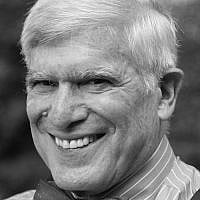
Putting these two lessons together leads me to add this Part II to my earlier column (“Groovy”) about my late brother-in-law, Prof. Jordan Sterling Penkower, who recently died. I had tried to paint a picture of Jordan’s multifaceted nature as scholar, musician, photographer, and family elder statesman, who lived his very productive life with one foot firmly planted in the 1960s – hence groovy in the column titles, a locution he often used. And yet, as I learned sitting through many hours of Sharon’s shiva for Jordan and thereafter, there was much that I didn’t know or fully appreciate.
Take his scholarship. I mentioned his research on biblical manuscripts, including Torah scrolls, a discipline in which he was a world-wide expert. But as I learned from his colleague, Prof. Yosef Ofer of Bar Ilan University, who wrote a moving In Memoriam that appeared in Textus magazine, Jordan’s research actually focused on three principal fields beyond the single one I was aware of: “(1) the transmission of the Hebrew Bible and the masorah in manuscripts and printed editions; (2) the Bible in rabbinic interpretation; and (3) medieval Jewish biblical exegesis, especially the commentary of Rashi.” Moreover, even the first field, which Prof. Ofer concentrated on in his remembrance, contains no less than five subfields. Thus, the “breadth and thoroughness” of Jordan’s oeuvre was even more all-encompassing than I thought.
But Jordan’s scholarship extended far beyond his being, well, a scholar. At least equally important is that he was a teacher and mentor par excellence. I was able to learn this and much more because of a combination of Jordan’s generosity and the hard work of our nephew Avi in disposing of Jordan’s extensive library.
It might have been relatively easy to simply donate his 2,500-3,000 books as a single collection to an institution like the National Library of Israel, or to Bar Ilan, where he taught for more than three decades. But easy was not Jordan’s way. Thus, the disposal had several different steps: setting aside a few higher-value books for auction, donating books to the NLI and some smaller academic libraries, giving books to family members and some lower tier and on-line auction houses, and allowing Jordan’s doctoral students and other graduate students and scholars to take books.
My learning experience arose with respect to the last group. When they came to peruse the library and select books, they were asked to write something to Jordan’s siblings to let us learn about the books’ new homes and their owners’ relationship to Jordan. Thankfully, more than a dozen acceded to that request, and the resulting letters, in English and Hebrew (translated by Avi), were eye-opening. Here are just a few examples.
As noted by one student of Hebrew illuminated manuscripts – not Jordan’s particular field, though his library nonetheless contained books in this discipline – Jordan’s “kindness and generosity” in making the books “accessible to scholars of Jewish studies instead of allowing this important collection to lie forgotten in some hidden corner, ensured that they would be placed in the hands of those who need it, continuing to provide knowledge to generations of researchers.” Others told us that they would use his books in their teaching, academic research, and Torah study.
It went far beyond that, though. We were told that they — mainly graduate students — took books they had been seeking for a long time and would never have been able to otherwise afford and had been shlepping back and forth from libraries. Long-time scholars said that owning copies of works they study was incredibly meaningful, and that “having access to books at home provides more than just the advantage of convenience; living among one’s books creates an intellectual atmosphere that encourages frequent consultation and reference to the volumes on one’s shelves. The books in our homes become our friends and partners in conversation.” Or, in the words of another, “the pages of the books I took become a linking thread between generations.”
As for themes, two of Jordan’s students – unrelated to each other – said that they had given him books they had each written that they found in Jordan’s collection and took home. Both discovered that Jordan had not only read their books but had also made important annotations in the margins correcting some of the material – corrections that would be reflected in revised editions. And so Jordan’s teaching, impact, and influence continues.
But what about Jordan as a teacher and doctoral adviser? I knew him as a perfectionist and had considered the possibility that he was thus a harsh taskmaster. Well, I was partially right. “He was meticulous and exacting, teaching me what true excellence means: precision, diligence, and unwavering attention to detail,” one student wrote; another told us that “for Prof. Penkower it was important that the dissertation be perfect – he never settled for less.”
Yet he was also “a lover of people” and “the best supervisor a doctoral student could ask for, who was available for every question” and answered “phone calls at all hours.” Another student called him “a mentor, a professional anchor,” who “walked with me step by step: guiding, refining, directing, advising, and never withholding professional truth.” And he did all this with an innate gentleness. “I especially remember that before sending comments, he would call to discuss them pleasantly, ‘so you won’t take the criticism too hard,’ because ‘overall, I am very pleased with your progress.’” “He always received me warmly,” said a non-student who attended his lectures in other forums, “and he responded patiently to every question, even expressing interest in my comments.” He was “confident in the abilities of his students,” often seeing in them something that they had not yet discovered in themselves.
There is still more, but I’ll let a graduate student couple sum it up: “The sweetness of this windfall is obviously tinged with the bitterness of knowing that it comes from someone’s passing, but we are grateful for Jordan’s bequest of his books to Jewish scholars.”
But scholarship was not all the new that I learned. I also discovered that this scholar and teacher – whose days and nights were spent buried in scholarly tomes, teaching and advising students, writing ground-breaking articles and award-winning books, and traveling internationally to inspect ancient manuscripts – was also a self-taught and extremely successful investor. Nonetheless, he lived relatively modestly, while using significant parts of the proceeds of his investments to support a broad range of Israeli charities, always quietly, often anonymously. I may have been surprised at his success since it was so unrelated to any of his other areas of expertise, but I wasn’t surprised in the least that “a lover of people” used his money to help all to the extent of his abilities and resources.
So, Jordy babe (another locution he was fond of using), you knew you would be missed by your family, to whom you devoted so much time and love. But the circle is so much wider than that, including both those you knew and those you did not, all of whom join me in saying that your memory will be for a blessing and an inspiration.