
“Gruzia” on my Mind – Why Israelis Love Georgia
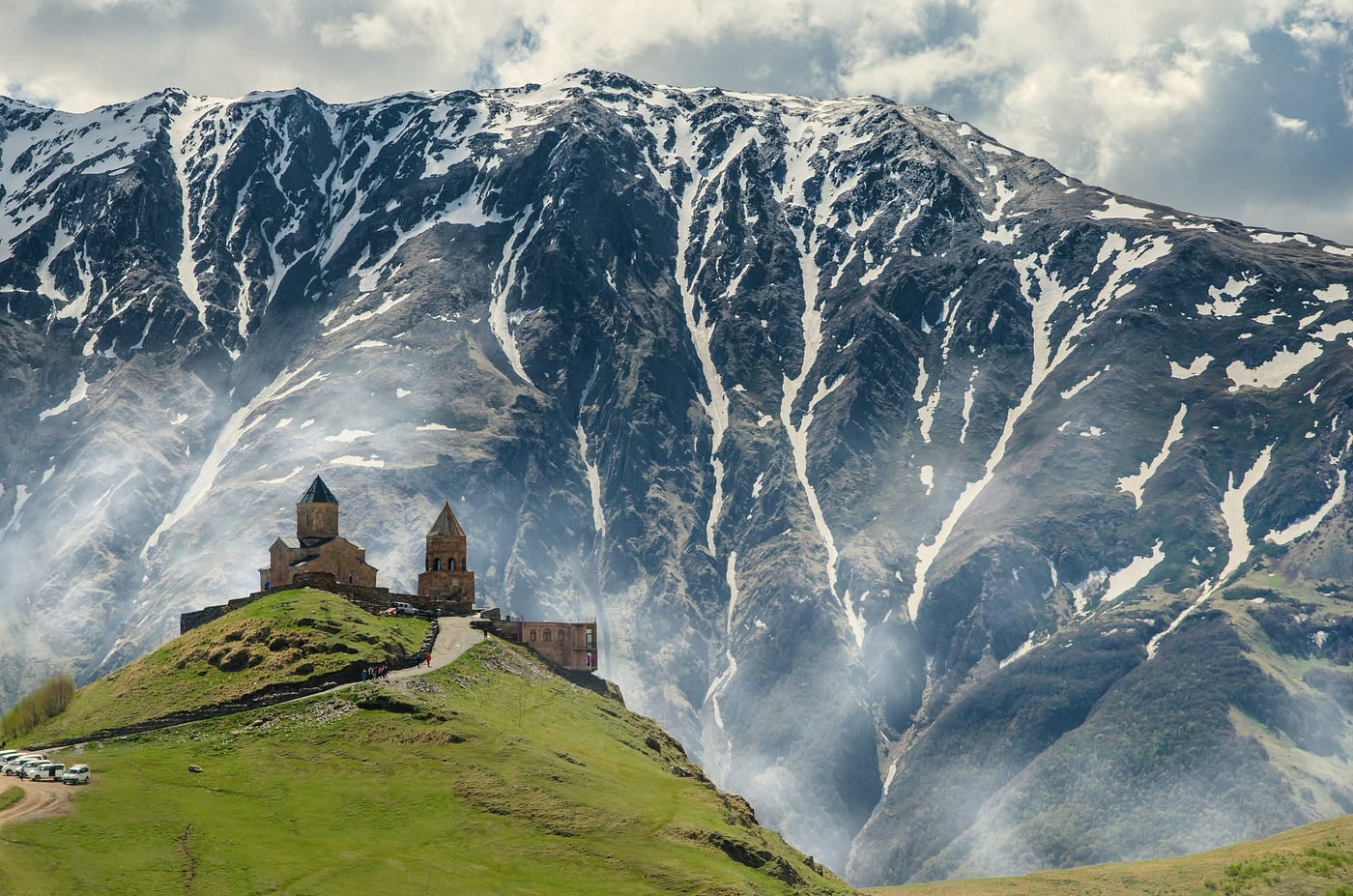
Last weekend, as a Saharan dust storm swept through Israel sending Tel Aviv and Jerusalem gasping to the top of the global air pollution index, I was staring out of a Georgian hotel room at the snow-capped Caucasus Mountains, blissfully unaware of the yellowing skies back home, surrounded by crisp wintery air that I would’ve bottled up if I could have and sold from a cooler on Gordon beach for a tidy profit. Cherished respite for my dismal Ashkenazi sinuses, yes, but restorative mountain oxygen was never the purpose of my trip. That was just good timing.
The real purpose of the trip, my first to Georgia, was a treasured blend of vacationer’s leisure and welcome obligation. The obligation: to meet my girlfriend Lisa’s family and experience the Georgian roots tour she’s taken many times in her life.
Lisa, an Australian, was born to two first generation Georgian immigrants who left home behind soon before the fall of the USSR. Her Jewish mother’s side of the family, themselves only one or two generations deep in Georgia having fled elsewhere in The Pale, found the Soviet gripped nation hostile and poverty-stricken, unfit for a sturdy life. So, they made the refugee’s sacrifice and dispersed — to Australia, America, and Israel. Though Lisa’s father left with them, his Christian, ethnically Georgian family remained, leaving behind the beloved aunt, uncle, and cousins Lisa now visits every year. They welcomed us fondly for a stay at their apartment in Tbilisi and lent us the warm ski jackets we’d take with us to the mountains later that week.
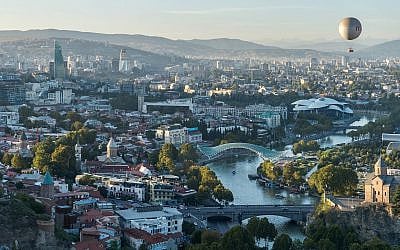
While traipsing through Tbilisi’s maze of hilly streets, a tangle of exhausted post-soviet buildings punctuated by the stately architecture of Georgia’s Imperialized past, I started to hear Hebrew drifting through the air. I’d do a double take and find that the stranger who spoke the words looked familiar — a face, a skin tone, a hairline, an outfit I’d seen many times in the streets of Tel Aviv. Diaspora Jews, myself included, are often giddy to hear Hebrew “in the wild,” a satisfaction akin to winking at a confidant across a crowded party, sharing a secret that the rest of the room does not know.
After a few days in Tbilisi, Lisa and I headed out for the mountains, escorted by a burly, belly laughing Georgian hawking rides to Gudauri, Georgia’s iconic ski town, two-hours drive away. He recklessly piloted the big red Mercedes van out of the city and up into the winding, increasingly terrifying mountain roads (no one is an atheist in a big red van to Gudauri). At a bathroom rest stop along the way, a van load of Israeli girls chattered away in Hebrew. Heading to the same place we were. Another 30 kilometers down the road as the landscape became more mountainous and snow dappled, we passed a roadside restaurant with signs all in Hebrew; a unicorn among horses in the ramshackle, half-abandoned town. Then we passed another. And another. Where was I, Brooklyn? The Golan heights?
Once in Gudauri, the chosen people’s presence reached a whole new level.
Within minutes of arriving, it was an Israeli teen who pointed us to the gear rental depot nearby. I knew it from his accented English, but his mom called out to him — “Gilad! Eifoh ha achot shelcha?” — and confirmed the suspicion. We hit the slopes soon after, eager to catch some afternoon runs before the lifts shut down. Lisa and I sat on the chair lift next to an Israeli family, the father telling his daughter to keep her ski tips tilted up for the dismount. On our next lift, four Israeli men, friends from the army. Later, in the gondola, a young couple argued in Hebrew, the woman insisting there should be a lake over to the left because it was listed on the map. Israelis relishing in apres ski revelry made themselves shamelessly apparent at the slope-side bars and restaurants dotted across the mountain. That night we ate dinner at a local Georgian joint where nearly every table conversed in Hebrew. More familiar faces and telltale chutzpah. The restaurant even played Omer Adam over the speakers.
It was like that for three whole days — little Israel on the mountainside. Not counting the locals, it seemed like the entire resort town that week was populated by about 60% Israelis, 30% Russians, and 10% miscellaneous tourists. Even more striking than their numerical presence was that the Israelis weren’t just happy to be there. They were, for better or for worse, being unabashedly Israeli. Proudly, loudly, Israeli.
But I can’t say I was surprised. Israelis LOVE Georgia.
Despite 20th century frictions, Georgia boasts one of the oldest ethnic Jewish lineages on Earth, with over 2600 years of near-continuous peaceful coexistence. The 100,000-plus Georgians and their offspring living in Israel have made its culture and severely underrated cuisine, like the cheesy khachapuri bread, friendly and familiar. Georgia offers world class skiing in winter, breathtaking treks in the spring and summer, resort towns, historical sites, and copious amounts of wine (a libation that Georgians invented over 8000 years ago) as delicious as any imbibed in Italy, Spain, or France, all significantly more affordable than the experiences on offer in many of Europe’s more conventional destinations. Bright beaches, rolling wine country hills, towering mountains, quaintly charming third-world towns, medieval ruins, and bustling, culturally rich cities can all be reached with ease. And with direct flights now available, Israelis can hop from Ben Gurion Airport to Tbilisi International in less than three hours, a fraction of the time (and cost) it takes to reach the South American and Southeast Asian locales Israelis are also known to frequent. I’d quickly lose count if I tried estimating the number of Israelis I know who’ve chosen Georgia for a post-army summer trek or ski vacation getaway.
Those facts, while undeniably appealing, are just the beginning of Israelis’ love affair with Georgia. Simply put, Georgians don’t seem to hate them.
Unlike many of the Western countries that have known no strife or oppression since World War 2, Georgia has always had bigger fish to fry: namely Russia, against whom they’ve fought two wars in the last 35 years and which now occupies two territories along the countries’ shared border in the north. Despite decades of Western drift that left a generation of Georgians hopeful for admittance to the EU, the Russian-backed puppet government now in power has all but entirely squashed their democratic aspirations.
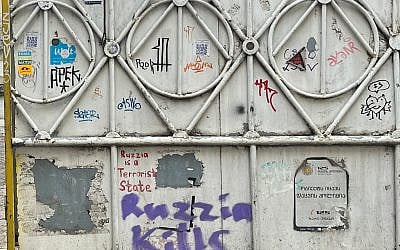
Both in Tbilisi and in the mountains, the “Death to Israel!” graffiti I’d seen in too many European cities was nowhere to be found, replaced instead by slogans like “F*ck Putin!”, “Ruzzia is a terrorist state!”, “Russians not welcome.” Having seen what such catchall hatred has done to Jews around the world, the Russians tourists had my sympathy. Many of them probably hate Putin and his vanity war just as much as the majority of Israelis despise Netanyahu, and they too should be allowed some peaceful respite from their own shellshocked nation. But I cannot deny, it was nice to see that I and the people of my chosen country were not at the top of the sh*t list; to see Jews spared from the global ire we’ve come to know all too well.
Amid skyrocketing antisemitism, with Israeli tourists around the world being mocked, berated, even beaten, this mountain in the middle of the Caucasus felt like a safe haven — a place where Israelis could escape the ever-present specter of war back home without the fear they now too must carry with them abroad.
Accessibility and affordability are always appealing. But the freedom to simply “be” is priceless. It’s no wonder so many Israelis have Georgia on their mind.